In a recent phone call, former US president Donald Trump urged Ukrainian President Volodymyr Zelensky to stop Ukrainian attacks on Russian oil refineries. Whether framed as a request or a demand, the move appears, at least on the surface, to diverge sharply from the Biden administration's policy of restricting the use of US-supplied long-range missiles for strikes inside Russia.
Trump has justified his position primarily on economic grounds, arguing that the repeated strikes on Russian refining capacity have disrupted diesel supplies and pushed up fuel prices. The International Energy Agency (IEA) estimated that Ukraine hit a Russian oil refinery every three days over the first eight months of 2026. In contrast, the Biden administration's restrictions were rooted in concerns about military escalation and the risk that deep strikes could provoke a wider confrontation between Moscow and NATO.
But focusing solely on these stated justifications obscures a deeper continuity. Both policies reflect Washington's effort to shape the boundaries of Ukraine's military response to suit broader American interests—whether those interests are defined by geopolitical caution or by domestic political calculations.
Ukraine's refinery strategy: a calculated economic war
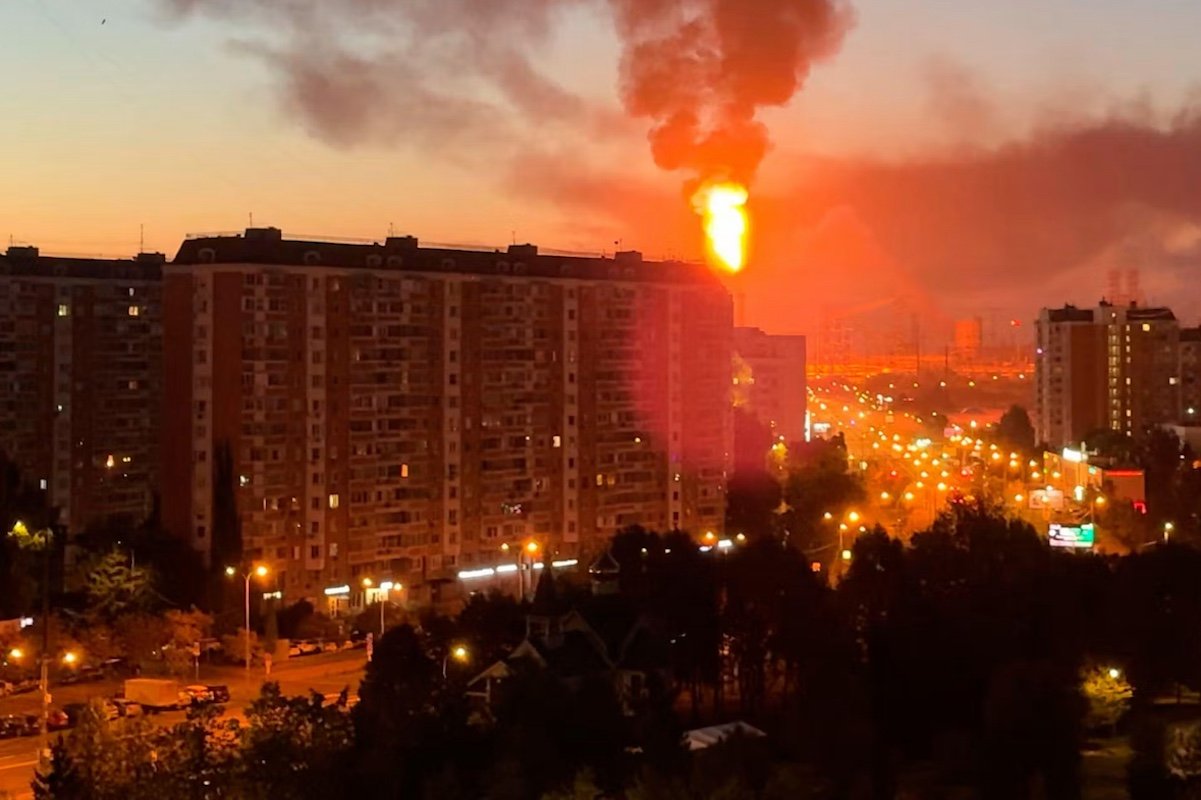
Kyiv's systematic campaign against Russian oil infrastructure is not symbolic. Refineries produce the gasoline, diesel, and aviation fuel that sustain both military operations and civilian life, making them logical targets in a strategy of economic warfare. Ukrainian officials have described the attacks as a deliberate effort to reduce Russia's economic and military capacity.
The strategy has yielded measurable results. The IEA report found that gasoline output in Russia is down 20% compared with 2025 levels, while diesel production has fallen by nearly 30%. For Ukraine, these strikes impose significant costs on Moscow without requiring costly, large-scale offensive operations along the front lines.
This context is crucial. Trump's push to halt the campaign was not aimed at an ineffective or indiscriminate form of violence; it targeted one of Ukraine's most successful infrastructure campaigns against Russia.
Zelensky reportedly rejected Trump's request. Speaking to Wall Street Journal editor-in-chief Emma Tucker on the sidelines of the UN General Assembly meeting on September 23, he said: “Our lives are more important than the price of energy.”
Competing visions of strategic success
The disagreement between the two leaders reflects their competing conceptions of what constitutes strategic success. For Zelensky, disrupting Russian refining capacity weakens the economic foundations of Russia's war effort. For Trump, the same attacks allegedly generate undesirable consequences—higher energy prices and fuel shortages that could ripple through global markets and affect consumers, particularly ahead of a crucial election.
The question is not whether the strikes matter, but which effects should be prioritized: pressure on Russia or stability in global energy markets.
This episode also illuminates a broader point about escalation and restraint. Biden's restrictions reflected a traditional understanding of escalation rooted in military interaction between major powers. The danger, in that view, lay in provoking Russian retaliation—possibly nuclear—or creating the perception of direct US involvement in attacks on Russian territory.
Trump's position points to a broader conception of escalation, one not limited to Russia itself but extending to economic interdependence as its own pathway of strategic risk. Refinery attacks may not increase the likelihood of direct military confrontation, but they can create consequences that spread through global energy markets and generate political costs for governments far removed from the battlefield.
The comparison suggests that the Biden and Trump administrations differ less in their desire to constrain Ukraine than in the risks they prioritize. Biden sought to manage military escalation with a nuclear-armed adversary. Trump seeks to manage the economic consequences of a protracted conflict. Both positions stem from the same underlying reality: Ukraine's military objectives are not identical to those of the US.
The refinery campaign demonstrates this clearly. What Ukraine sees as a highly effective means of degrading Russian capacity can simultaneously be viewed in Washington as a source of broader strategic risk. This dynamic is not unique to the US-Ukraine relationship. Across the Indo-Pacific, similar tensions arise when allies' tactical goals diverge from the strategic interests of their patrons—whether in the context of US-China relations or regional security arrangements.
Ultimately, the refinery strikes reveal that the politics of support is inseparable from the politics of restraint. Whether through restrictions on long-range strikes or pressure to avoid targeting Russian energy infrastructure, successive US administrations have attempted to shape not only how much support Ukraine receives but also how that support is used. The real continuity between Biden and Trump lies not in their specific policies, but in their shared assumption that Washington retains a legitimate role in defining the acceptable limits of Ukrainian military action.