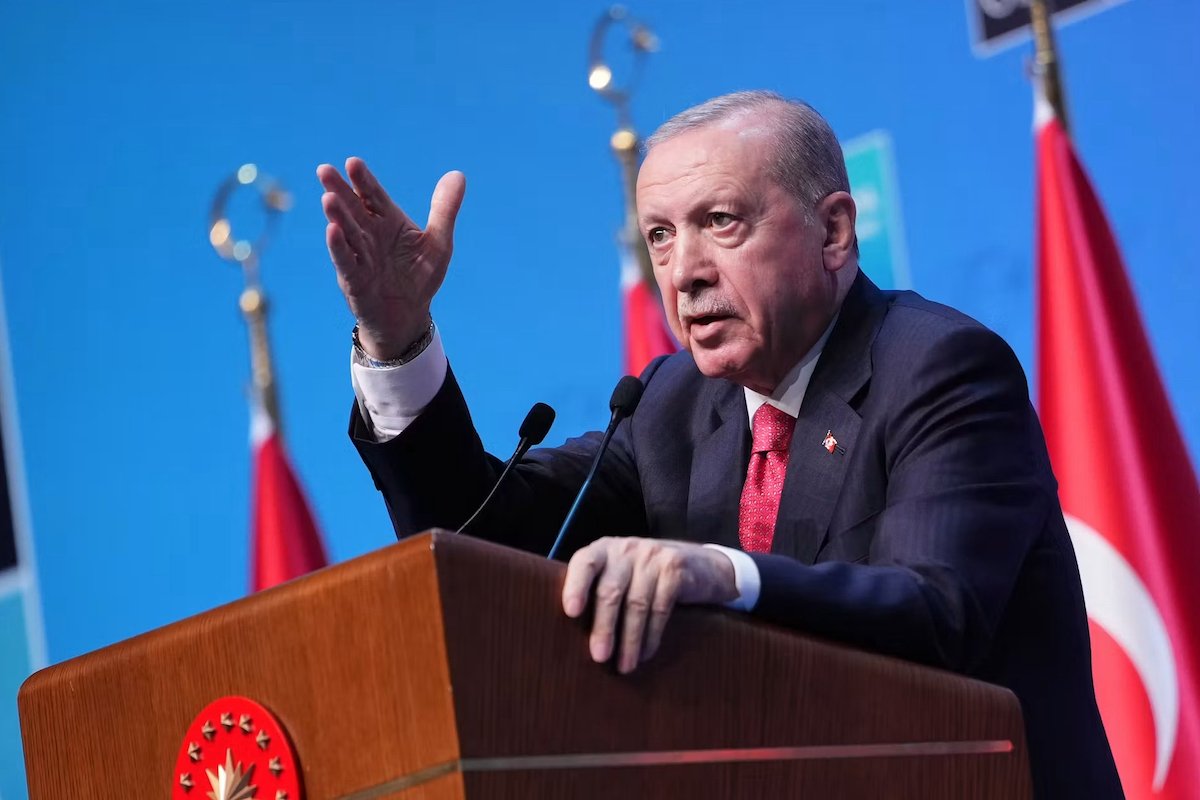
Less than two months after hosting a NATO summit framed as proof of Turkey's pivotal role in transatlantic security, President Recep Tayyip Erdogan has applied for full membership in the Shanghai Cooperation Organisation (SCO). The move, which some Western observers dismissed as a rogue gesture, underscores a broader trend in Ankara's foreign policy: playing East and West against each other to maximize maneuverability.
Turkey has been a NATO member since 1952 and remains an official candidate for European Union membership. Yet its application to the SCO, a bloc led by China and Russia, reflects a growing willingness to engage with alternative international orders. This is not a simple pivot away from the West, but a calculated effort to diversify alliances and hedge against over-reliance on any single bloc.
Forum shopping as strategy
Erdogan's approach, which I call "populist world-making" in my book Turkey, Geopolitics, and the Age of Populist World-Making, extends his domestic political style to the international stage. Just as he portrays Turkish citizens as silenced by entrenched elites at home, he presents Turkey as a nation denied its rightful status by Western-dominated hierarchies globally.
This strategy manifests in what analysts term "forum shopping"—choosing among international institutions and diplomatic frameworks to advance specific interests. Turkey does not see the SCO as a replacement for NATO, but as an additional arena to pursue economic, political, and strategic goals. By engaging with multiple, sometimes overlapping, orders, Ankara aims to prevent any single power from dictating its choices.
The SCO application is the latest expression of this approach. Turkey has also deepened ties with Russia and China through bilateral deals and regional initiatives, while maintaining its NATO commitments. This dual-track policy allows Erdogan to claim a unique diplomatic role, as seen in his mediation efforts in the Black Sea grain deal.
Syria and Libya: testing the limits
Syria provides a clear example of Turkey's forum-shopping. Despite opposing Bashar al-Assad alongside other NATO members, Turkey worked with Russia and Iran through the Astana process to manage conflicting objectives and de-escalate the conflict. This exclusive forum, created outside the Western-led Geneva framework, served the interests of all three states despite their incompatible goals.
In Libya, Turkey supported the internationally recognized government while also engaging with Russia and other actors. This balancing act has drawn criticism from France and other NATO allies, but Ankara argues it is necessary to protect its interests in the region.
Turkey's relationship with Russia is particularly complex. It opposed Moscow's invasion of Ukraine, armed Kyiv, and closed Turkish waters to Russian warships. Yet it refused to join Western sanctions and maintained close economic and diplomatic ties with the Kremlin. This enabled Turkey to broker the Black Sea grain agreement, a diplomatic win that would have been impossible for a firmly aligned state.
Constraints and risks
Turkey's room to maneuver is not unlimited. Its economy depends heavily on European markets and Western finance, and its security relies on NATO's collective defense. Russia, China, and Iran are partners in some arenas but competitors in others, creating potential for friction and mistrust.
Forum-shopping can expand autonomy, but it also risks strategic over-extension. Erdogan's ambition to position Turkey as a global power is constrained by domestic economic vulnerabilities and the need to maintain credibility with Western allies.
Ultimately, Erdogan rejects the premise that others should define Turkey's choices. He is seeking a better position within the existing order—and recognition as a power entitled to shape what comes next. Whether this strategy succeeds depends on Turkey's ability to manage the competing demands of its diverse partnerships.