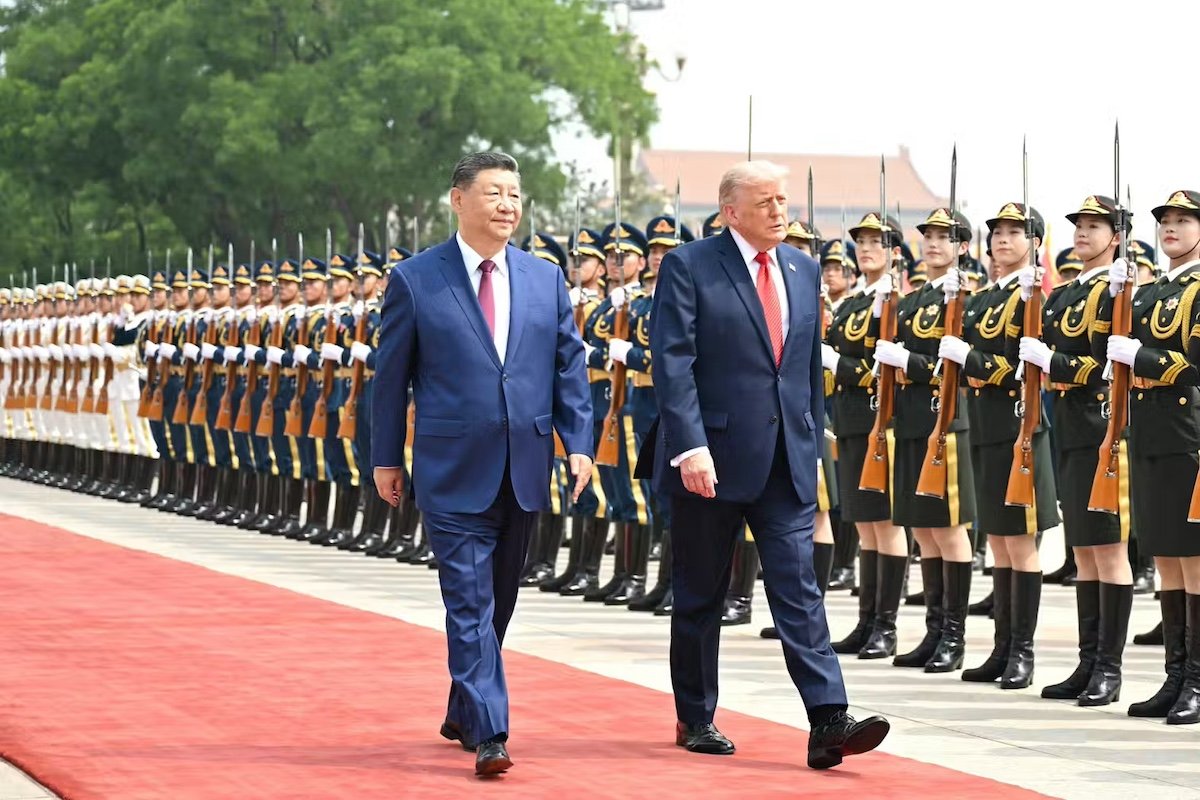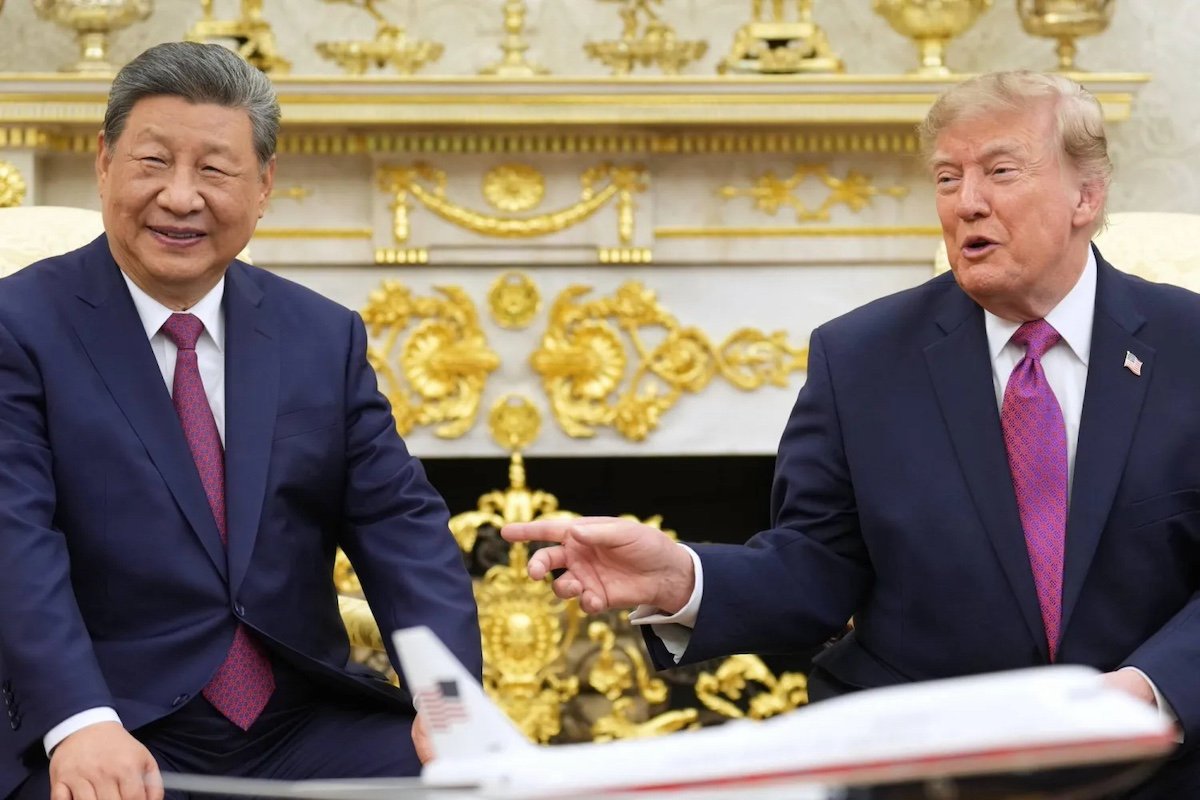
When President Donald Trump welcomed Chinese President Xi Jinping to Washington with a personal greeting at Joint Base Andrews, the pageantry was hard to miss: the red carpet, the state dinner, the cannon salute, and a bald eagle sculpture as a gift. Critics on both sides of the aisle called it a reward for a rival. But beneath the spectacle, the bilateral relationship has quietly entered a new phase.
At their Beijing summit in May, the two leaders agreed to build a “constructive China-US relationship of strategic stability.” Each word was chosen with care. “Constructive” signals a positive agenda, not just crisis management. “Strategic” elevates the relationship to the level of leaders and long-term horizons. “Stability” sets both a direction and a boundary. This week, that formula began to look like a working plan—a stark departure from the language that has defined US-China ties since 2018.
From decoupling to de facto acceptance
During Trump’s first term, Washington launched a trade war, slapped tariffs on Chinese goods, and placed Huawei and other firms under technology sanctions. The administration urged multinationals to adopt “China+1,” shifting production to Vietnam, India, or Mexico, and touted “decoupling” as the goal. Since then, Beijing has diversified its trade across Southeast Asia, Latin America, and Africa. US-China trade fell by around 30% in 2025 alone, according to the McKinsey Global Institute’s 2026 update on global trade geometry.
Yet China has built a complete and strategically critical supply chain, from basic materials to advanced equipment. It remains the only country with all 41 industrial categories and 666 sub-categories in the United Nations classification. It sells advanced machinery, components, and critical materials to factories worldwide. McKinsey calls it the “factory to the world’s factories,” a shift also reported by the Wall Street Journal. India, Vietnam, and Mexico have become assembly lines for Chinese products. In many ways, China+1 did not remove China from the global supply chain—it helped China move up the value chain.
The most telling change is in Washington’s vocabulary. In August 2023, Commerce Secretary Gina Raimondo declared China “uninvestable,” a talking point that dominated congressional hearings and opinion pages. Terms like “de-risking,” “de-coupling,” “friend-shoring,” and “China+1” filled the airwaves. Now, “China+1” has nearly vanished from official discourse. Senior officials and business executives no longer use it. Washington has effectively bid China+1 au revoir.
Executives vote with their feet
Who sat at the head table at the Trump-Xi gala dinner told the story. Beside the two presidents were titans of American tech: Apple’s Tim Cook, Nvidia’s Jensen Huang, AMD’s Lisa Su, and Tesla’s Elon Musk. All understand how critical China is to their businesses, both as a market and as the base of their supply chains. Apple’s first foldable phone, the iPhone Duo, was developed, trial-produced, and assembled exclusively in China, according to Apple’s vice-president for Asia procurement and operations—not in India or Vietnam. Tesla, which once announced it would phase Chinese suppliers out of its American-built cars, is now seeking multiple Chinese suppliers for its Optimus humanoid robot, with orders already placed. Huang has argued for months that export controls are backfiring on American competitiveness. Su has pledged to deepen AMD’s engagement in China. These executives all know that China+1 and decoupling are not working.
Smaller firms follow the same logic. EnerVenue, a California battery startup, announced last week that it began mass production in Changzhou after abandoning plans for a US$264 million factory in Kentucky. Its chief executive cited China’s skilled workforce and supply chain strength, calling China the “factory of factories.” Chinese business media have also reported cases of American manufacturers that moved orders to India or Southeast Asia to avoid tariffs, struggled with quality and delivery, and returned the work to their original Chinese suppliers.
A new strategic frame
The toasts at the Trump-Xi dinner affirmed the new direction, especially in people-to-people and business-to-business ties. Both leaders reached back into history. Trump spoke of a foundation of commerce and mutual respect, and of ties between the two peoples that endure. Xi recalled the trade that began soon after American independence and the Hump airlift over the Himalayas during the war against Japan. He recalled Ping-Pong Diplomacy and the redwoods Richard Nixon gave China that now grow in Zhejiang. He praised Ronald Sakolsky, an American teacher who donated US$5,000 to fund a Chinese woman’s desert tree-planting two decades ago and recently returned to see a forest in the desert.
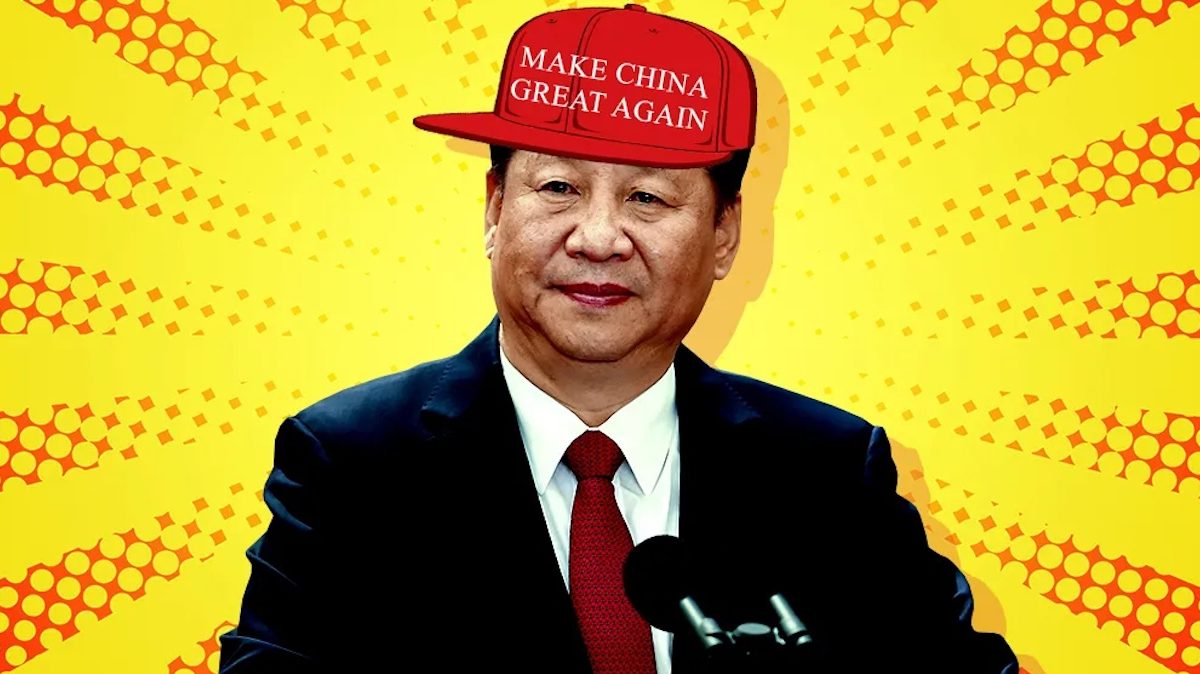
Xi’s most strategic move was his remark that Trump’s Make America Great Again and China’s pursuit of national rejuvenation “can surely be mutually reinforcing.” This directly challenges the Thucydides Trap—the idea that a rising power and an established one inevitably head for war. Xi rejected that premise and offered an alternative frame: two great projects of national renewal need not collide. He called for “a new approach for major countries to get along.”
None of this means rivalry and competition have slowed. In July, the Federal Communications Commission added foreign-made humanoid and industrial robots to its covered list, a move Beijing condemned. Chip export controls remain unchanged. China’s military buildup continues, and Washington remains wary of Beijing’s ambitions in the South China Sea and beyond. The summit’s path to avoid the Thucydides Trap is far from guaranteed.
Yet the shift in tone is real. The two sides have agreed to treat AI risks like a pathogen, a sign of pragmatic cooperation. But they still clash over Taiwan and Iran. The era of “China plus one” may be over, but the era of strategic competition is not. Washington has simply learned that China cannot be wished away from the global economy—and that the cost of trying to do so is too high.