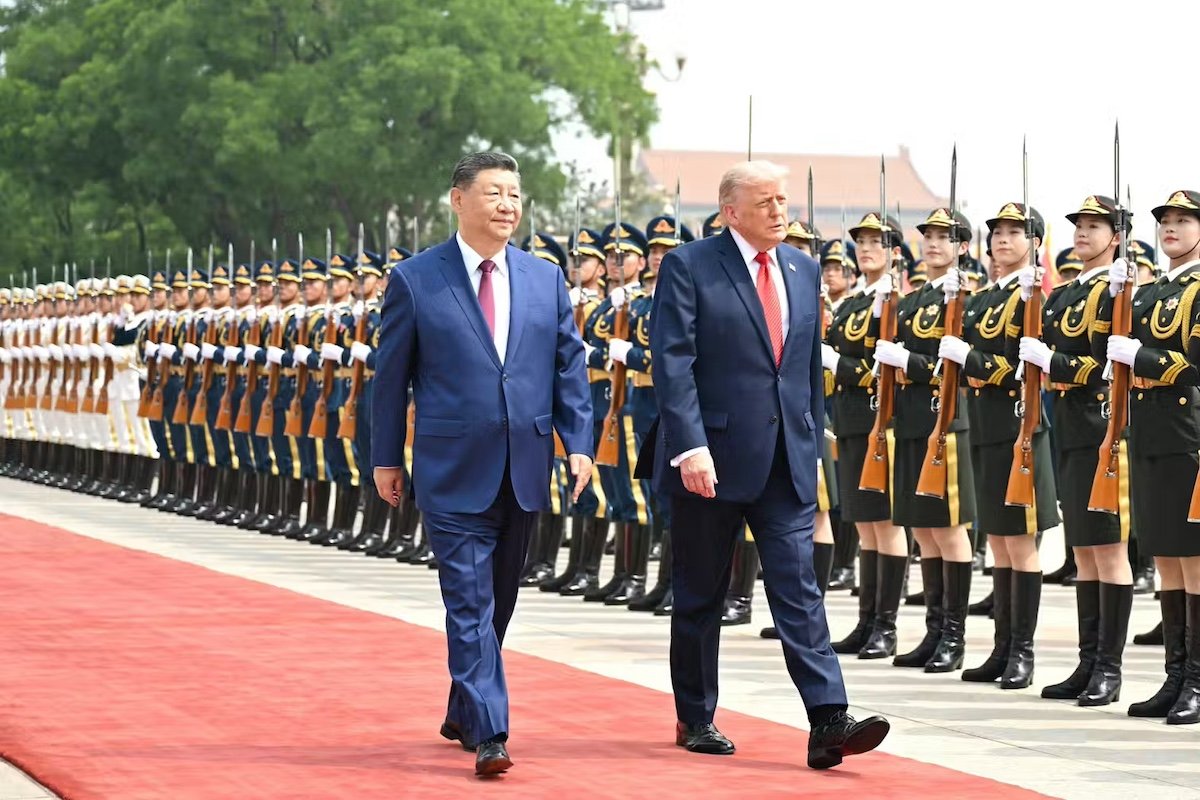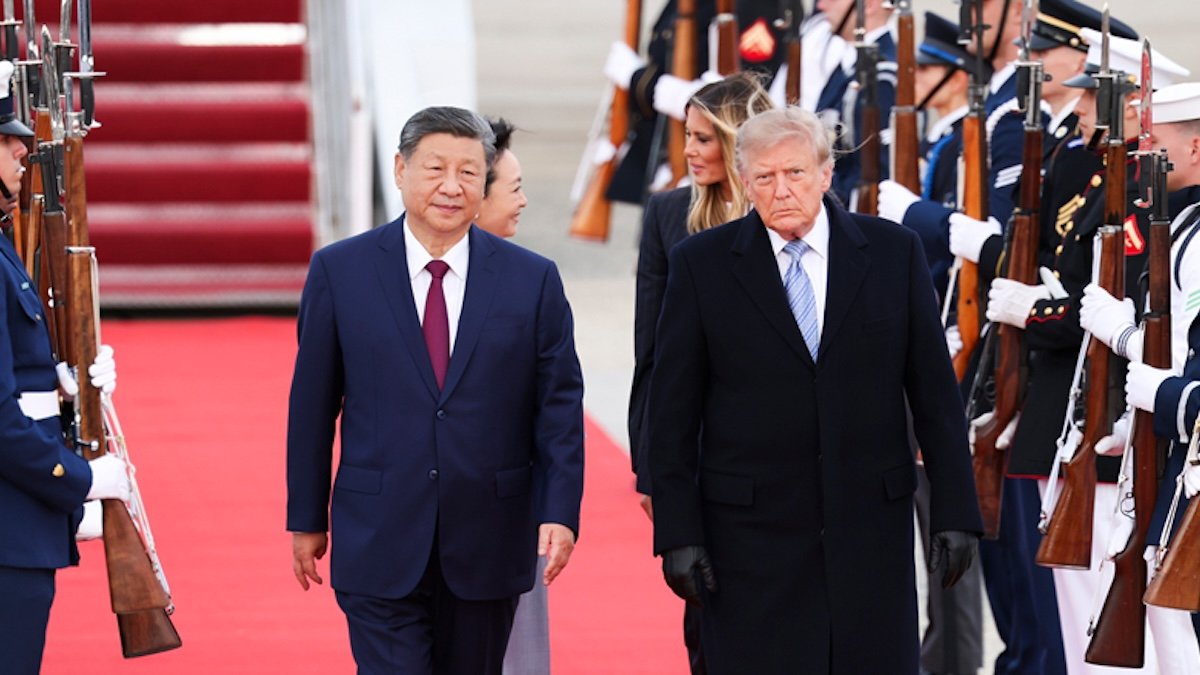
Chinese President Xi Jinping and US President Donald Trump held their first face-to-face meeting since May at the White House on Thursday, producing a narrow agreement on artificial intelligence governance but exposing sharp differences over Taiwan and Iran. No trade deal was announced by Thursday afternoon, US time.
Speaking at a morning welcoming ceremony, Xi pledged to work with Washington on AI safety and governance, a commitment that follows a preliminary dialogue between Chinese Vice Premier He Lifeng and US Treasury Secretary Scott Bessent in New York on Sunday. Bessent said both sides had agreed to set up a hotline to notify each other of AI safety incidents.
“Both China and the US are leading nations in AI. We have both the capability and responsibility to develop and manage AI for good, and ensure that the development of AI is always under human control and serves the well-being of the people,” Xi said.
He added: “China-US cooperation may not solve every problem in the world, but without our cooperation, it would be hard to solve many of the world’s problems.”
Taiwan and Iran: red lines and appeals
On Taiwan, Xi reiterated Beijing’s stance, urging Washington to adhere to the “correct position” of opposing Taiwan independence and handle the issue with prudence, according to China’s state news agency Xinhua. The Trump administration has put a proposed US$14 billion arms package for Taiwan—the largest ever—on hold since the two leaders met in Beijing in May, with Trump describing it as a potential “negotiating chip.”
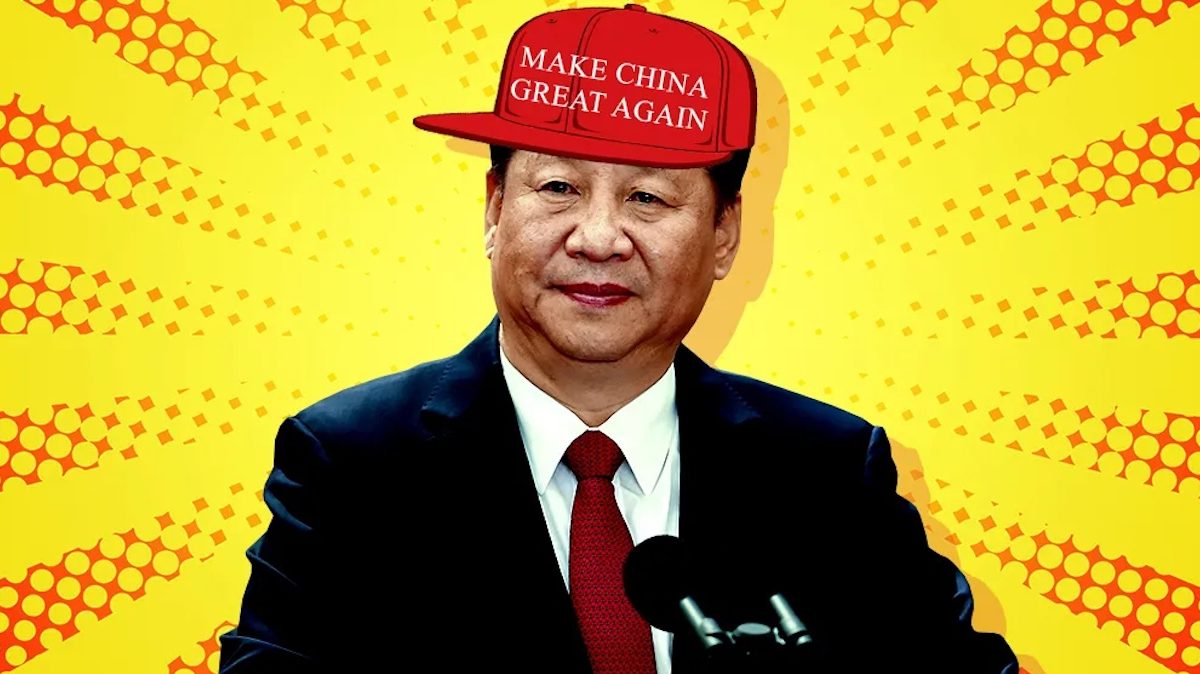
Xi’s speech also carried a symbolic message: “Achieving the great rejuvenation of the Chinese nation and making America great again (MAGA) can go hand in hand.” In Beijing’s political vocabulary, that rejuvenation includes the reunification of Taiwan with the mainland, a prospect Washington views as a military threat that would extend China’s reach beyond the first island chain.
On Iran, Xi expressed hope that the US and Iran would return to dialogue and negotiation as soon as possible, and supported their return to the Islamabad Memorandum of Understanding (MoU) signed on June 17. That agreement extended a ceasefire and reopened the Strait of Hormuz to commercial shipping, but collapsed in July after Iranian strikes on vessels. Beijing has so far resisted US pressure to use its leverage over Tehran to end the nearly seven-month war.
Beyond AI: youth exchanges and military hotlines
Xi also announced an initiative to invite 100,000 young Americans to China for exchanges and study over the next five years—double the target he set in San Francisco in November 2023, which China’s Foreign Ministry said was met in May, two and a half years ahead of schedule. He proposed increasing direct flights, strengthening counter-narcotics and law enforcement cooperation, and maintaining regular military-to-military dialogue with improved crisis communication mechanisms.
The counter-narcotics pledge appeared to address Washington’s long-standing demand that Beijing curb the flow of fentanyl precursors. The two leaders also invoked the wartime alliance, with Trump praising the Flying Tigers, American volunteer pilots who fought Japan for China in 1941-42, and noting that the US Marines adopted the Chinese phrase “gong he” (working together) as “gung ho.” Xi recalled that “Chinese and Americans fought shoulder to shoulder against fascist aggression,” and announced that two giant pandas, Ping Ping and Fu Shuang, would soon move to Zoo Atlanta.
Before the summit, British Prime Minister Andy Burnham had asked Trump to raise the case of Jimmy Lai, Hong Kong’s jailed pro-democracy activist and British citizen. White House aides were already planning to do so, as Trump did in Beijing in May.
Xi stressed that competition between the two powers should be “healthy” and “kept within bounds,” saying it should be “a race of catching up with one another, not a wrestle in which one either wins or loses.” He argued that the Thucydides trap—the idea that a rising power and an established one are destined for war—could be overcome.
The summit produced no breakthrough on trade, leaving the broader relationship in a familiar pattern of cautious engagement amid unresolved tensions. For deeper context on the strategic stakes, see the agenda behind the Trump-Xi meeting and why Trump's Iran policy is a dead end.