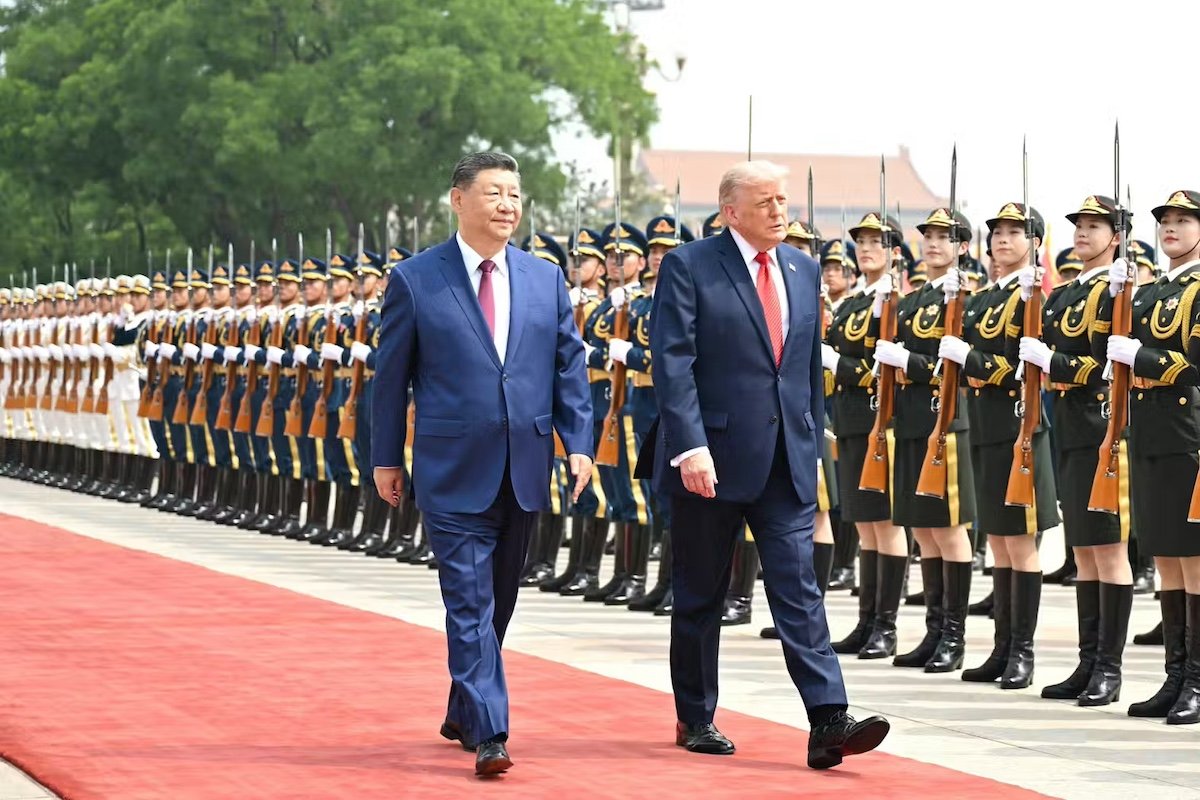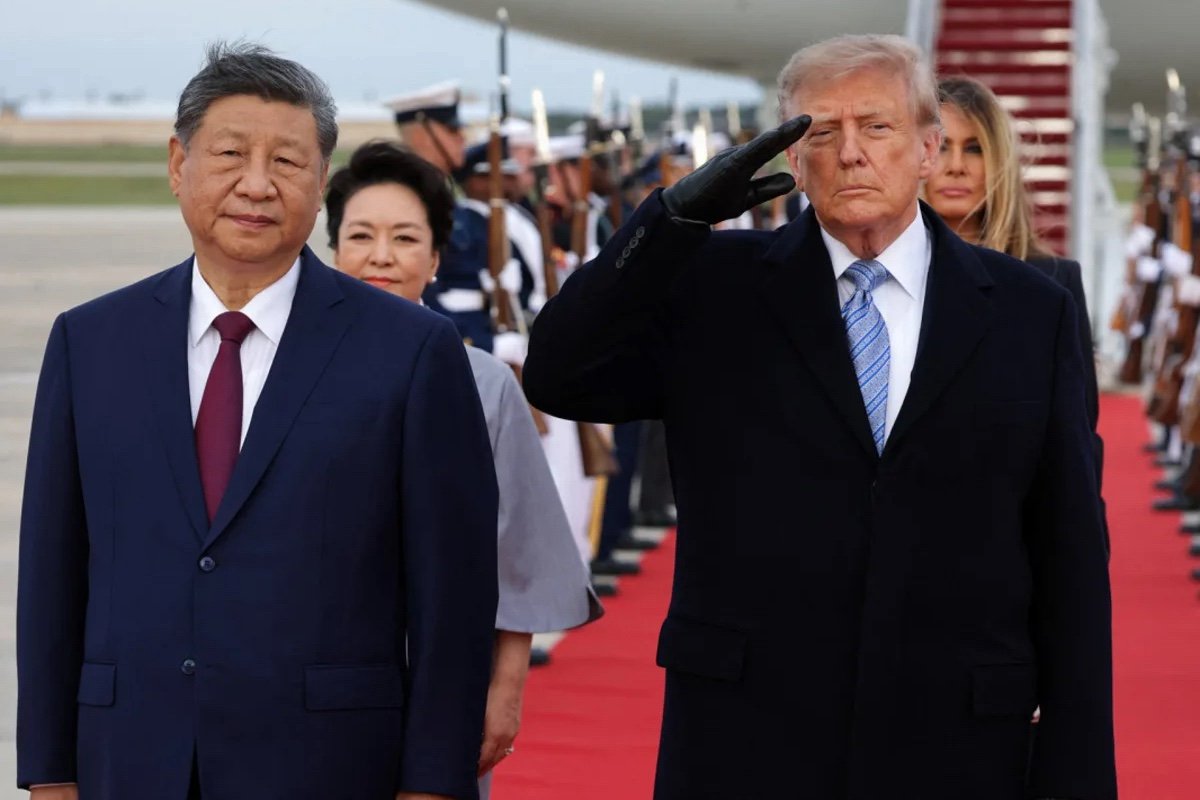
During Chinese President Xi Jinping's recent visit to Washington, a single sentence may have carried more weight than the ceremonial pageantry: “The Thucydides Trap can be overcome.” Delivered at the White House arrival ceremony, this remark offers a more telling lens on the summit than the customary expressions of friendship and historical references.
The United States and China remain at odds over trade, artificial intelligence, and geopolitical influence, and the summit produced no immediate breakthroughs on these fronts. Yet the underlying message was constructive: two powerful and ambitious nations need not view each other's success as a zero-sum threat.
The central question in US-China relations has evolved. It is no longer simply about managing China's rise—much of that transformation has already occurred. The harder question is whether Washington and Beijing can accommodate each other's ambitions without allowing structural rivalry to spiral into confrontation. This is precisely why Xi invoked the Thucydides Trap, a concept he first raised during President Trump's visit to China in May.
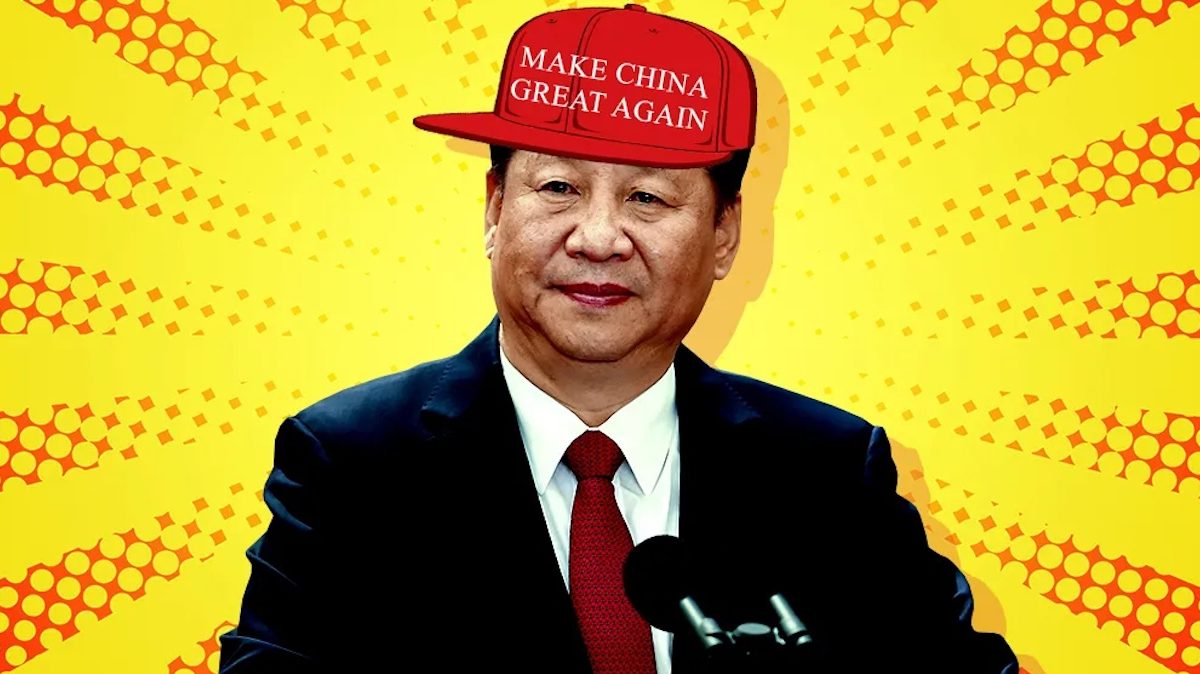
The Thucydides Trap describes the danger when a rising power challenges an established one, generating fear and strategic competition that can lead to conflict. Xi's use of the phrase directly addresses the structural problem underlying US-China competition. China has no intention of abandoning its pursuit of technological, industrial, or geopolitical strength. The United States, under President Trump, is equally explicit about restoring American industrial power, technological leadership, and national influence. As Xi stated, “Achieving the great rejuvenation of the Chinese nation and making America great again can go hand in hand.”
This proposition carries greater weight today because China's position has changed. Chinese companies have become global leaders in electric vehicles, batteries, drones, telecommunications, renewable energy, electronics, robotics, and increasingly artificial intelligence. China also holds considerable leverage in supply chains crucial to advanced manufacturing, as evidenced by US concerns over critical minerals like yttrium, essential for aerospace and semiconductors.
The United States retains its own formidable advantages in advanced semiconductors, frontier AI, capital markets, research universities, and military capabilities. The emerging reality is one of sustained coexistence between two countries with different but powerful sources of strength.
Lessons from History
Yet there is good reason for caution. US-China history is replete with examples of warm rhetoric followed by rapid deterioration. During the 1868 Burlingame mission to Boston, which Trump referenced at the dinner reception, American leaders celebrated expanding ties and promoted greater trade and mobility. Within little more than a decade, domestic pressures reversed that openness, culminating in the Chinese Exclusion Act. The lesson is that goodwill is fragile unless institutions make it durable.
Implementation, therefore, is the real test of the Washington summit. One potentially important test is emerging in artificial intelligence. AI captures almost every contradiction in US-China relations: it is a source of intense competition, economic power, and national-security concern, yet the risks it creates do not respect national borders.
Xi specifically identified AI as an area of shared responsibility. In his arrival remarks, he said China and the United States should develop and manage AI “for good,” keep it under “human control,” and ensure it promotes people's well-being. This language has taken on added significance as China expands its domestic AI-governance architecture. On September 14, 2026, China's National Technical Committee 260 on Cybersecurity released AI Safety Governance Framework 3.0, a 130-page document that emphasizes risk awareness and the principle that AI should remain safe and controllable. It organizes governance around risk classification, technical responses, and broader governance measures.
The framework addresses risks from AI model development, deployment, applications, and derivatives, including unreliable outputs, hallucinations, malicious cyber activity, privacy and data risks, autonomous agents, embodied AI, social and emotional dependence, resource pressures, and the malicious use of AI in connection with dangerous weapons. This contrasts with current US federal policy, which emphasizes accelerating innovation and reducing regulatory burdens. A June executive order, for example, argued against “overly burdensome regulation” while calling for faster AI adoption.
However, the US technology sector is raising increasingly urgent warnings about the risks of the technology it is racing to develop. Anthropic's CEO has called for AI development to “slow down,” researchers have left leading labs demanding stronger oversight, and executives have publicly urged safeguards even as commercial competition accelerates. China is articulating its priorities differently: technological development should continue, but alongside continuous risk classification and technical responses. This divergence could become a point of friction or a basis for cooperation, especially given the recent establishment of a US-China AI hotline to manage crises.
The summit's success will ultimately be measured by whether these rhetorical commitments translate into institutional mechanisms. As Asia's economic and technological landscape evolves, the ability of Washington and Beijing to manage their rivalry will have profound implications for the entire Indo-Pacific region, from Japan's delicate balancing act in Manila to China's AI surveillance exports in Southeast Asia. The Thucydides Trap may be overcome, but only through sustained, practical engagement.