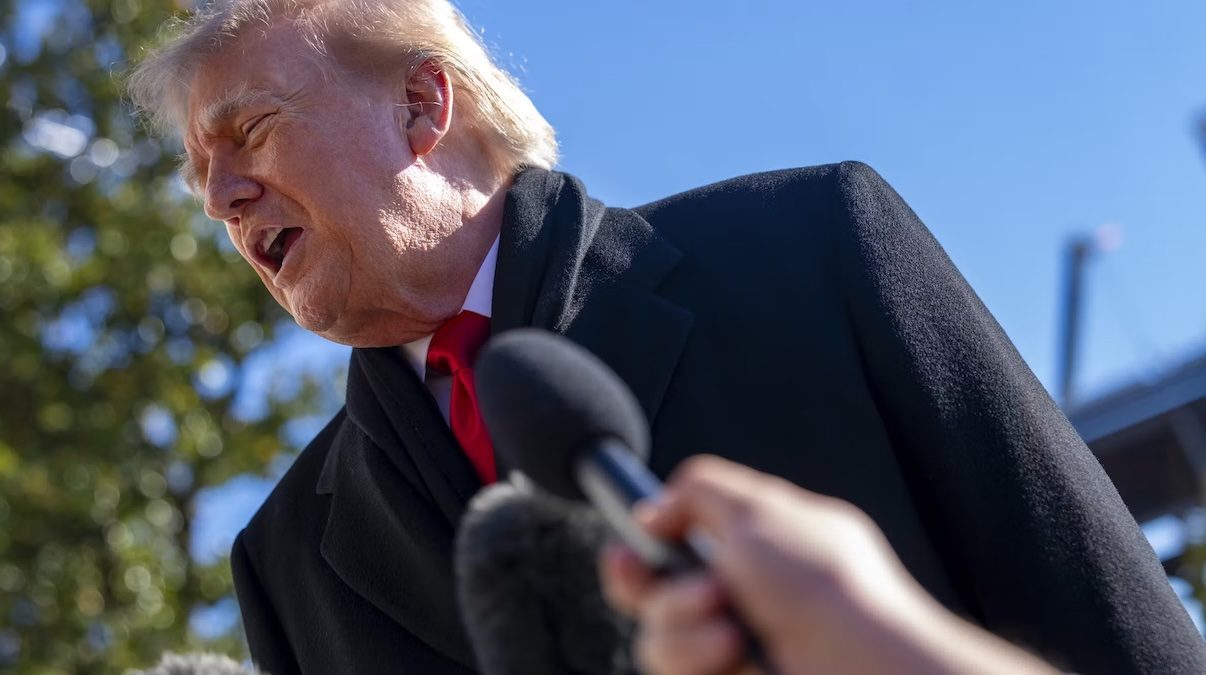
When Donald Trump signed an executive order on September 29 instructing federal agencies to replace the term "artificial intelligence" with "super intelligence," he framed it as a matter of perception: "artificial" makes it sound fake. A week later, he established a "super intelligence force" to coordinate the government's efforts, led by Jay Clayton, the director of national intelligence and a former SEC chair. The force includes FTC chair Andrew Ferguson, Pentagon tech chief Emil Michael, and Scott Kupor, who oversees the federal workforce. It has 120 days to report on AI risks and opportunities.
Is this a serious national strategy or a branding exercise? The label itself tells us little. What matters is whether the force can marshal what actually decides AI leadership: compute, capital, talent, and infrastructure. This is now a race, and the countries and organizations that move fastest and mobilize the most resources will hold a significant advantage.
Coordination or window dressing?
Supporters point to a genuine coordination problem. AI responsibility in Washington is scattered across intelligence, defense, competition policy, procurement, and the civil service—which rarely act in concert. Putting several agencies under one roof, reporting directly to the White House, could cut through that. Clayton has been blunt: "The risk of not being first is high."
America also has a strong hand. According to Stanford's 2026 AI Index, US private investment in AI reached $285.9 billion in 2025, roughly 23 times China's $12.4 billion. America's largest tech firms are on track to spend more than $650 billion on capital investment this year. A body that helps clear bottlenecks the private sector cannot—grid connections, data center permitting, hiring technical talent into government—could add real value. Including the head of the federal workforce is a telling choice: governments have long struggled to recruit the people they need for AI.
Critics see something much thinner. The White House has not disclosed a budget, nor said whether the force will have regulatory powers or merely advise. It arrived shortly after leading firms, including OpenAI, Anthropic, Google, Meta, and Nvidia, had signed a one-page White House accord committing to internal evaluations, external audits, and board reviews. Trump called it "morally binding." But Democrat lawmaker Mark Warner, senior senator from Virginia, was scathing: "The president's response? To rename it and tell the companies developing it to regulate themselves," he said.
Three deeper problems
First, the US does not control the trajectory of AI. The same Stanford report found that the performance gap between the best US and Chinese models has narrowed to 2.7 percentage points, down from double digits in 2023. Beijing will pursue its own strategy whatever Washington calls its task force. As Xi holds the upper hand in broader tech competition, the US cannot dictate the pace.
Second, the actors that matter most are private. The frontier AI labs have enormous commercial and strategic incentives of their own—and the investment figures are overwhelmingly private money. The companies will cooperate where interests align, on energy or export controls, for example. But I would not expect them to commit fully to a government program. A voluntary accord with no enforcement mechanism shows where the leverage lies.
Third, timing. The US midterm elections heavily shifted control of Congress in the Democrats' favor. This could reshape both funding for AI and oversight. Building national AI capability is a multi-year effort, and what is created by executive action can be undone the same way. Trump revoked Joe Biden's AI executive order on his first day back in office.
There is also a tension in the mandate itself. The force is asked both to win a race and to protect the public, yet its leadership is drawn from intelligence, defense, and competition enforcement rather than AI safety. Those goals do not always point the same way, and the announcement says little about how they will be balanced.
Is this better than nothing? Absolutely. Coordination has value, and the force could become a serious mechanism for concentrating resources at a scale commensurate with the stakes. But the test is not the name. It is whether the body secures a substantial budget, gains real authority over infrastructure approval, procurement, and hiring, and survives the political cycle. As Huang's exit exposes cracks in US tech strategy, the need for coherent policy is clear. Yet a name, like super intelligence, is just a slogan. Until we see what resources the force can command, and whether it can execute quickly and sustain that effort, I would put relatively little faith in it changing the trajectory of AI.