President Donald Trump has suffered two significant legal setbacks on his tariff agenda this year—first in February 2026, when the US Supreme Court struck down his sweeping emergency tariffs, and again on May 7, when a federal court invalidated the interim tariffs he had imposed as a stopgap. Yet the president shows no sign of retreat. Instead, he is pursuing a new legal pathway under Section 301 of the US Trade Act of 1971, a tool that could prove more resilient—and more disruptive—for America's trading partners across Asia and the Indo-Pacific.
“So, we always do it a different way,” Trump told reporters after the May 7 ruling. “We get one ruling, and we do it a different way.” That different way now involves two formal investigations: one into alleged “excess industrial capacity” in several countries—a euphemism for state-subsidized overproduction—and another into alleged failures to enforce bans on trade using forced labor. Both probes are expected to pave the way for fresh tariffs later this year, with China and other major economies in the crosshairs.
Why Section 301?
Section 301 grants the president broad authority to retaliate against foreign trade practices deemed discriminatory, unfair, or burdensome to US commerce. Unlike the International Economic Emergency Powers Act (IEEPA) that Trump used for his “Liberation Day” tariffs in April 2025, Section 301 imposes no cap on tariff rates and allows the president to discriminate among targeted countries. Crucially, it generates tariff revenue without violating the Constitution's taxation clause—a key issue in the Supreme Court's February decision.
Trump initially avoided Section 301 because he believed IEEPA offered unlimited tariff authority without procedural hurdles. That calculation proved correct until the Supreme Court intervened. Now, with his preferred tool neutered, Trump is turning to a statute that federal courts have historically treated with deference, giving the president wide discretion in determining the purpose, scope, and remedies of trade actions.
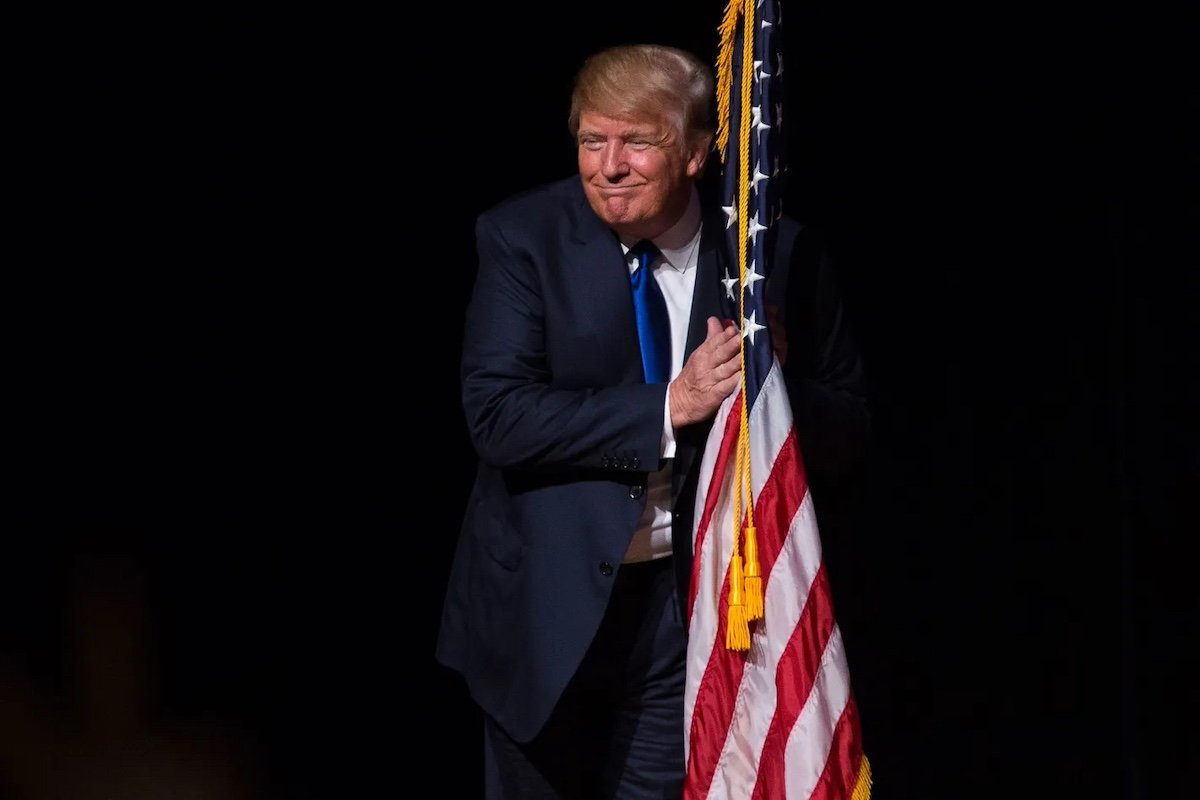
The president has made no secret of his anger at the judiciary. He has publicly excoriated his own Supreme Court appointees, Amy Coney Barrett and Neil Gorsuch, whose votes swung the February decision. Trump called the justices who ruled against him “fools” and “lapdogs,” declaring he was “ashamed” of them. He also warned that the court's decision would push him to “impose tariffs more powerful … rather than less.”
This pivot to Section 301 is what some trade analysts are calling “revenge tariffs”—a deliberate attempt to demonstrate that the courts cannot stop his trade war. The administration's probes are vast in scope. The first targets alleged overproduction in sectors such as steel, aluminum, and semiconductors, which directly implicates China, South Korea, Japan, and other industrial powerhouses. The second probe focuses on forced labor, a charge that has already led to import bans on goods from China's Xinjiang region and could expand to other countries.
Trump has signaled that any tariffs resulting from these investigations will be used as leverage. In a February post on Truth Social, he warned: “Any Country that wants to ‘play games’ with the ridiculous supreme court decision, especially those that have ‘Ripped Off’ the U.S.A. for years, and even decades, will be met with a much higher Tariff, and worse, than that which they just recently agreed to. BUYER BEWARE!!!”
The legal path ahead is uncertain. Challenges to Section 301 tariffs would first go to the Court of International Trade, which already struck down the interim tariffs. Appeals would then go to the US Court of Appeals for the Federal Circuit, and ultimately to the Supreme Court. But given the judiciary's historical deference to presidential trade authority under Section 301, the administration may have found a more durable legal foundation.
For Asian capitals, the implications are stark. The Trump administration's tariff strategy is no longer a temporary emergency measure but a structural shift in US trade policy. As we have noted in our analysis of Trump's tariffs and export controls reshaping US-China economic ties, the president's approach is increasingly disconnected from traditional trade dispute resolution mechanisms. International trade law already provides avenues for addressing forced labor and industrial overcapacity through negotiations and policy changes. Trump, however, appears to view tariffs as an end in themselves—a tool to correct what he calls “unfair trade imbalances” and to reclaim the tariff-setting power the courts have denied him.
Whether this strategy succeeds will depend on the courts, the response of trading partners, and the political fallout at home. But one thing is clear: Trump's tariff obsession is far from over, and Asia's economies will remain at the center of the storm.