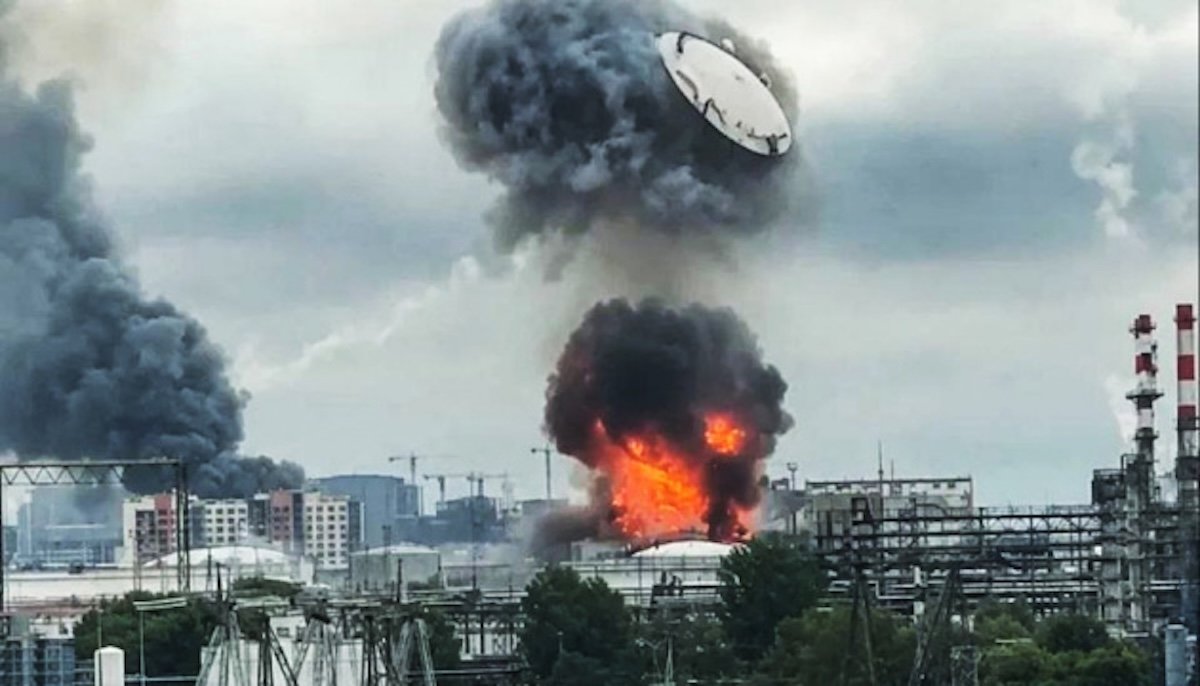
Last week, as Vladimir Putin hosted his flagship economic forum in St. Petersburg, Ukrainian drones struck an oil terminal in the same city, sending plumes of smoke over the event designed to project Russia as a safe investment destination. The attack was a vivid demonstration of Ukraine's growing military capability—and a reminder of why Europe needs Kyiv as much as Kyiv needs Europe.
On June 15, the European Union is expected to grant Ukraine and neighboring Moldova permission to begin formal accession negotiations. Yet the road to membership remains strewn with obstacles, even as the strategic logic of enlargement grows more compelling by the day.
Ukraine as Europe's Defense Laboratory
Viewed through a security lens, Ukraine's value to the EU is undeniable. The country has become the continent's leading laboratory for defense innovation—a place where lessons in drone warfare, missile defense, and rapid production scaling are being learned in real time. As Japanese firms like Terra Drone have discovered, Ukraine offers unmatched expertise in adapting cheap drones and artificial intelligence to modern combat.
This transformation is the product of four years of war, but also of hundreds of billions of euros in EU and member-state funding. The irony is stark: the most successful example of the integrated European defense market called for by Mario Draghi's 2024 competitiveness report exists in a country not yet in the EU.
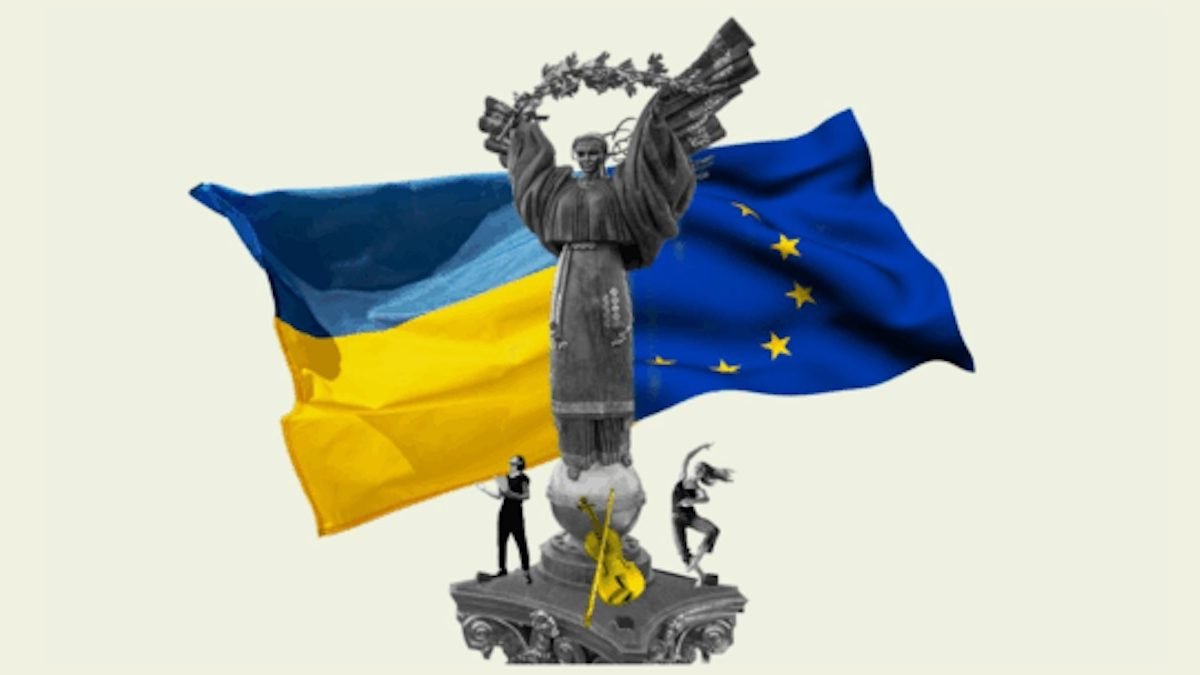
Ukraine's European identity is deeply rooted. During the 2013-2014 Euromaidan protests that ousted President Viktor Yanukovych, the EU flag flew alongside Ukraine's own. The trigger for those protests was Yanukovych's refusal to sign a free-trade agreement with the EU that parliament had already approved. In the 2015 documentary The Great European Disaster Movie, the most passionate voices in favor of the EU came from Ukrainians—a stark contrast to the skepticism expressed in Britain and France.
The Go-Slow Coalition
With Viktor Orban no longer Hungary's prime minister, open opposition to Ukrainian membership has faded. But beneath the surface, a coalition of countries is keen to slow the process. Italy's Giorgia Meloni argues that Balkan candidates—Albania, Bosnia and Herzegovina, Serbia, and North Macedonia—should take precedence. While this may be a diplomatic gambit to favor Italy's close neighbor Albania, it risks delaying Ukraine's entry for years, especially given Serbia's democratic deficits and Russian interference.
More consequential opposition comes from two of Ukraine's largest neighbors: Poland and Hungary. Hungary's new leader, Peter Magyar, has lifted Orban's veto on starting accession talks and unblocked a €90 billion EU loan for Ukraine's war effort. But the status and rights of roughly 100,000 ethnic Hungarians in Ukraine remain a sensitive issue in Budapest.
Poland's objections are more visceral. President Volodymyr Zelenskyy recently sparked outrage in Warsaw by granting posthumous honors to a former leader of the Organization of Ukrainian Nationalists, a group involved in World War II massacres of Poles in what is now western Ukraine. The gesture reopened old wounds, even as Poland has hosted millions of Ukrainian refugees.
Agricultural Protectionism
Beyond historical grievances lies a more prosaic obstacle: agriculture. The EU already absorbs 65% of Ukraine's goods exports, and a 2014 free-trade agreement was deepened in 2022 when Brussels abolished remaining tariffs. But under pressure from farmers in Poland and Hungary, the EU reintroduced tariffs on food imports in June 2025.
Full Ukrainian membership would require abolishing those tariffs again, giving Polish farmers ample reason to demand a long transition period. Russia's imperial ambitions have long been fueled by Ukraine's vast, fertile wheat fields—a resource that now complicates its European integration.
EU enlargement requires unanimous consent from all 27 member states, each of which must ratify the decision through its own parliament or referendum. That gives every country a veto, and the path ahead is likely to be long and contentious. But as Ukraine's drones fly over St. Petersburg, the security argument for embracing Kyiv grows harder to ignore.