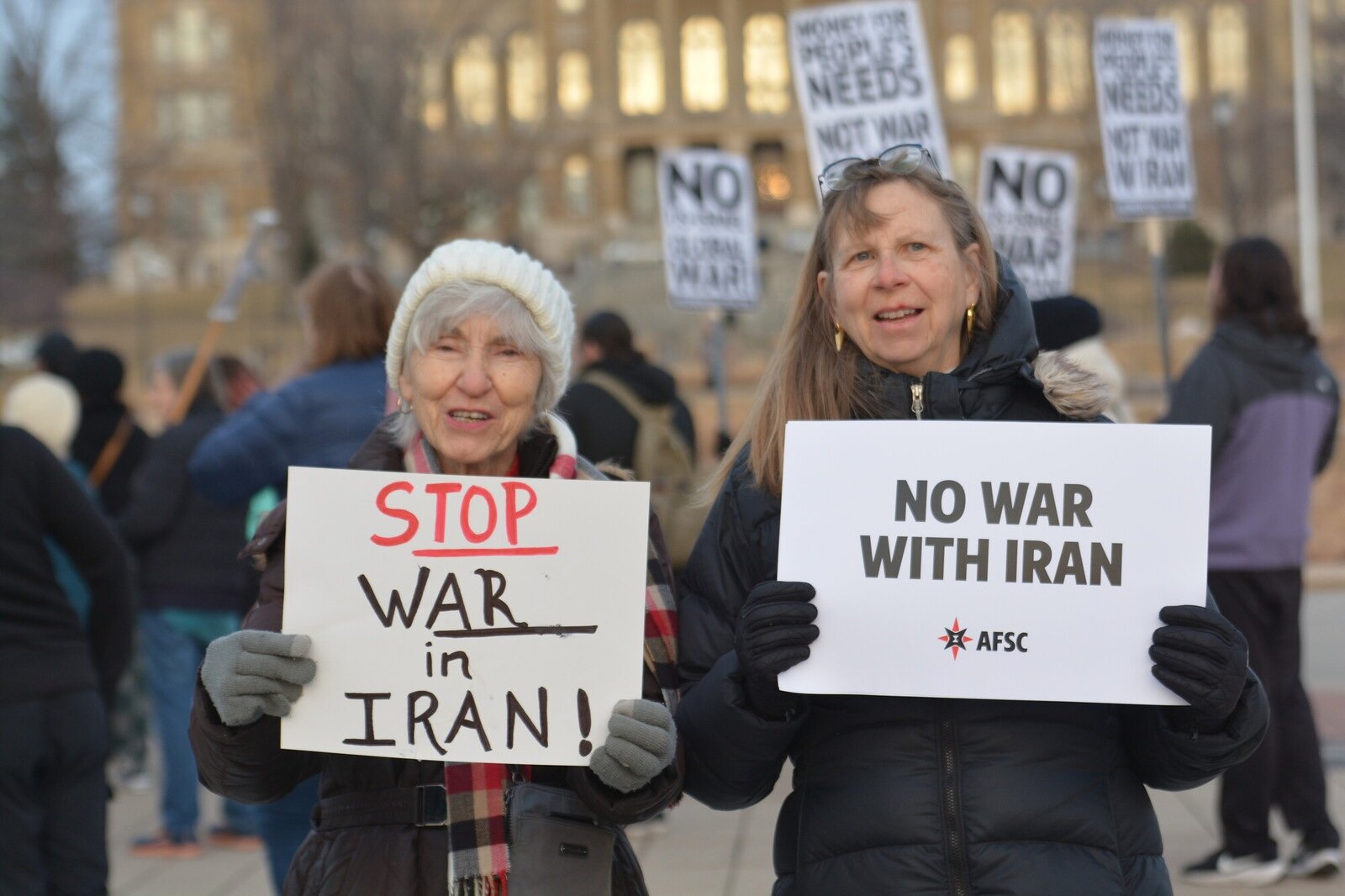
In Tuesday's US midterm elections, the war with Iran emerged as a decisive issue, with nearly three-quarters of voters telling NBC News exit pollsters that the conflict was a significant factor in their ballots. The results have intensified a debate within the Democratic Party about whether to embrace a more forceful anti-war platform ahead of the 2028 presidential race.
According to the exit polling, 74% of voters described the ongoing US-Israeli military campaign against Iran as a "crucial" or "major" factor in their vote. Among those voters, 63% cast their ballots for Democratic candidates. A separate 63% of all voters said the Trump administration was wrong to take military action against Iran, while only 37% supported the decision.
The political damage was acknowledged even within the administration. Vice President JD Vance, in a lengthy social media post on Tuesday, admitted that "the real reason we lost is the war," adding that "the president himself said so last night." President Donald Trump, in an interview with Fox News, conceded that "a part of it was Iran," but he defended the 35-week campaign, insisting that "people understood the importance of what I've done with Iran." He told The Wall Street Journal, "I did the right thing. I would have done it again."
A mandate for change?
Progressives and foreign policy analysts argue that the election results offer Democrats a clear opportunity to reposition themselves as the party of peace. Ben Rhodes, who served as a senior national security adviser under President Barack Obama and supported US interventions in Iraq, Libya, and Syria, said the results were "an absolute rebuke of the war in Iran." He urged Democrats to "truly become the anti-war party."
Geopolitics scholar Van Jackson warned on social media that "if Democrats remain the party of the national security state, they will lose everything in 2028. If they become the anti-war party, they'll consolidate this wave with the presidency."
Matthew Petti, writing on the libertarian site Reason, argued that Democrats now have a chance to exercise Congress's constitutional power over the war, including by withholding military funding. He noted that Representative Ro Khanna (D-California) has called for stopping funding for further actions in the Iran War, drawing a parallel to the efforts that ended the Vietnam War.
However, Petti cautioned that past Democratic victories have not always translated into anti-war policy. He recalled that after the 2006 midterm sweep over Iraq War anger, Democrats struggled to use their congressional majorities to end that conflict.
Funding as leverage
Senator Chris Van Hollen (D-Maryland) is pushing his party to attach explicit restrictions on war spending to the upcoming government funding bill, which expires next month. "Right now, the continuing resolution goes through December 11," Van Hollen told The Lever. "My view is that Democrats should not advance spending to continue to fund this war." He added, "The Vietnam War ended only when Congress defunded it. This is an illegal war, and we need to make sure that taxpayer monies are not used to continue an illegal war."
Margaret DeReus, executive director of the Institute for Middle East Understanding, pleaded on social media: "For the love of all that is good, Democrats, do not squander this. The voters have given you a mandate. Use it. Be the party of working people. Be the anti-war party. Be the anti-corruption party."
Matt Duss, a former aide to Senator Bernie Sanders and now executive vice president at the Center for International Policy, noted that "Trump ran and won as an anti-war candidate in 2024 because Democrats left that lane wide open for him." He added, "Voters have just brutally punished him and the GOP for breaking that promise. Will Democrats finally get it? Americans are tired of war. They want a new foreign policy."
The outcome also resonates beyond US borders. In Asia, where the Iran conflict has disrupted oil supplies and heightened regional tensions, the shift in American politics could signal a change in Washington's posture. As Asia's oil buffer against Hormuz turmoil wears thin, allies and rivals alike will be watching whether the Democrats' anti-war turn translates into a more restrained US foreign policy.
For now, the party faces a critical choice: capitalize on the anti-war sentiment or risk repeating the mistakes of the past. The voters have spoken, and the world is listening.