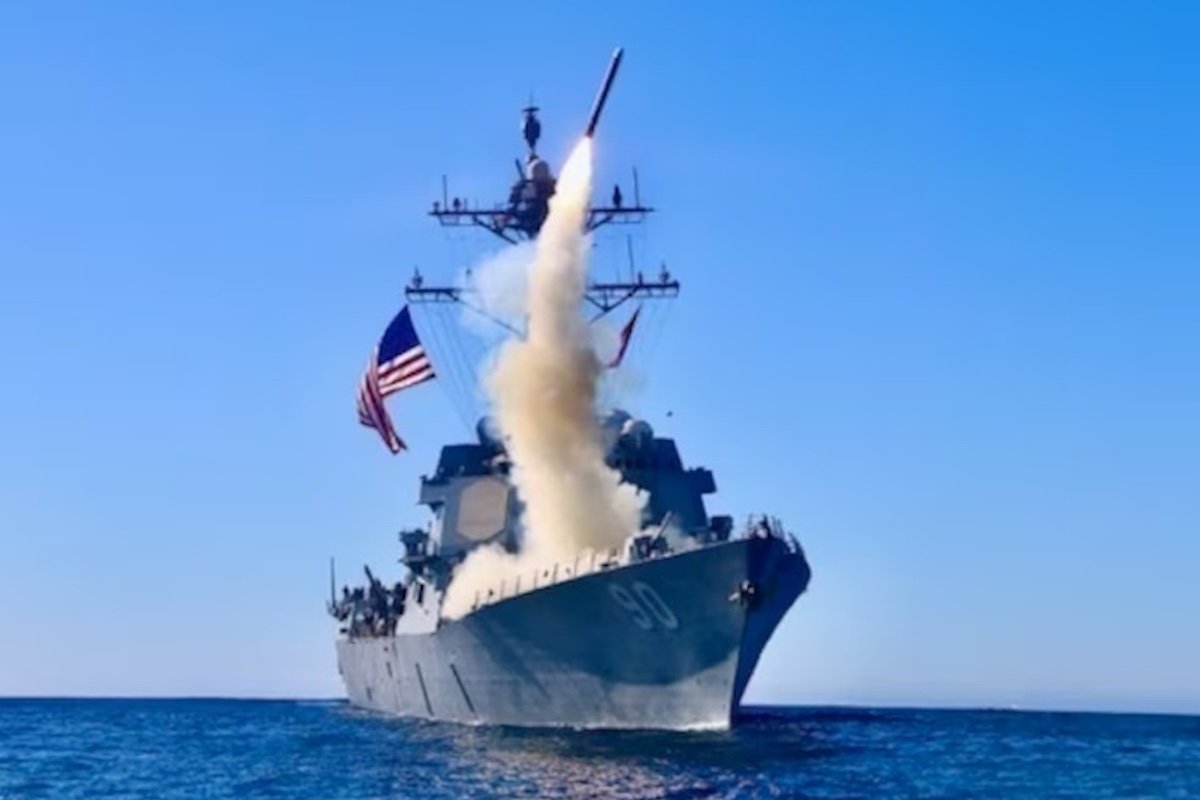
The US Navy is moving forward with a bunker-busting variant of the Tomahawk cruise missile, a weapon designed to penetrate and destroy the kind of hardened underground missile sites that China has spent decades building across the Taiwan Strait. The program, known as the Joint Multiple Effects Warhead System (JMEWS), is slated for low-rate initial production under a sole-source contract with Raytheon, a subsidiary of RTX. The decision reflects lessons from recent conflicts, particularly the Iran war, where strikes on deeply buried facilities proved harder than expected.
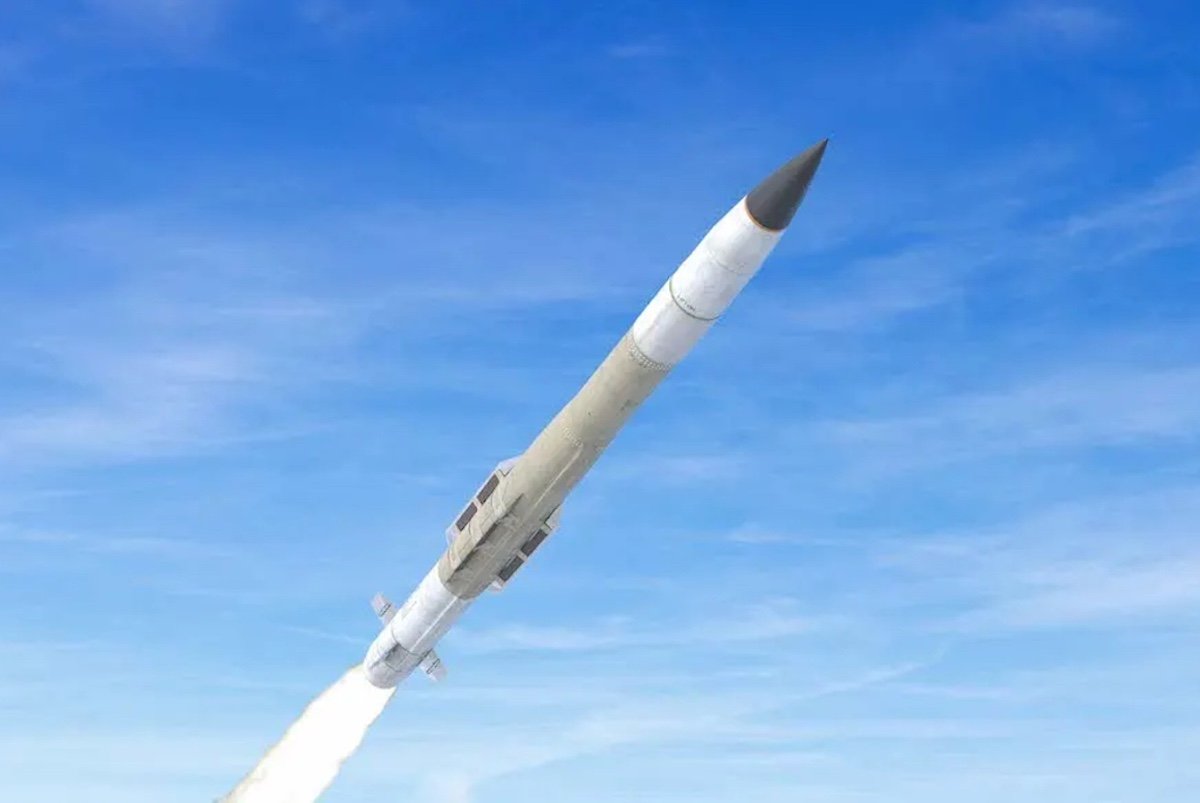
The new Tomahawk Block Vb will carry a two-stage warhead that combines a penetrating nose with a blast-fragmentation charge, allowing it to destroy bunkers, missile silos, and command centers from a standoff distance of roughly 1,600 kilometers. That range keeps US surface ships and submarines outside the reach of many Chinese air defenses, avoiding the need to send manned aircraft into heavily defended airspace. The Navy justified the non-competitive award by citing Raytheon's proprietary data and its role as the missile's sole manufacturer since 1994, arguing that no other contractor could meet deployment timelines without duplicative costs.
While exact figures for the contract were not disclosed, budget documents indicate funding for 35 re-certified missiles with upgrade kits, with an initial operational capability projected for 2027. The work will be managed by the PMA-280 office at Patuxent River, Maryland, with production centered in Tucson, Arizona.
Lessons from Iran and Ukraine
The push for a bunker-busting Tomahawk comes after US and Israeli strikes on Iranian missile facilities during Operation Epic Fury fell short of expectations. Although the initial bombardment crippled much of Iran's ballistic missile infrastructure, Tehran's forces rapidly rebuilt damaged sites, often bulldozing and unearthing sealed bunkers within hours of an attack. Iran preserved an estimated half of its mobile launchers and continued firing 15 to 30 ballistic missiles daily, despite enduring more than 20,000 strikes. Deep mountain fortifications, spare parts stockpiles, and deceptive decoys allowed Iran to sustain its deterrent.
The experience highlighted a broader problem: the US inventory of standoff munitions is not unlimited. Dwindling stocks may have forced reliance on shorter-range weapons like the Joint Direct Attack Munition (JDAM), which require aircraft to fly closer to targets and risk entering enemy air-defense envelopes. That is a dangerous proposition against a peer adversary like China.
The Russia-Ukraine war offers a sobering preview of how subsonic cruise missiles fare against modern air defenses. In a July 2026 Russian attack, Ukrainian forces intercepted 31 of 33 Kh-101 air-launched cruise missiles and all six Kalibr ship-launched missiles, though they failed to stop any ballistic missiles due to a shortage of Patriot interceptors. The Kh-101 and Kalibr are functionally similar to the Tomahawk, and their poor performance suggests that even a well-armed cruise missile may struggle against a dense, integrated air-defense network.
China's underground missile network
China's People's Liberation Army Rocket Force (PLARF) relies heavily on subterranean complexes to protect its most valuable strike assets. According to a July 2023 report by Decker Eveleth for the James Martin Center for Nonproliferation Studies, Base 61, headquartered in Huangshan, Anhui, disperses its conventional missile brigades across Fujian, Jiangxi, and Zhejiang. These units operate from mountain tunnels excavated by Base 68 engineering teams, which can be activated upon strategic warning.
Inside these hardened facilities, crews service and mate warheads on transporter-erector-launchers (TELs) for hypersonic DF-17s, DF-16s, and DF-15s before rolling out to pre-surveyed launch pads. The tunnels are linked to subterranean command posts via dedicated fiber-optic networks, enabling rapid “shoot-and-scoot” salvos. As Eveleth notes, simply destroying TELs before they launch may no longer be sufficient; the underground facilities themselves must be targeted.
But attacking those facilities is no easy task. China's air-defense network is among the densest in the world, making it perilous for aircraft to drop traditional bunker-busters like the BLU-109 or GBU-28. A standoff weapon like the JMEWS-armed Tomahawk could theoretically strike these targets from a safe distance. Yet the missile's effectiveness against a peer adversary remains an open question.
The Tomahawk has proven devastating against adversaries with obsolete or disjointed air defenses—Iraq, Afghanistan, and Iran—but China is a different challenge. Subsonic cruise missiles are vulnerable to modern surface-to-air missiles and fighter interceptors. Moreover, the quality of mission planning matters as much as the weapon itself. A poorly planned strike could waste scarce munitions on decoys or miss critical targets.
There are also logistical and escalation concerns. The US would need to launch a large number of Tomahawks to saturate Chinese defenses, but stockpiles are finite. And any strike on Chinese territory, even on military targets, risks a broader conflict. As the US Navy invests in this capability, it must weigh whether the bunker-busting Tomahawk is a decisive tool or just another piece in an increasingly complex strategic puzzle.
For now, the JMEWS program signals that Washington is taking China's underground missile network seriously. But as the Iran and Ukraine experiences show, defeating deeply buried and well-protected targets requires more than a new warhead—it demands a comprehensive strategy that accounts for enemy adaptation, logistics, and the limits of standoff firepower.