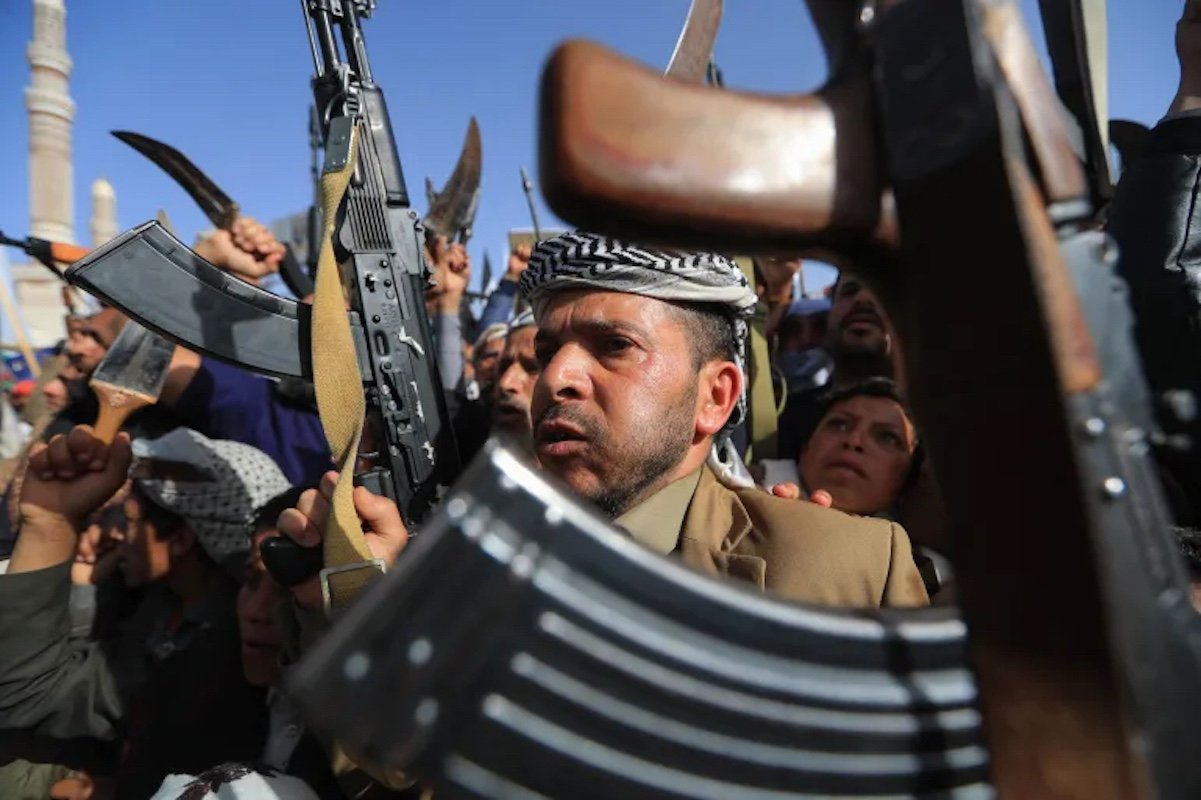
The recent escalation in Yemen's civil war, marked by Saudi Arabia's deployment of Turkish and Pakistani military support against the Houthi rebels, has brought into sharp focus a broader trend: the growing influence of non-state alliances in shaping global affairs. The Houthis, who have governed much of northern Yemen as a de facto authority since 2004, have not only survived a decade of Saudi-led offensives and US, British, and Israeli strikes but have also forged a network of partnerships that extend far beyond their Iranian patron.
According to a September statement by a US military spokesperson for Africa Command, the cooperation between the Houthis and the Somali Islamist group Al-Shabaab is a "highly concerning, escalatory threat to regional stability." This alliance, which has been publicly evident since at least 2024, is particularly striking given the ideological chasm between the Zaydi Shiite Houthis and the fiercely anti-Shiite Al-Shabaab. Yet, the two groups have found common ground in their opposition to shared enemies, with the Houthis supplying weapons and technical training to Al-Shabaab in exchange for access to piracy smuggling routes along the Somali coast.
Similar ties have emerged with the Islamic State in Somalia (ISS), which has received Houthi weapons and drones while helping monitor ships in the Gulf of Aden. The Houthis, Al-Shabaab, and ISS have also coordinated with Somali pirates to transport goods and target vessels in the Red Sea. A 2025 article in the Carnegie Endowment for International Peace noted that "During the Gaza conflict, Ansar Allah persuaded Al-Shabaab, ISS, and Somali pirates to attack vessels and block their passage into the Red Sea in solidarity with the Palestinians."
A web of convenience
These alliances are largely transactional and temporary, as highlighted by the Jamestown Foundation's analysis of the Houthis' pause in fighting with Al Qaeda in the Arabian Peninsula (AQAP) since 2022. The Houthis gain funds and smuggling routes, while AQAP affiliates obtain weapons and manufacturing capabilities. This pragmatic approach extends to the Houthis' long-standing relationship with Hezbollah, which, like the Houthis, is backed by Iran.
State support for non-state groups is nothing new. From British backing of the Arab Revolt in World War I to US and Soviet proxy warfare during the Cold War, great powers have long used local armed groups to advance their interests. The Cold War era, in particular, saw superpowers finance and arm militant movements from the Nicaraguan Contras to the FARC in Colombia, often turning a blind eye to their involvement in the drug trade.
Smaller states have also used non-state groups as a means to strike at more powerful adversaries. Libya's support for the Irish Republican Army in the 1970s and 1980s is a classic example. However, the partial decline in state support after the Cold War forced many militant groups to become self-reliant, driving them into closer contact with organized crime. This "crime-terror nexus" has built a global black market of smuggling routes, safe houses, arms dealers, financiers, and money launderers.
The Houthis, for instance, have turned to drug smuggling to fund their operations, according to Yemeni authorities and the Organized Crime and Corruption Reporting Project. Somali pirates have become more militarized due to their cooperation with the Houthis. The global illicit economy generated around $6 trillion in 2025, according to the International Coalition Against Illicit Economies, giving criminal and militant networks growing reach across international trade and finance.
Governments and businesses are increasingly forced to contend with these groups operating within the formal economy. In 2023, Gulf-based traders were sanctioned for brokering charcoal exports from Al-Shabaab-controlled territory. As the global order grows more unstable due to ongoing wars, cooperation among non-state groups makes it harder for governments to control them and for the private sector to avoid them.
Africa has experienced this phenomenon most severely. Since the 2023 outbreak of Sudan's civil war, an estimated 150 groups have been involved in the conflict, many with ties to regional and international networks. The Houthi Red Sea gains have raised risks for African coastal states, as the alliances between militant groups and pirates threaten maritime security and regional stability.
The implications for the Indo-Pacific are significant. As the US and China compete for influence in the region, the rise of non-state alliances adds a new layer of complexity. The US and China compete for Gulf AI dominance as war reshapes alliances, but the more immediate challenge may come from these non-state networks that operate across borders and beyond the control of any single state.
The renewed civil war in Yemen risks igniting a wider regional conflict, but it also highlights a broader trend: the erosion of state monopoly on violence and the rise of non-state actors as key players in global security. As these alliances continue to evolve, they will likely reshape the global order in ways that states are only beginning to understand.