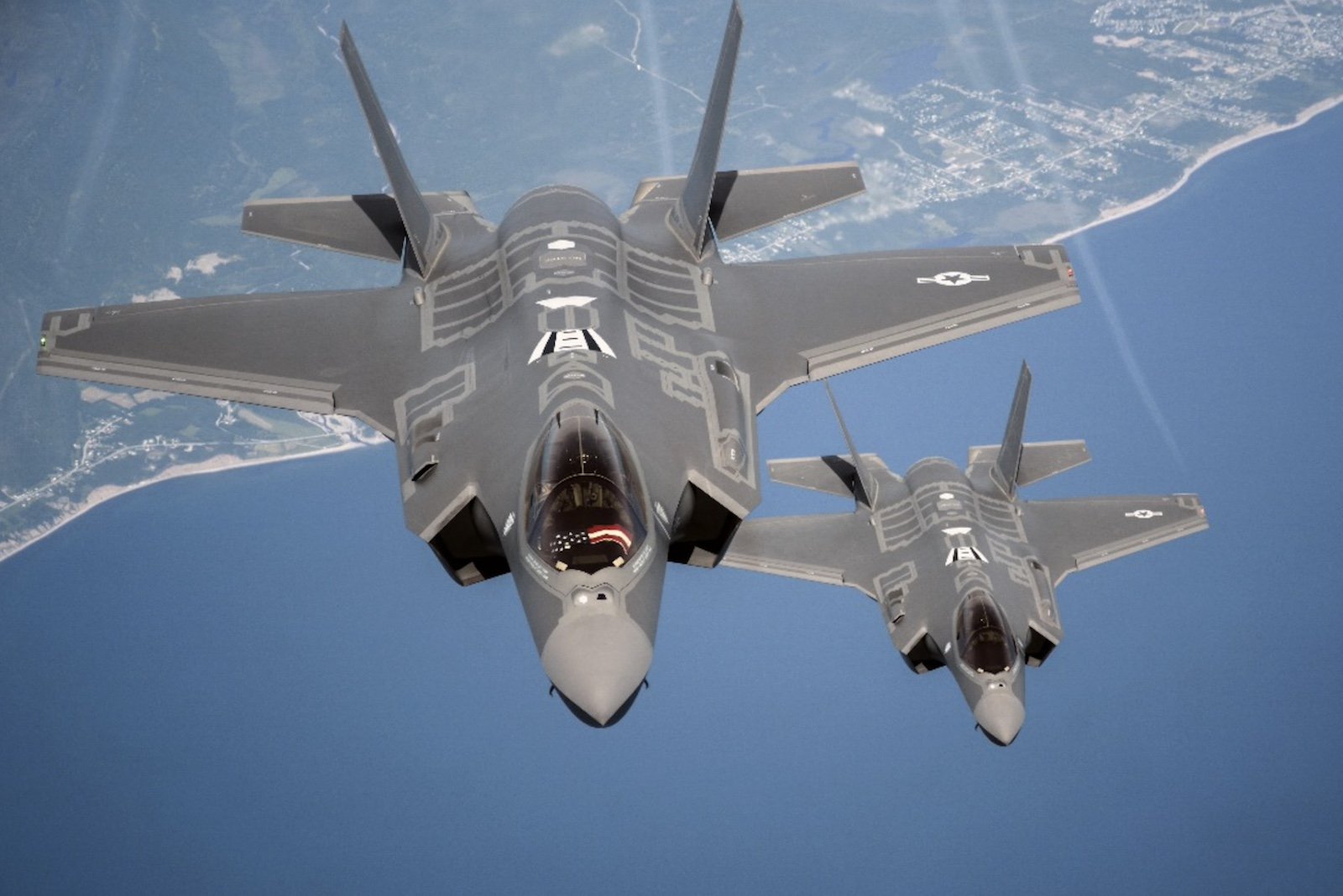
The proposed transfer of 48 Lockheed Martin F-35 Lightning II jets to Saudi Arabia, valued at up to US$24.3 billion, has put Washington in a delicate position. The deal, which received formal Congressional notification from the State Department, is intended to strengthen Riyadh's defenses against Iranian drone strikes and Houthi attacks from Yemen. But it also forces US policymakers to reconcile regional deterrence with Israel's long-held air superiority and mounting worries about Chinese espionage.
The sale follows a November 2025 US-Saudi strategic defense pact that cleared the way for direct procurement of fifth-generation fighters. The package includes 49 Pratt & Whitney F135 engines, precision navigation gear, cryptographic devices, and extensive logistics and weapons support. The Trump administration argues the sale will improve interoperability without upsetting the regional balance of power, yet many in Congress are unconvinced.
China's shadow over the deal
Lawmakers have pointed to Saudi Arabia's deepening defense and commercial ties with Beijing as a serious risk. They fear that sensitive stealth technology could be exposed to Chinese intelligence through shared maintenance facilities, integrated production lines, or even via Pakistani engineers rotating through Saudi bases. This echoes earlier disputes that stalled similar arms sales to the United Arab Emirates.
Defense Security Asia noted in November 2025 that China could access F-35 data through such channels, given the close military cooperation between Riyadh and Beijing, which includes ballistic missiles and drones. The risk is not hypothetical: China has a track record of acquiring foreign military technology through espionage and reverse engineering.
The concern is not limited to technology leakage. Some analysts argue that the F-35's heavy reliance on forward bases and aerial refueling makes it vulnerable in a prolonged conflict. John Ferrari and Dillon Prochniki wrote in an April 2026 War on the Rocks article that while the F-35 performed well in short, pre-planned strikes against Iran, its low mission-capable rates and high cost—around US$80 million per aircraft—make it difficult to sustain under sustained missile attacks. They advocate for a shift toward cheaper, attritable uncrewed systems.
Israel's qualitative military edge
The sale also tests the US statutory commitment to preserve Israel's qualitative military edge, as Israel is currently the only F-35 operator in the region. Reuters reported in November 2025 that the aircraft destined for Saudi Arabia will lack the advanced features of Israeli units. Israel has special authorization to modify its F-35s, including integrating its own weapons and radar-jamming systems. The US is also unlikely to sell Riyadh advanced munitions like the AIM-260 Joint Advanced Tactical Missile, which would likely be reserved for Israel.
Moreover, the US may equip Saudi F-35s with an inferior software suite to keep them qualitatively behind Israel's fleet. This approach aims to maintain Israel's edge while still providing Riyadh with a credible deterrent.
Operational realities and regional trust
Even with fifth-generation fighters, the threat environment remains challenging. In March 2026, a US F-35 was damaged by Iranian anti-aircraft fire, forcing an emergency landing. The Houthis have also claimed shootdowns of Saudi F-15s, highlighting the dangers of operating in contested airspace. Air Vice Marshal James Beck of the Royal Air Force stated in October 2025 that fifth-generation stealth is now the baseline for controlling the skies against basic threats.
Beyond military utility, the sale is partly political. Authors like Vali Nasr and Marc Lynch have argued that Gulf monarchies have lost confidence in the US security umbrella, especially after Iranian strikes exposed the limits of US primacy. For Saudi Arabia, acquiring F-35s may be as much about signaling strategic autonomy as about actual combat capability.
The deal now faces a Congressional review period, during which lawmakers can block or modify it. The outcome will signal not only the future of US-Saudi relations but also how Washington balances its commitments to Israel and its concerns about China's growing influence in the Middle East. As the region's security landscape shifts, the F-35 sale is a test of whether the US can maintain its role as the guarantor of stability without compromising its technological edge.