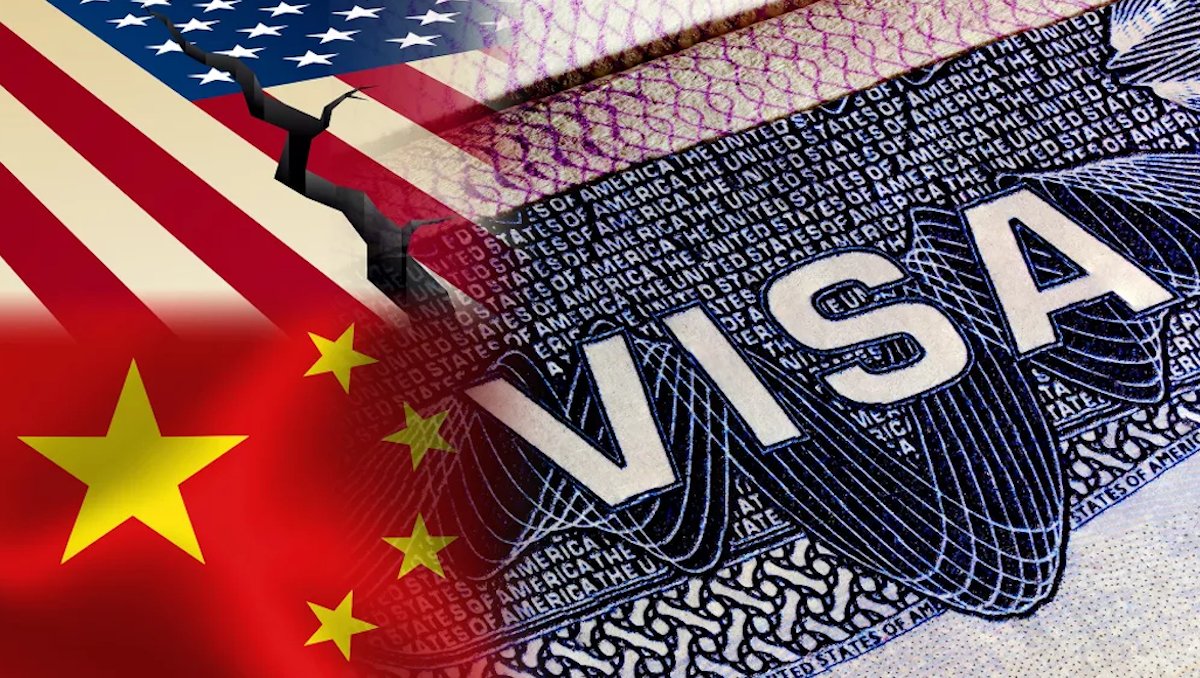
The latest warning from Washington that China could face visa restrictions over deportation cooperation signals a troubling trend: migration policy is being weaponized in the service of geopolitical competition. While US officials frame the issue as a matter of compliance—urging Beijing to accept nationals ordered removed—the use of visa pressure reveals a more strategic calculus.
Once migration becomes leverage between major powers, it rarely produces better coordination. Instead, such approaches introduce additional friction, making cooperation more difficult at a time when bilateral trust is already under strain. The danger is that a human issue is being securitized, with migrants' rights subordinated to state interests.
Visas as Leverage
The US warning over deportation cooperation shows how quickly migration can become a diplomatic pressure point. Under Section 243(d) of the Immigration and Nationality Act, Washington has the option of tightening visas against countries it considers unwilling to take back their nationals. But the existence of a legal tool does not answer the deeper question: does using migration enforcement as geopolitical pressure make the system safer, or does it deepen the logic of confrontation?
International migration institutions and human rights bodies have long argued that migrants' rights should be protected by law, not used as instruments of state pressure. The Office of the UN High Commissioner for Human Rights has stressed that migrants' rights are protected under existing legal frameworks and that rights are not opposed to security; rather, they reinforce the rule of law when properly applied. That principle matters here because visa threats and sanctions blur the line between lawful immigration management and political punishment.
Migration Inside Rivalry
This is more than a technical immigration dispute. The issue falls within a broader US-China relationship shaped by mistrust, tariffs, export controls, and a growing strategic split. In that climate, even ordinary consular or deportation questions can be recast as tests of national resolve. Once that happens, migration stops being a policy area and becomes another theater of pressure, where each side signals toughness instead of solving practical problems.
The antiwar argument is straightforward: security language often expands the space for confrontation while shrinking the space for compromise. Scholars of migration securitization have shown that when states frame mobility mainly as a security threat, the result can be militarized borders, reduced rights protection, and policy spillover far beyond the original issue. In this case, visa sanctions may satisfy a domestic political audience, but they risk turning consular coordination into a proxy battlefield in a great-power dispute.
There is a cost to this approach. If Washington wants Beijing's cooperation on repatriations, it needs predictable consular channels and clear documentation procedures—not public ultimatums. When Washington turns to public pressure, it risks closing off those pathways. Beijing, like most governments, tends to push back when cooperation is sought through public pressure. That dynamic can slow down repatriation efforts and complicate identity verification. Over time, this approach risks feeding a cycle in which using migration as leverage only makes resolution harder to achieve.
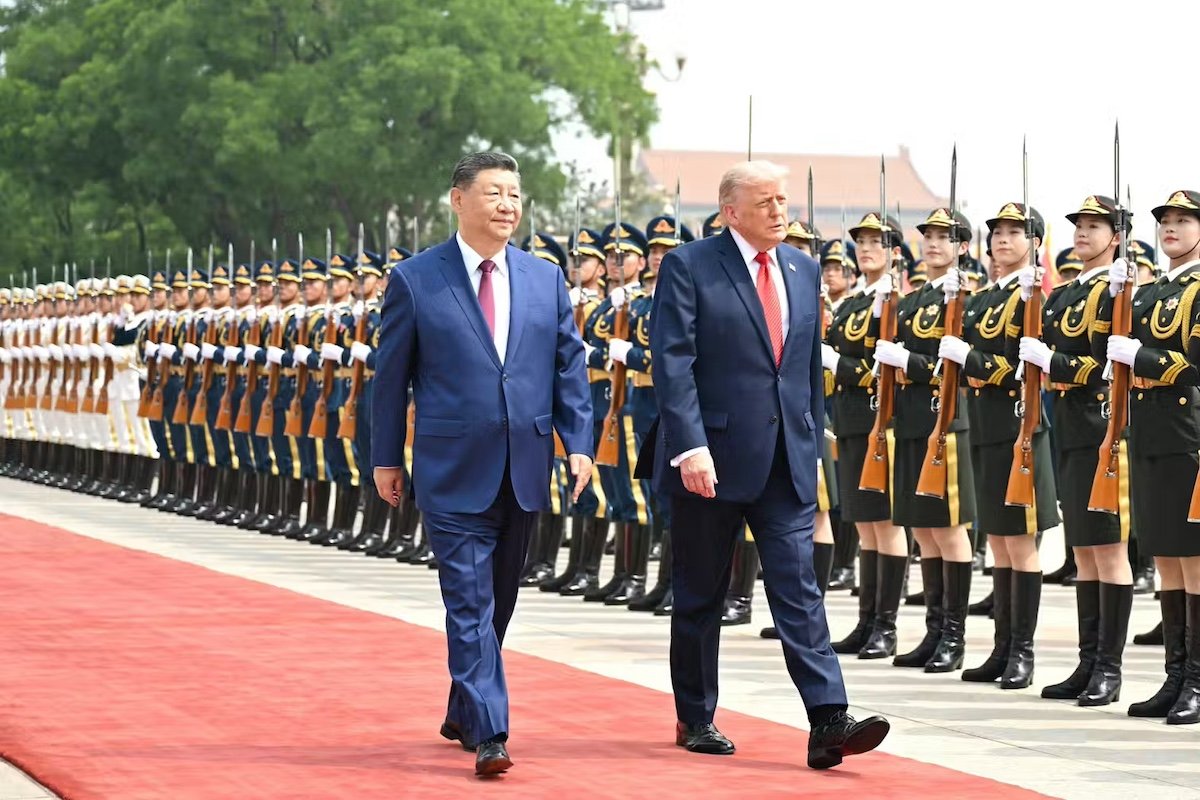
As the Trump-Xi summit demonstrated, US strategic drift often complicates bilateral cooperation. A similar pattern is emerging here.
A Better Approach
A more practical course would separate migration management from strategic rivalry. The US and China can compete on trade and security while still cooperating on deportations, identity checks, and travel documents. That is not a concession but a matter of keeping routine functions insulated from politics. A rights-based approach does not dilute enforcement; it helps sustain it without escalating tensions.
US credibility on migration depends on consistent enforcement, not measures that draw foreign nationals into a broader dispute. China, for its part, has room to ease tensions by approaching repatriations more consistently and without knock-on effects for ordinary travelers. Otherwise, a technical problem risks turning into yet another arena for rivalry.
If Washington wants credibility on migration, it needs to enforce immigration rules without turning foreign nationals into bargaining chips. Visa restrictions should be used sparingly, and only where they are clearly tied to law and to a proportionate policy goal. Beijing has its own reason to avoid escalation. If it does not cooperate on lawful repatriation procedures, the fallout could widen beyond deportations and affect ordinary travelers, students, and businesspeople.
That is not an abstract risk: Reuters reported this week that the Trump administration is prepared to consider visa sanctions on China if repatriation cooperation does not improve. There is also a practical lesson here. Immigration enforcement depends on documentation, identity verification, and regular consular contact, not just pressure from Washington. When those channels weaken, removals become slower and more politicized, and the issue stops looking technical altogether.
Good Migration Governance
In practical terms, people in Asia are likely to feel this in their day-to-day plans. A visa dispute between Washington and Beijing can throw off study plans, holiday trips, or business schedules that depend on smooth cross-border travel. Once migration is cast as a measure of political strength, it becomes easier for other states in the region to treat it as a security issue too, and harder to keep space for cooperation that puts people's rights at the center.
A more sustainable course would ring-fence migration from strategic rivalry. Washington should reserve visa restrictions for clearly defined legal violations and avoid using foreign nationals as bargaining chips. Beijing should engage more consistently on repatriations and documentation, not to concede to US pressure, but to keep migration governance out of the geopolitical fray. The alternative is a world where every visa application becomes a test of loyalty, and every migrant a pawn in a game neither side can win.