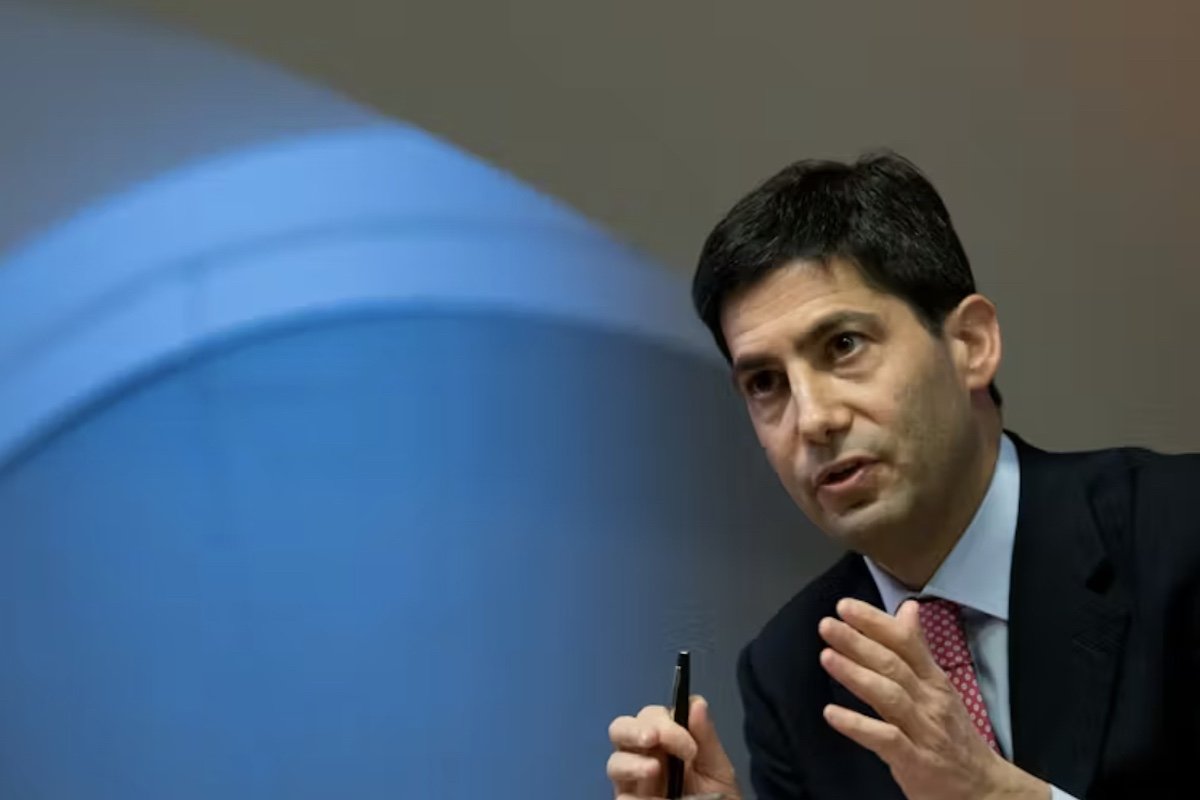
President Donald Trump's selection of Kevin Warsh to lead the Federal Reserve has sparked intense debate over monetary policy direction. While markets speculate whether Warsh remains an inflation hawk, a deeper examination of his philosophy reveals a potential transformation not in interest rates, but in how the world's most influential central bank communicates with the public.
The 'Family Fight' Model
Drawing from a 2023 interview and his public record, Warsh favors a significant departure from recent Federal Reserve practice. He champions what he terms a "family fight" model of policymaking. This approach encourages vigorous, unrecorded debate behind closed doors, followed by a unified public front once a decision is reached.
Warsh's perspective is shaped by advice from former Fed Chair Paul Volcker, who emphasized that a central banker's first task is to get interest rates "about right," acknowledging the inherent uncertainty in policy. Volcker's second, and in his view more crucial, lesson was to "make sure you look like you know what you are doing." For Warsh, this translates to projecting confidence and unity, especially during crises, to maintain institutional credibility.
He has expressed skepticism about the modern Fed's expansive transparency. In the 2023 interview, he argued that publishing policymakers' individual projections—the "dot plot"—can lead to "a troubling convergence of views," stifling genuine internal disagreement. He believes that when officials know their words will be permanently recorded and scrutinized, they become more cautious, hedging their statements rather than speaking plainly.
A Departure from Decades of Transparency
This philosophy places Warsh at odds with the Federal Reserve's trajectory over the past thirty years. Under Alan Greenspan, the Fed began publicly announcing its interest rate decisions in 1994, a major break from earlier opaque practices. Ben Bernanke accelerated this shift post-2008 financial crisis, introducing quarterly press conferences, forward guidance, and the publication of economic projections.
His successors, Janet Yellen and current Chair Jerome Powell, have largely maintained and even expanded this framework. Powell holds a press conference after every policy meeting and has attempted to replace obscure "Fed speak" with clearer language. The result is a central bank that explains not only its decisions but also its economic rationale in unprecedented detail.
Warsh questions the value of this openness. He contends that extensive public communication can constrain a central banker's "ability to change his mind," yet "a central bank that can't change its mind isn't credible." For him, credibility stems from adaptability and decisive action, not from consistent messaging or detailed forward guidance.
Implications for Global and Asian Markets
The stakes of this potential shift are global. Modern financial markets react powerfully to central bank signals. Investors price assets based on expectations of future policy, not just on actual rate changes. The Fed's current transparency—through forward guidance and projections—aims to reduce market uncertainty by helping participants anticipate its moves.
A move toward less explicit signaling under Warsh would not inherently make policy tighter or looser, but it would likely make it less predictable. Market reactions could become more volatile and sensitive to incoming economic data, as investors would have fewer clues about the Fed's internal deliberations and future intentions.
This has direct consequences for Asia's export-oriented and trade-dependent economies. Nations like Japan, South Korea, Vietnam, and China are deeply integrated into global financial flows. Less predictable U.S. monetary policy could increase volatility in capital movements, currency exchange rates, and borrowing costs across the region. Business investment, hiring decisions, and government fiscal planning all depend on stable expectations about future interest rates and dollar strength.
The uncertainty comes at a delicate time, as Trump's proposed 15% tariff plan already threatens to disrupt Asia's intricate supply chains. Furthermore, geopolitical tensions, such as those highlighted by the Hormuz blockade raising stakes ahead of a potential Trump-Xi summit, compound the economic risks. A less communicative Fed could amplify these shocks, leaving Asian policymakers with a more challenging external environment.
In essence, Warsh's approach represents a trade-off. He appears willing to sacrifice some degree of market predictability for greater policymaking flexibility and internal debate. The success of such a model would depend heavily on the Fed's ability to maintain its inflation-fighting credibility through actions alone, without the scaffolding of detailed public explanation. For Asian central banks and finance ministries, which closely monitor and often align with Fed policy, this would necessitate a more agile and potentially reactive stance, adding another layer of complexity to managing their own economies.