In George Orwell's 1984, the greatest danger to an authoritarian state is not an invading army but the possibility that citizens might begin to think independently. Control of information becomes control of reality: books are rewritten, histories are erased, and dissenting voices are silenced simply for offering an alternative version of events.
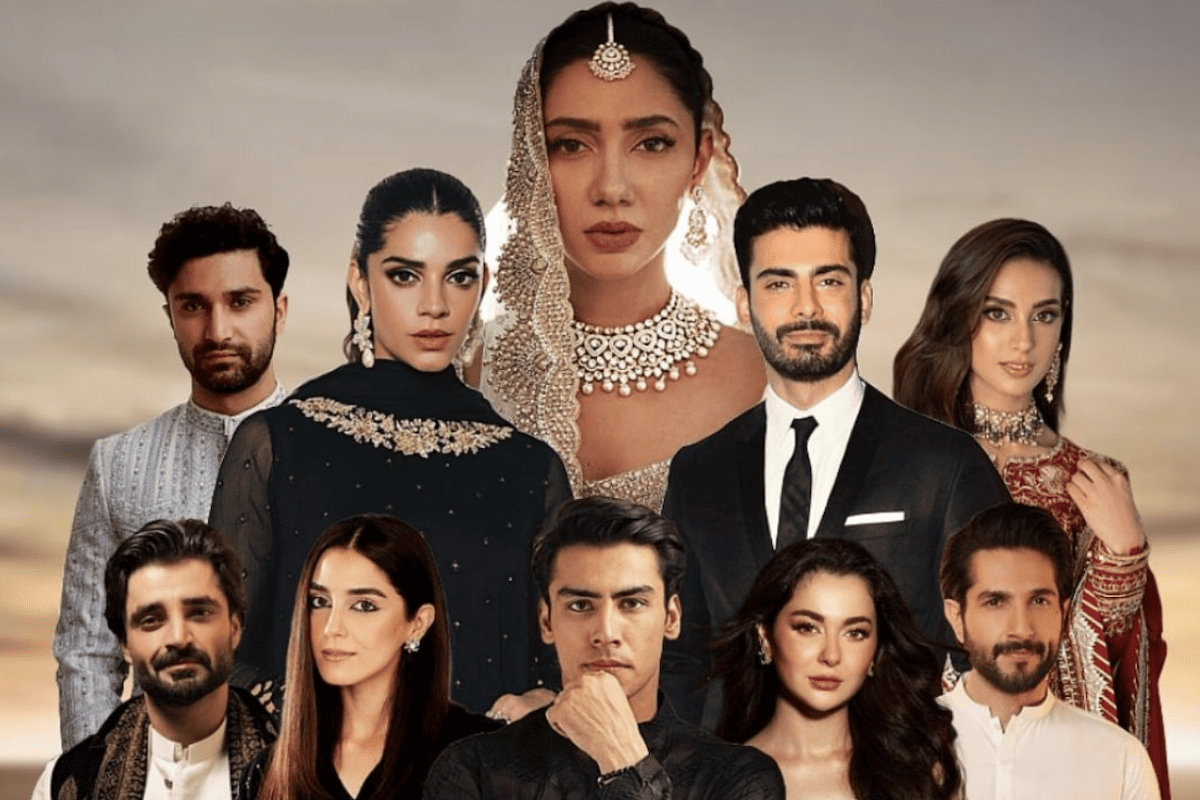
That fictional warning feels increasingly relevant in South Asia, where even a television drama can be framed as a national security issue. This week, the All Indian Cine Workers Association appealed to Prime Minister Narendra Modi to prevent Netflix from streaming Pakistan's first original series, Jo Bachay Hain Sang Samait Lo, in India. The show, adapted from Farhat Ishtiaq's bestselling Urdu novel, follows six interconnected love stories across three generations and features some of Pakistan's most prominent actors, including Fawad Khan, Mahira Khan, Hania Aamir, and Sanam Saeed. It premieres internationally on December 4, 2026.
The association's demand goes beyond a single production. It has called for a permanent law prohibiting Pakistani entertainment content, artists, and productions from Indian television, cinema, and streaming platforms. This reflects a familiar approach in which cultural exchange is not seen as an opportunity for mutual understanding but as something to be restricted whenever bilateral relations deteriorate.
When entertainment becomes the enemy
In May 2025, India's Ministry of Information and Broadcasting issued an advisory asking OTT platforms to discontinue Pakistani-origin films, dramas, and songs. The move followed the Pahalgam terrorist attack of April 22, 2025, after which India accused Pakistan of involvement—a charge Islamabad denied. The subsequent military confrontation further damaged already fragile cultural ties, and Pakistani artists faced renewed restrictions as entertainment became entangled in the wider political dispute.
Governments have legitimate responsibilities to protect their citizens, but those responsibilities should not automatically turn every artist, filmmaker, or musician from a neighboring country into a security threat. What is so threatening about an Urdu-language drama about relationships, family, and human emotions?
There was a time when Pakistani dramas crossed the Indian border without diplomatic permission. Humsafar, starring Fawad Khan and Mahira Khan, found an audience in India after its 2014 broadcast. Zindagi Gulzar Hai and other Pakistani productions also attracted viewers who connected with their characters and emotional depth. These audiences did not necessarily agree on politics or history; they simply recognized something human in the stories.
That is perhaps the most uncomfortable aspect of cultural exchange for those who prefer hostility to remain permanent. A drama can introduce audiences to people they have been encouraged to view only through the language of rivalry. A familiar expression, a shared language, or a compelling character can reveal similarities that political rhetoric obscures. Culture does not resolve territorial disputes or erase historical disagreements, but it can create spaces where societies recognize one another beyond official narratives.
This is why cultural exchange matters most between countries with difficult political relationships. Modi's government has increasingly operated in an environment where national identity, security, and cultural belonging are closely intertwined. The treatment of Pakistani artists illustrates how quickly the language of national security can extend into the cultural sphere. A permanent legal prohibition would institutionalize hostility, turning a political disagreement into a long-term barrier between ordinary people, artists, and audiences.
It would also send a conflicted message about India's confidence in its own cultural industry. A country with one of the world's largest film industries should have little reason to fear that its audiences might watch a Pakistani drama. If a production is compelling, audiences can judge it on its merits; if not, they will change the channel. The irony is striking given the global ambitions of Indian entertainment. Bollywood has benefited enormously from cinema's ability to cross linguistic and geographical boundaries, yet when Pakistani storytelling seeks similar recognition, sections of the Indian film industry demand that the doors be closed.
For Pakistan, Jo Bachay Hain Sang Samait Lo marks a new stage in the international visibility of its entertainment industry. The Netflix collaboration allows a Pakistani creative team to introduce Urdu-language storytelling to a global audience, showcasing the country's literary and artistic potential. The demand to block it says less about the show's content and more about the political climate in India, where cultural exchange is increasingly viewed through a lens of suspicion. As Orwell warned, the greatest threat to any system is not an external enemy but the possibility that people might begin to think differently—and a love story, it seems, can be a dangerous thing.