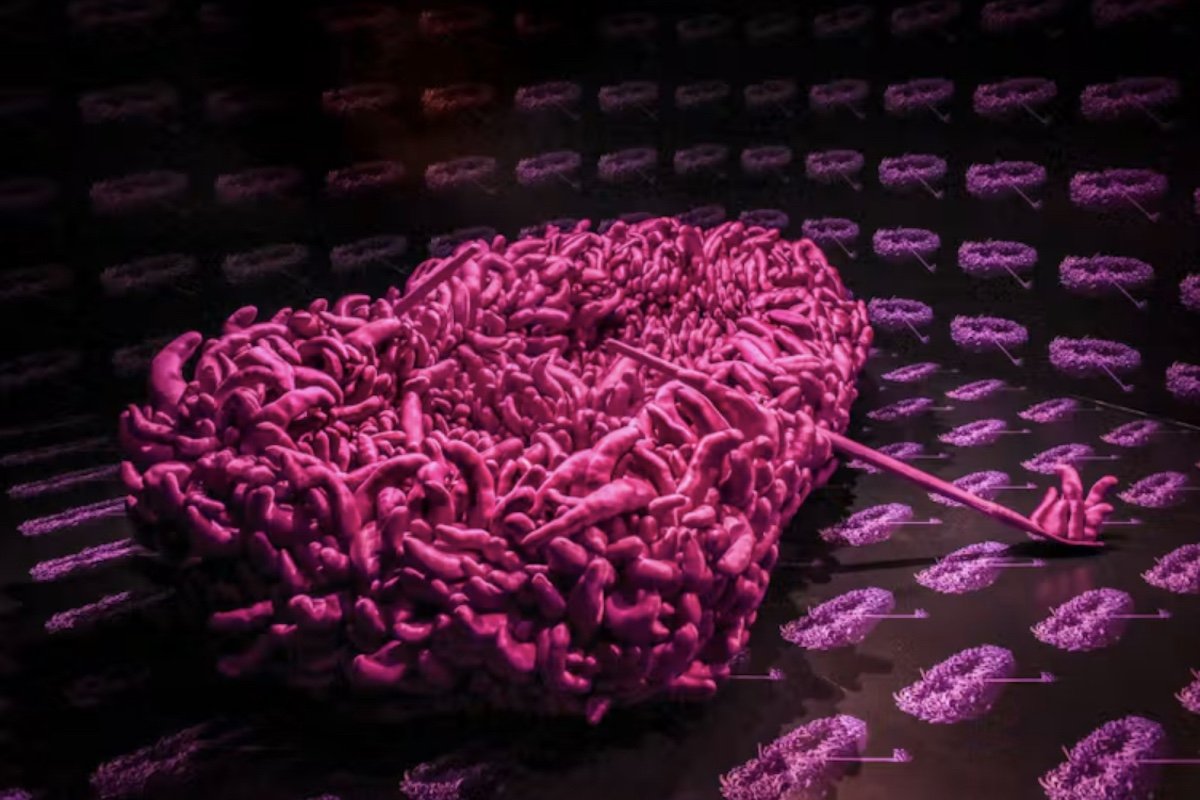
Yayoi Kusama, the Japanese artist who died in August 2026 at 97, left behind a legacy that is as provocative as it is expansive. Her installations—massive, immersive, and unapologetically bold—defied easy categorization, from the phallic protrusions of her Accumulation series to the infinite reflections of her Mirror Rooms. But beyond the spectacle, Kusama's work was a sustained challenge to the Western, male-dominated art establishment, and a rethinking of how mental health and femininity are perceived in creative practice.
Kusama's breakthrough came in 1962 when she sent two canvases to Amsterdam's Stedelijk Museum, a move that shifted her focus from painting to avant-garde sculpture. That year, she created Accumulation No. 1, the first in a series that would define her career. The work—an armchair upholstered with sewn, phallic-shaped protrusions—was a radical departure from the abstract expressionism that then dominated New York, where Kusama had settled. It also thrust her into the pop art scene, leading to the fantastical Infinity Mirror Rooms that would later make her a global icon.
The Stedelijk Museum is currently hosting a major retrospective of Kusama's work, on view through January 17, 2027, which includes Accumulation No. 1 alongside other pieces from the series. Yet even as her art gained recognition, critics often reduced her repetitive forms to symptoms of obsessive-compulsive disorder, a narrative that overshadowed her intentionality. As an art historian who has studied Kusama extensively, I argue that her use of repetition was a calculated strategy to interrogate gender politics in the art world.
Phallic Focus and Feminist Critique
When Kusama arrived in New York in the late 1950s, the art scene was dominated by male abstract expressionists, and women were often relegated to roles as wives or assistants. Painter Grace Hartigan, for instance, had to adopt the pseudonym “George” to gain recognition. By the early 1960s, however, change was brewing. Venezuelan sculptor Marisol Escobar's 1962 exhibition at the Stable Gallery integrated self-portraits into her sculptures, challenging gender conformity.
Kusama's Accumulation No. 1 emerged in this context. She procured furniture and egg cartons, and even a wooden rowboat for a related piece, Aggregation: One Thousand Boats Show. But her most significant choice was to focus on sewing—a craft rooted in her female Japanese education. She ordered a sewing machine and began creating phallic forms from fabric, filling them with cotton and painting them white. These protrusions were then applied to an armchair, transforming a domestic object into a surreal, unsettling commentary.
By using phalluses—a symbol of patriarchal authority—Kusama embraced femininity in a subversive way. The phallic forms, made through a traditionally feminine craft, colonized the furniture, turning it into a vessel of complex meaning. This was not mere provocation; it was a deliberate exploration of gender dynamics, with the phallus as a central motif.
Neurosis or Intention?
Critics have long interpreted the labor-intensive process of creating these phalluses as evidence of obsessive-compulsive neurosis. But this assumption overlooks Kusama's meticulous planning. In a 2008 interview, filmmaker Heather Lenz spoke with Helen Yrissary, a friend who helped sew the protrusions on the armchair. Yrissary noted that while five assistants crafted the phalluses, only Kusama herself secured them to the chair. This suggests that obsession was a calculated aesthetic and conceptual choice, not a compulsive action.
Kusama was aware of obsessive-compulsive disorder and its anxieties. Drawing on Sigmund Freud's psychoanalytic theories, she explained in her autobiography that she developed the phallic image while exploring kyōfu—fear or the uncanny—in the Accumulation series. According to Freud, the uncanny arises from a child's first awareness of anatomical differences between sexes, leading to what he called “penis envy.” Kusama's work may have satirized this concept, and even suggested a vanquishing of male authority.
In a 1966 self-portrait, Kusama flaunted a phallic protrusion near her crotch, a gesture that could imply she had her own penis, was bisexual, or defied the category of “female.” Such redefinitions of female sexuality inspired contemporaries like Louise Bourgeois, who admired Kusama's work and later created phallic sculptures such as Fillette (1968) as commentary on psychological complexes and gender.
Despite the significance of Accumulation No. 1 and Accumulation No. 2, The New York Times initially gave them only a brief mention. Three months later, sculptor Claes Oldenburg's work received more attention, a disparity that underscores the gender biases Kusama faced. Yet her influence persisted, and her legacy now extends beyond the art world, touching on broader conversations about mental health and creativity.
Kusama's art remains popular, and its resistance to categorization is part of its power. As Japan continues to grapple with its own cultural identity, as seen in debates over what it means to be Japanese, Kusama's work offers a lens into how individual expression can transcend national and gendered boundaries. Her phallic sculptures and mirror rooms are not just spectacles; they are deliberate, thought-provoking challenges to the status quo.