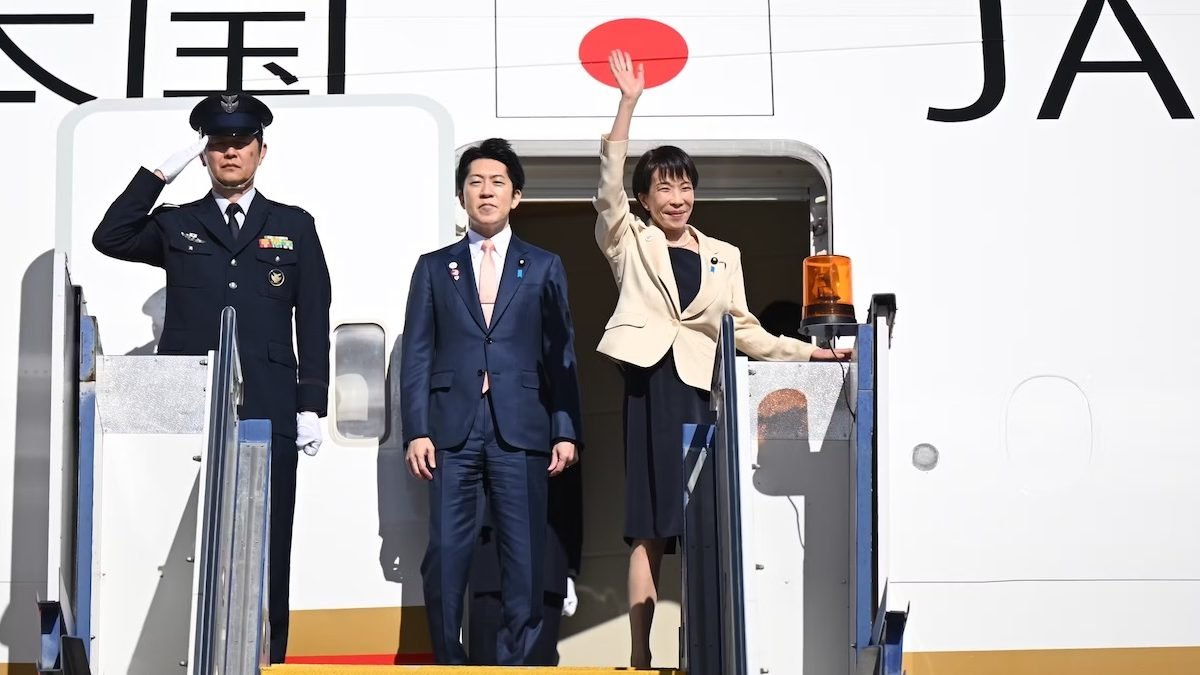
When Sanae Takaichi became Japan's first female prime minister in October, she did not just break a political ceiling—she also sparked a cultural phenomenon. Known as Sanakatsu, or Sana-mania, her supporters have turned her into a pop icon, with her image appearing on cookie packages and her handbag choices going viral. But Takaichi is no feminist standard-bearer. She has opposed allowing married couples to keep separate surnames and has resisted calls to let women inherit the imperial throne.
Her political identity is built on relentless work. In a social media post that resonated widely, she described surviving on minimal sleep while reading cabinet papers, ironing handkerchiefs, and sewing loose buttons. This image of a woman managing both state affairs and domestic chores has struck a chord, particularly among younger voters and women.
What Takaichi's appeal says about gender in Japan
Analysts have offered various explanations for Takaichi's popularity. Some argue that her supporters prioritize economic policies over gender equality. Others suggest that after decades of male leadership, voters simply wanted to see a woman at the top. But as an anthropologist who has studied Japanese women for over a decade, I believe these explanations miss a deeper truth.
In my research, I found that many Japanese women express support for gender equality in principle, yet their daily actions reveal a more complex reality. In a project on household waste, I observed that women often took on the bulk of cooking, cleaning, and sorting rubbish, even when they worked demanding jobs. Government surveys confirm this: men spend an average of 3.5 hours daily on household tasks, while women spend more than seven hours.
One woman told me, "I believe in gender equality. I want to work full-time and I do not want to repeat what my mother did and spend all day at home cooking. But I also want to provide nutritious meals to my family. So I rely on ready-made side dishes. They fill the gap between persistent gendered expectation and the reality of being a full-time worker."
This quiet accommodation of inequality is not a sign of contentment. Publicly challenging gender norms can be risky in Japan, where strict divisions of labor have long been endorsed. After the Fukushima nuclear disaster, mothers who questioned government reassurances about food safety were dismissed as "radiation brain moms." In my earlier research, some women who evacuated after Fukushima faced domestic conflict—and in some cases violence—when they challenged their husbands' views on radiation risks.
Seen in this light, Takaichi's appeal becomes less paradoxical. Her "work, work, work" performance feels relatable to women who are navigating similar double burdens. Her viral post was not about policy but about an exhausting day of juggling public and domestic life. For many women, seeing a leader acknowledge that struggle makes their own lives feel recognized, regardless of her political positions.
Yet there is a danger in this relatability. Takaichi's idealization of work risks normalizing the long hours women put in every day, rather than questioning why they continue to shoulder the double burden. It also undermines advocates who have pushed for better work-life balance in Japan, especially in light of rising cases of karoshi (death from overwork).
Perhaps the real question is not why many Japanese women support a conservative female leader whose politics may set back gender equality. Instead, we should ask why Takaichi's embrace of relentless work resonates so deeply. Her popularity points to the persistence of a problematic gendered ideal in which women are expected not simply to work hard, but to quietly make inequality manageable.
As Japan navigates its economic and demographic challenges, the conversation around Takaichi's leadership may offer a window into the country's evolving gender dynamics. For now, her supporters see in her a reflection of their own struggles—and that, perhaps, is enough.