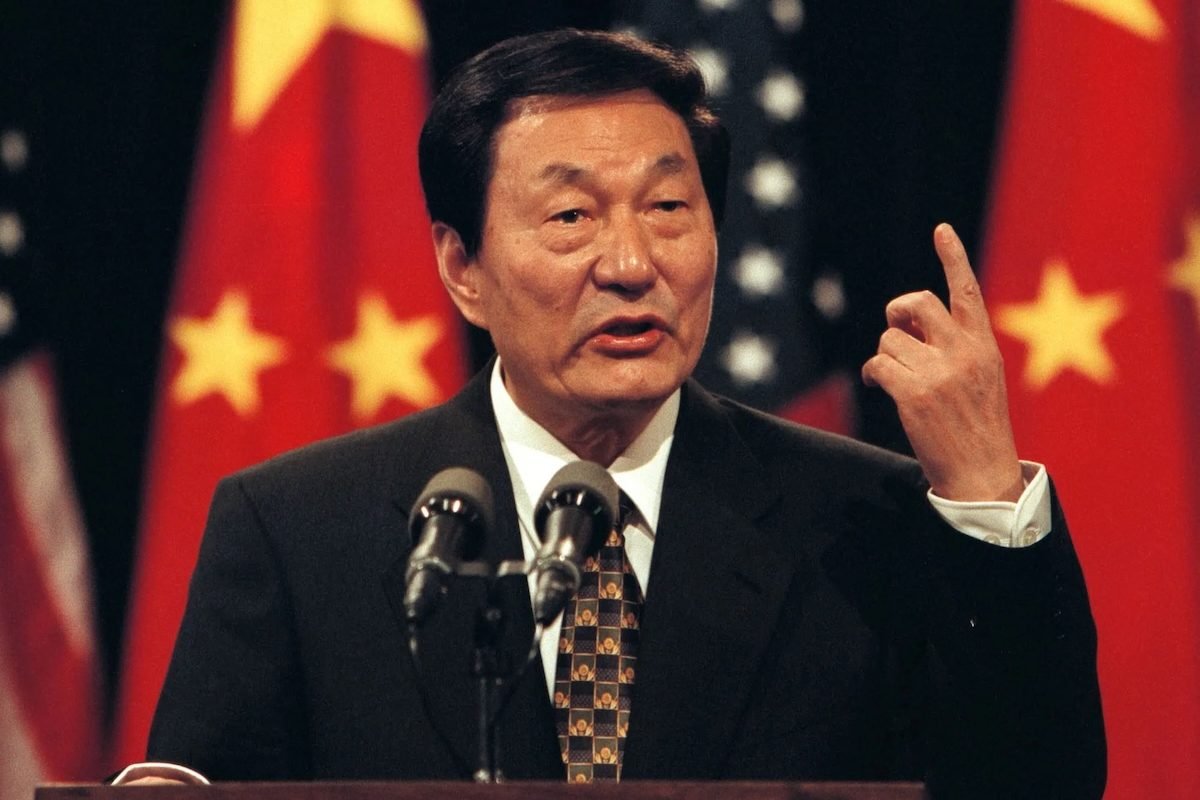
Zhu Rongji, the former Chinese premier who steered the country into the World Trade Organization and attempted to modernize its financial system, died on August 12, 2026, at the age of 97. Born on October 23, 1928, Zhu was a pivotal figure in China's economic transformation, yet his legacy has been increasingly overshadowed by the policies of his successors.
The WTO Gamble
Zhu's most significant achievement was securing China's entry into the WTO in 2001. He believed that full integration into the global economy was essential for China's development. At the time, China's trade operated on a dual-track system, with high tariffs on official imports and rampant smuggling that bypassed duties entirely. Zhu and his advisors calculated that joining the WTO, lowering tariffs, and cracking down on smuggling would actually increase government revenue from import duties.
This was a delicate and politically sensitive move. Much of the smuggling, particularly through the southern provinces of Fujian and Guangdong, was protected by the People's Liberation Army (PLA). In exchange for staying out of politics, the military had been allowed to enrich itself through business activities. Zhu's crackdown on smuggling directly challenged the PLA's interests, but he prevailed, and the military lost its economic privileges.
The Unfinished Convertibility
Zhu's grander vision was to make the renminbi fully convertible by 2000, positioning it as a major international currency. However, the Asian financial crisis of 1997-98 exposed the vulnerabilities of fragile financial systems to global speculation, forcing him to postpone that goal. After he stepped down as premier in 2003, the postponement became indefinite.
The 2008 global financial crisis further complicated matters. It demonstrated that even the American financial system, which China had sought to emulate, was not infallible. In response, China launched a massive stimulus package, worth nearly a trillion dollars, which revived its economy but also created a dependency on such measures. Subsequent stimulus packages became increasingly necessary, pushing full convertibility further out of reach.
Zhu reportedly opposed the 2008 stimulus and the ones that followed, arguing that they would lead to unsustainable debt and murky financial accounts. He was rumored to have been so vocal in his criticism that he was placed under house arrest and forbidden from meeting anyone. While he may have been vindicated by later events, the situation has remained out of control.
A Leader of Ideas
Those who met Zhu describe a leader focused on substance rather than showmanship. In a 1999 interview, he contrasted sharply with President Jiang Zemin. Jiang dominated the room and sought reactions, while Zhu was more interested in the ideas and the person before him. With Jiang, the staff was tense; with Zhu, they were relaxed, and he didn't care.
Zhu's path to power was not smooth. As a young man in 1957, he was punished during the anti-rightist campaign. Deng Xiaoping noticed him in the mid-1980s when he was a mid-level official at the Chinese Academy of Social Sciences. In 1988, Deng sent him to Shanghai as mayor to revitalize the city, which was lagging behind Guangdong. The 1989 protests changed priorities, and Jiang was called to Beijing, while Zhu rose to vice premier in 1993 and premier in 1998.
Zhu's impact on the Chinese economy is unmatched. He cleared the books, reformed the financial system, and pushed for market discipline. Yet his reforms were abandoned after he left power. He understood that market rules cannot be ignored forever, and if they are, the economy will eventually collapse.
Zhu's death marks the end of an era. His vision of a fully convertible renminbi and a transparent financial system remains unrealized, but his efforts laid the groundwork for China's rise as an economic superpower. As the region watches China's current economic challenges, Zhu's warnings resonate more than ever.