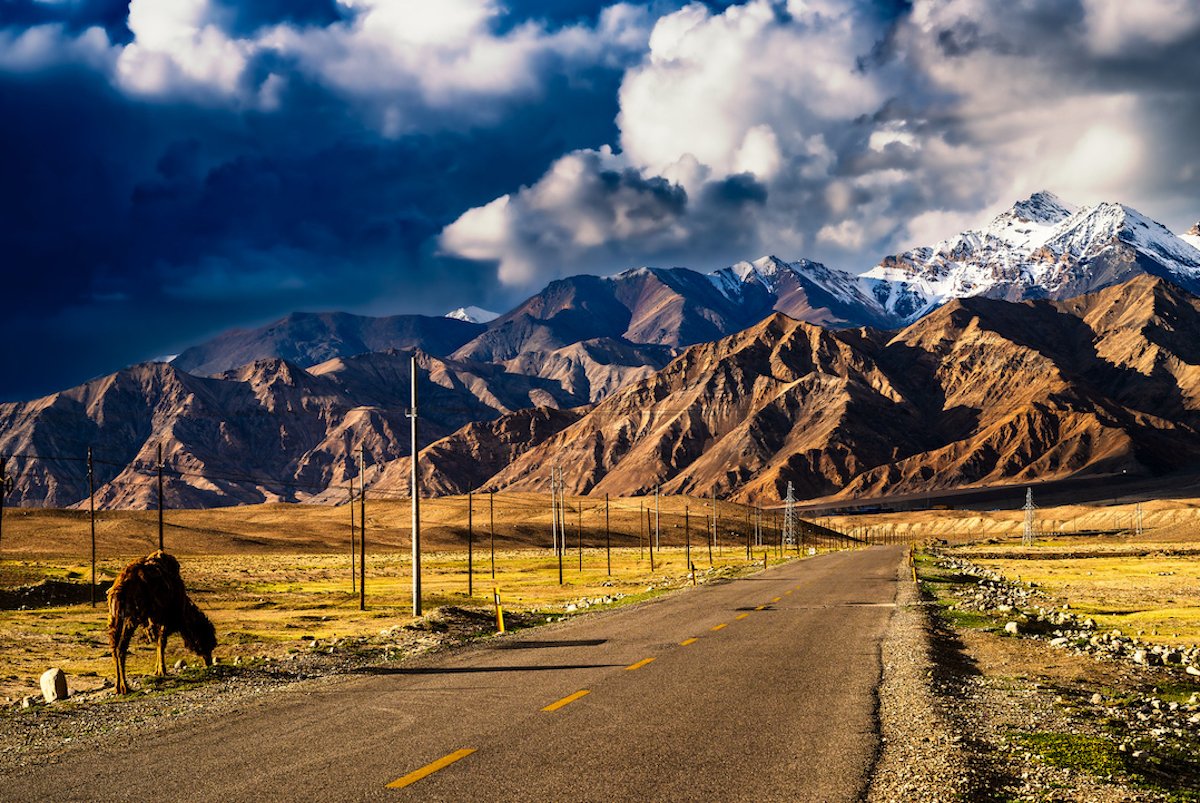
Afghanistan has formally opened a 121-kilometer road through the Wakhan Corridor, linking the remote Broghil area in Badakhshan Province to the Chinese border. Built by Afghan engineers at a cost of roughly 365 million afghani (about US$5.5 million), the road provides Kabul with its first physical connection to China and gives Beijing a potential alternative route into Afghanistan and the wider region.
The inauguration comes at a time when China is actively seeking to diversify its regional connections, as Pakistan's actions in Afghanistan create new security and strategic headaches for Beijing. Afghan officials accuse Islamabad of destabilizing the border region through repeated airstrikes, proxy groups, and other measures. In September alone, Pakistan struck multiple locations inside Afghanistan, claiming to target militants, while Afghan authorities reported civilian casualties. These attacks have heightened tensions and made Afghanistan's dependence on Pakistani territory and trade routes increasingly untenable.
China's recalculation
Beijing's concerns are multifaceted. First, instability in Afghanistan could spill into Xinjiang, giving militant groups like the Turkestan Islamic Party (historically known as the East Turkestan Islamic Movement) room to operate. Chinese officials fear these groups could use unsecured Afghan territory to move supplies, train recruits, and launch attacks on Chinese personnel and infrastructure.
Second, China has growing doubts about Pakistan's ability to protect Chinese interests within its own borders. Repeated attacks on Chinese workers and engineers, particularly in Balochistan, have exposed vulnerabilities in the China-Pakistan Economic Corridor (CPEC). The Baloch Liberation Army has systematically targeted Chinese nationals and infrastructure, forcing Beijing to spend resources not only on building projects but also on guarding them.
Financial frustrations add to the picture. Allegations of corruption and mismanagement involving Pakistan's military and political elite have dogged CPEC, with concerns over irregularities, opaque dealings, and delays undermining the economic and strategic returns Beijing expected.
Geography compounds the problem. CPEC passes through Gilgit-Baltistan, a territory Pakistan administers but India claims. New Delhi has repeatedly restated its position, and Beijing must consider the possibility that India might one day try to reclaim the area, leaving a flagship Chinese project running through disputed ground.
The most pressing concern, however, is Pakistan's shifting alignment. Under Field Marshal Asim Munir, Islamabad has moved closer to the United States, a development China may view as undercutting its interests and adding to regional turmoil. Beijing sees any larger American presence in its western security periphery as something to prevent.
That is where the Wakhan Corridor comes in. The new road gives Afghanistan a route toward China and offers Beijing another potential link, reducing its reliance on Pakistan and CPEC. While it reaches the Chinese border, it does not yet constitute a fully operating commercial crossing, but it creates the possibility of closer ties in the future.
Moscow's stake
Russia has a strong interest in these developments. At the eighth Moscow Format meeting on Afghanistan, which brought together representatives from Afghanistan, India, China, Russia, Pakistan, Iran, and Central Asian states, Moscow strongly backed the Taliban and pushed for closer political and economic ties. Russia has already formally recognized the Taliban government and remains committed to opposing any expansion of Western military and intelligence activity in the region.
Moscow sees instability in Afghanistan as a direct security threat, chiefly because a vacuum allows groups like Islamic State Khorasan Province to expand. The group has demonstrated its ability to carry out deadly attacks on Russian soil, most notably the March 2024 assault on Crocus City Hall near Moscow, which killed more than 140 people. Russia wants neither a larger American presence on its periphery nor an Afghanistan where terrorist groups can flourish.
India also has reasons to welcome an active Wakhan route. It objects to CPEC's passage through Gilgit-Baltistan and desires a stable, peaceful, and prosperous Afghanistan. More trade and transit options for Afghanistan serve that goal, and the Wakhan road gives Kabul another way to reach China and Central Asia without relying on Pakistan.
Afghan officials have called the route strategically, politically, and economically important, saying it could tie their landlocked country into Central Asian networks and global markets. Reducing reliance on Pakistan matters because Kabul accuses Islamabad of using border crossings as a political weapon, closing key points from time to time to gain leverage. Better connections through the Wakhan Corridor could weaken Pakistan's traditional hold over Kabul.
Pakistan, for its part, appears to be watching the corridor closely. There are reports of Pakistani-backed groups trying to undermine the project, though details remain unclear. The road's opening signals a shift in regional dynamics, with China, Russia, and India all recalibrating their approaches to Afghanistan and Pakistan.
As Beijing diversifies its connections, the Wakhan Corridor could become a strategic asset, offering a direct land link to Afghanistan and beyond. For Pakistan, it represents a loss of leverage, as its traditional role as the gateway to Afghanistan is increasingly challenged. The coming months will reveal how far China is willing to go in reducing its dependence on Pakistan and what that means for the region's security and economic landscape.