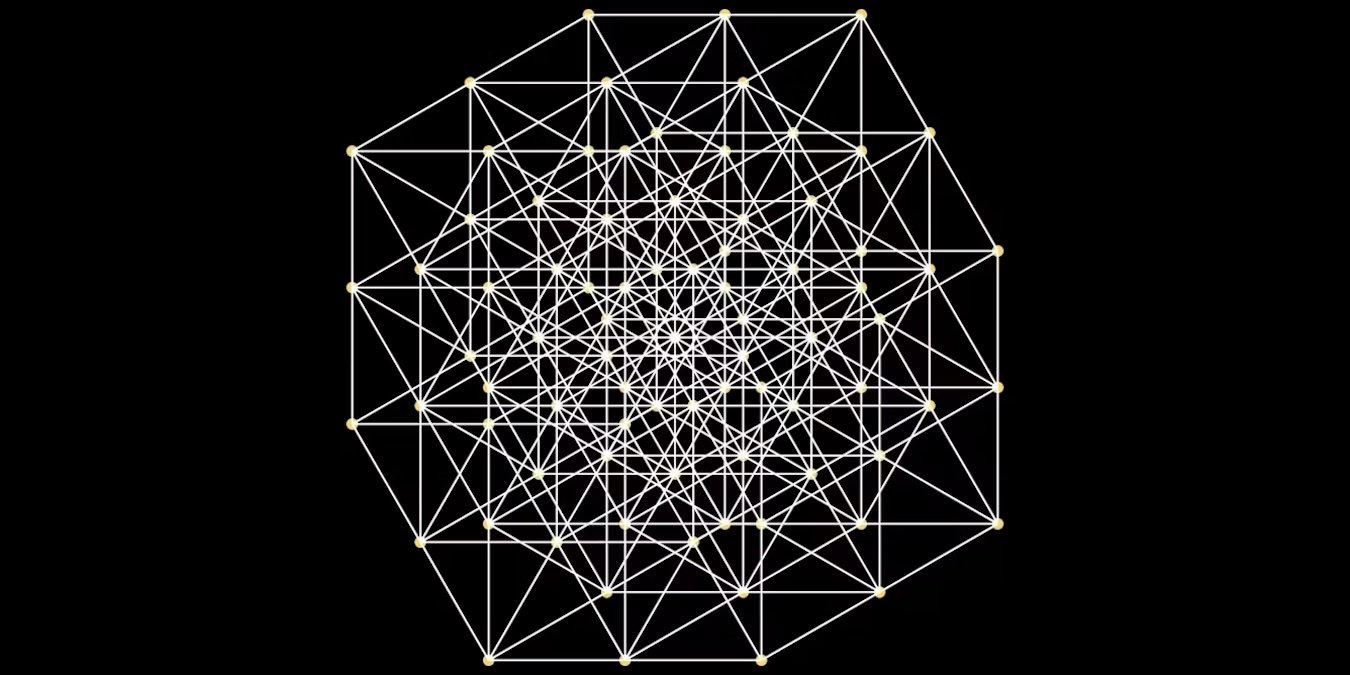
In May 2026, OpenAI released a result that sent shockwaves through the mathematical community: a generative AI had resolved the unit distance conjecture, a major unsolved problem in geometric graph theory first posed in 1946. Since then, a steady stream of new results has emerged, each partially or fully leveraging artificial intelligence to tackle research-level mathematics. Yet, the majority of new math published each month still comes from human minds.
Where is this heading? How quickly will AI capabilities expand? Will most mathematical research soon be conducted by machines? Or, as some mathematicians suggest, will AI combine with human ingenuity and other computational tools to create a golden age of mathematics?
A Legacy of Unsolved Problems
One of the 20th century's most prolific mathematicians, Hungarian Paul Erdős, left behind hundreds of unsolved problems now known as Erdős problems. These have become a tempting proving ground for AI companies eager to demonstrate their systems' mathematical prowess. Over decades, human researchers have steadily resolved many of them, but a large number remain open. The unit distance problem was one such challenge, and its solution by AI marked a significant milestone.
This wasn't the first mathematical problem solved by AI—nor even the first Erdős problem—but it was the most prominent. Notably, after reading the AI-generated proof, human researchers adapted its central technique to solve the sum-product conjecture just a week later. As the AI result rested on the shoulders of earlier mathematicians, humans were able to climb one step higher thanks to AI's advances.
Combining Technologies for New Heights
Computer tools have aided mathematics since the dawn of computing, from supercomputer models of climate change to pandemic simulations. In pure mathematics, proofs can now grow to petabytes in size—a petabyte equals one million gigabytes. To verify such massive arguments, mathematicians use proof-verification languages that encode every logical step, ensuring each follows from underlying axioms.
In a recent preprint, researchers combined computational tools, proof verification, and AI with their own human ingenuity to achieve a new result in Ramsey theory. After exhaustive computational searches, AI conjectured a general pattern, proved it held, and helped convert the argument for verification. This synthesis led the authors to declare that we are entering a golden age of mathematics.
Such developments resonate across Asia, where nations like South Korea and Japan are deeply invested in AI research. Japan's recent bond yield surge, dubbed the 'Honebuto Shock,' underscores the region's sensitivity to technological shifts. Meanwhile, Pope Leo XIV's encyclical on AI and human dignity offers a moral framework for Asia's digital future, emphasizing that human creativity remains central.
Million-Dollar Math Problems
Today, AI's capabilities are uneven. Graph theory has proven particularly amenable to AI-based proofs, but other fields remain resistant. For every problem AI solves, many more remain beyond its reach. The six remaining Millennium Prize problems—each offering a million-dollar reward from the Clay Mathematics Institute—appear as out of reach for AI as they are for humans.
As for the future, no one knows how far or fast AI's capabilities will grow. If progress continues, what will mathematical research look like in five or ten years? Early examples where humans built on AI results or leveraged AI alongside existing tools offer a glimpse of one possible future. On the flip side, students' anxiety about spending years honing their skills is understandable, but we are not close to AI replacing human mathematicians entirely.