An old Hindi film from the 1980s shows a politician carrying two speeches in his pocket—one for a good day, one for a bad one. Anyone who has followed live commentary on Asia's largest technology stocks this year will recognize the habit.
When a stock opens 8% higher on overnight news from elsewhere, out comes the first speech: AI is transformative, spending is durable, the capex cycle has years to run. A bullish analyst is found to corroborate. When the same stock opens 8% lower the next morning, the second speech appears: the spending is unsustainable, the cycle has peaked, returns will never materialize. A bear is given space to remind us of the dot-com bust.
On the third morning, whichever speech fits is read again. The loop seems endless. The same desk can deploy both narratives in a single week, using them as convenient justifications for any price move.
Some of the region's largest companies now earn returns on equity of 40% or 50%, yet trade at under five times earnings. They move as if every day were results day. A low multiple on exceptional earnings no longer signals a bargain; investors seem to believe that if the cycle reverses, no multiple is low enough.
The mechanics of desperation
Start with a basic fact: on any day, in any stock, every share bought is a share sold. Net flow is always zero. Prices move because one side wants the trade more than the other. A buyer in a hurry lifts the offer; a seller in a hurry hits the bid. The tick measures urgency. Value enters the price only when those who care about it are present and willing to stand in the way.
Picture a stock that closed at 100. In a market rich with fundamental investors, an overnight seller meets a buyer at 99, another at 97, and someone at 95 who thinks the shares are cheap. These buyers disagree about fair value, and their disagreement is what makes them useful—each lower price brings out another.
Now give the same seller a different book. The index fund is waiting for subscriptions. The active fund already holds its maximum weight. The pension fund has no instruction to change anything. The market maker will trade but won't carry a large position overnight. The investor who believes the business is worth 130 is still reading the news.
The price walks down through empty space, looking for anyone with an order. The auction clears at 92. There are plenty of owners and plenty of activity, but very little demand near 100. The 92 records where orders happened to meet that morning. By itself, it does not establish that anyone who studies the business believes it lost 8% of its value overnight.
Machines need not sell much to produce this. They only need to exhaust the bids queued at the start of the day. Fast liquidity that is cheap on quiet days steps back on loud ones, so the queue is shorter than it looks. When machines have an event to price in, they can overwhelm whatever stands on the other side. Fundamental investors, who might have refilled the queue, are rarely present in force in those early hours.
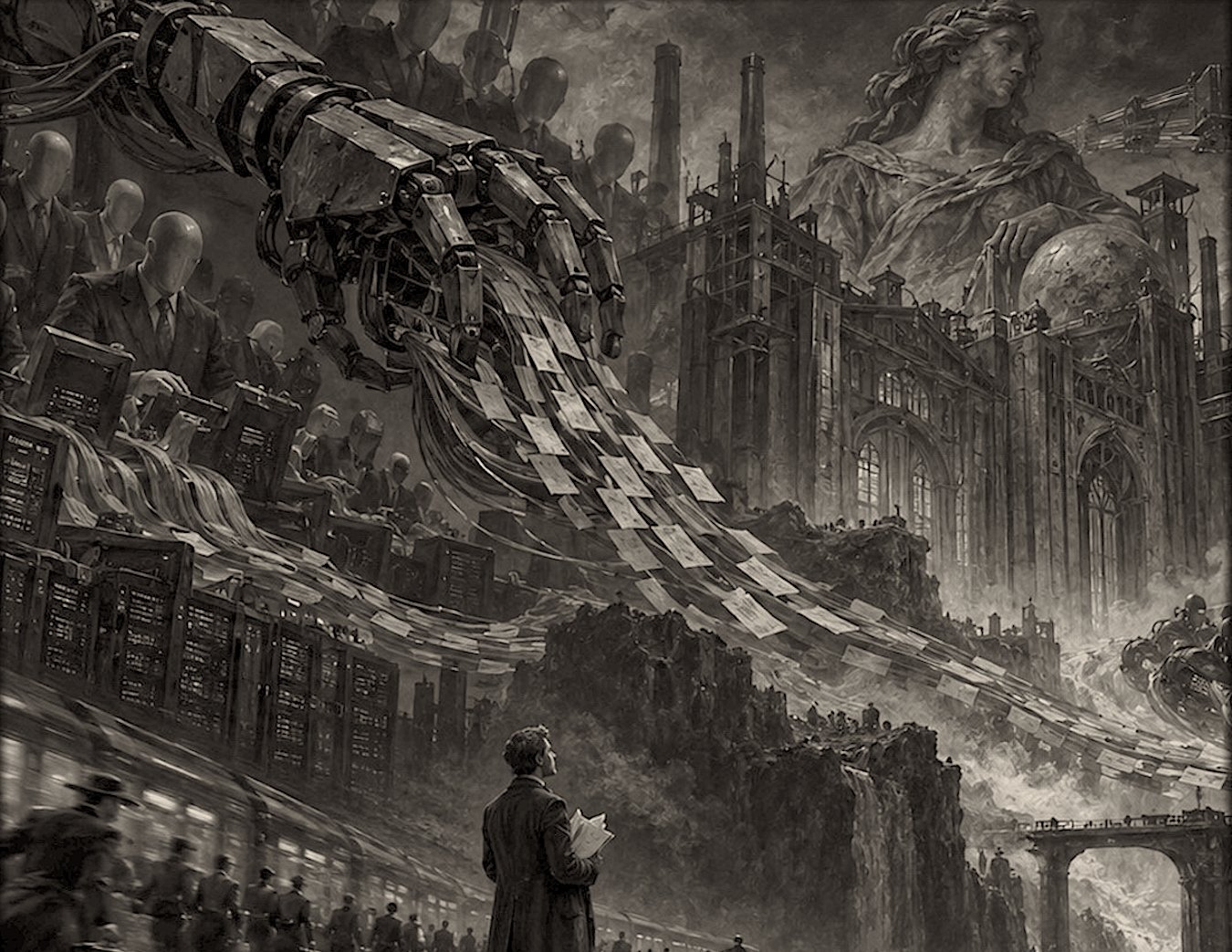
This is why market size says so little about resilience. Market capitalization is no cash reserve behind the bid. It's the only explanation for near-trillion-dollar stocks moving like meme stocks consistently. The patient money that owns most of a market can be entirely absent from the minutes in which its price is set. Ninety-nine dollars sit patiently and do nothing. The hundredth dollar—the only one that must trade now—sets the price everyone else reads. Call it the tyranny of the marginal dollar.
A national pension fund that owns 6% or 7% of its home market is a landlord that skips today's rent auction. When value buyers who respond to price plunges are this scarce, a modest amount of forced selling can move an enormous amount of market value.
World's after-hours market
These mechanics apply to any stock, anywhere. What is particular to Asia is the bellwether status now granted to a select few stocks in the north of the region. Consider a large American technology company reporting after the US close. Its own shares trade after hours, but thinly, with wide spreads and little depth. A fund that needs to cut its AI exposure that evening cannot do it there in size without moving the price against itself. So the trade travels—to futures, to options, to baskets, and to the first deep cash market that opens with stocks presumably tied to the same story.
“Presumably” is the critical word. Once a handful of liquid counters become the proxy for global risk-on and risk-off, taking over a role that currency pairs such as the dollar-yen once held, their prices begin to lose touch with their own reality. The connection may be justified or not, but the market no longer cares. The result is a daily drama where China's stock market lags while Seoul and Taipei shine, and where Seoul and Taipei markets ride the AI wave. Meanwhile, Indonesia's MSCI scare shows how quickly sentiment can shift in emerging markets.
No one seems willing to ask the obvious questions: who actually trades at the open every day, and why so little patient money is left on the other side? This piece cannot prove all of what follows. Some of it is our highly subjective reading of how these markets now work. But we hope it generates more discussion than the current zero.