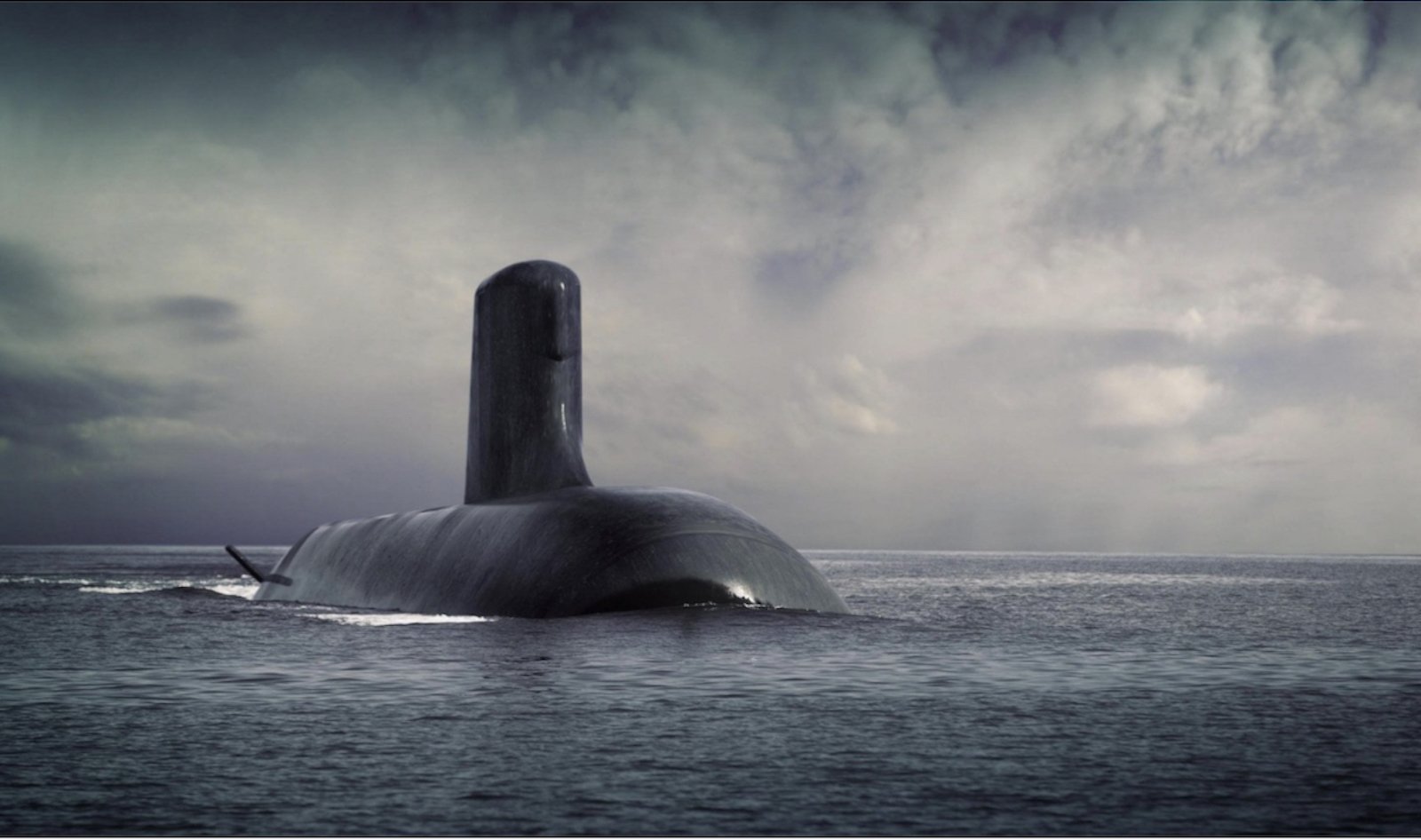
At the Shangri-La Dialogue in Singapore last week, US Defense Secretary Pete Hegseth, Australian Defense Minister Richard Marles, and UK Defense Secretary John Healey announced a significant revision to the AUKUS submarine acquisition plan. Instead of the originally promised mix of one new Block VII Virginia-class submarine and two used Block IV vessels, Washington will now transfer three in-service Virginia-class nuclear attack submarines to Australia. The change, framed as a streamlining measure to simplify logistics and maintenance, has drawn scrutiny over its implications for Australia's naval power and the partnership's true strategic purpose.
The revised deal aims to reduce the complexity of managing multiple submarine classes—Australia's current Collins-class, the incoming Virginia-class boats, and the future SSN-AUKUS design. By standardizing the fleet, Canberra hopes to cut costs and ease supply chain burdens. Yet the shift comes as the US struggles with domestic shipbuilding capacity, producing only 1.3 attack submarines annually against a target of 2.33. Australia is contributing financially to the US industrial base and sending hundreds of personnel for maintenance training at Pearl Harbor to mitigate these strains.
Strategic Access or Submarine Capability?
Critics argue that the revised AUKUS deal may be less about providing Australia with a credible submarine force and more about securing US access to Australian bases. Peter Jennings, writing in The Australian, notes that acquiring in-service Block IV Virginia-class submarines—engineered for a 33-year lifespan—will leave Australia with vessels that have only about 21 years of service life upon delivery in the 2030s. These boats require three major overhauls during their operational cycle, potentially costing tens of billions of dollars and causing extensive downtime, depending on whether the US completes scheduled refits before transfer.
Albert Palazzo, in The Conversation, goes further, describing the revised deal as a “bait and switch” that exposes deep strategic inequalities. He points out that the US has substituted a promised new Block VI vessel with a third second-hand Block IV submarine, significantly reducing Australia's anticipated naval firepower. Moreover, the agreement grants the US unilateral authority to modify or cancel the transfer, while pocketing Australia's non-refundable US$2 billion manufacturing contribution. Palazzo stresses that the arrangement prioritizes US strategic interests—specifically securing a submarine base at HMAS Stirling in Western Australia—while forcing Australia to absorb structural risks with minimal leverage.
This focus on base access aligns with broader US efforts to strengthen its Indo-Pacific posture, as seen in initiatives like the Quad's shift to infrastructure and cables. For Washington, HMAS Stirling offers a strategic location for forward-deployed submarines, particularly as China expands its undersea capabilities.
China's Undersea Expansion
China's growing submarine fleet provides context for why US access to Australian bases has become increasingly valuable. In a March 2026 statement to the US-China Economic and Security Review Commission, Andrew Erickson detailed a massive expansion of the People's Liberation Army Navy (PLAN) submarine force, driven by President Xi Jinping to counter US undersea advantages. China is leveraging vast naval industrial capacity and Russian technology transfers to shift toward an all-nuclear-powered fleet, Erickson noted.
Key developments include the Type 093B nuclear-powered guided-missile submarine (SSGN) with land-attack capabilities, construction of advanced Type 095 SSNs and Type 096 nuclear ballistic-missile submarines (SSBNs), and the fielding of the JL-3 submarine-launched ballistic missile (SLBM), capable of reaching the continental US from bastions in the South China Sea. Henry Boyd and Tom Waldwyn, in a February 2026 report for the International Institute for Strategic Studies, found that China accelerated nuclear submarine production at the Bohai Shipbuilding Heavy Industry Co. shipyard in Huludao between 2021 and 2025, surpassing the US in both launch numbers and combined tonnage. China now operates 32 nuclear-powered submarines, according to Defense Security Asia, surpassing Russia's 25-28 but still trailing the US's 71.
More critical than fleet size is China's growing ability to operate far from home waters. A March 2026 Reuters investigation revealed that China is mapping the undersea battlespace across the Pacific, Indian, and Arctic oceans using civilian research vessels under its “civil-military fusion” policy, deploying advanced acoustic sensors and buoys. This directly enables force projection beyond the First Island Chain, raising the stakes for US allies like Australia.
The AUKUS submarine shift thus reflects a broader strategic calculus: as China's undersea reach expands, Washington's need for forward bases like HMAS Stirling grows. For Canberra, the deal may deliver submarines, but at the cost of strategic autonomy and billions in sunk costs. The partnership's future will depend on whether Australia can negotiate more favorable terms or whether it remains a junior partner in a US-led strategy.