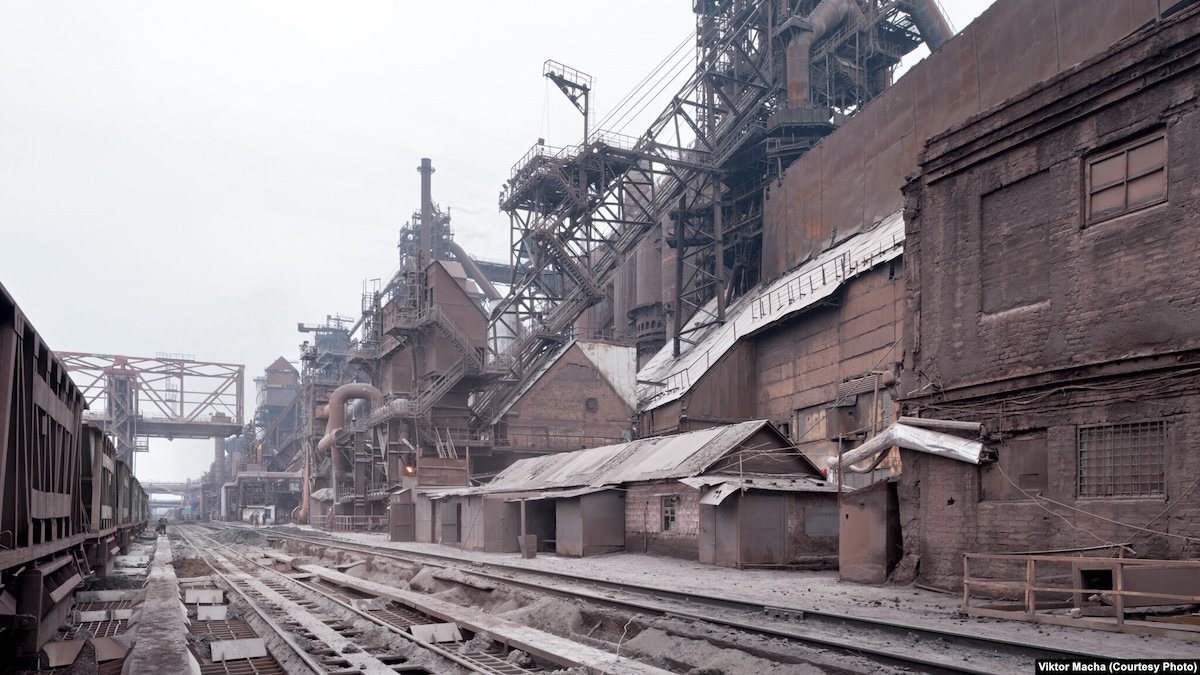
Mariupol, the southern port city that became a symbol of Russian destruction and Ukrainian defiance during the 2022 siege, is once again in the crosshairs. Ukraine's 1st Azov Corps released footage on May 8 showing reconnaissance and strike drones flying over the occupied city, targeting roads, industrial sites, and military facilities used by Russian forces. Azov fighters described the operation as a “patrol” over their hometown.
“For now, from the air,” the unit wrote on social media. “But there is more to come.”
The return of Ukrainian drones to Mariupol carries both symbolic and military weight. The city, which Russia reduced to ruins and where tens of thousands are believed to have died, has been under occupation for four years. Moscow has tried to militarize the city and reshape its demographics, building new apartment blocks and encouraging Russian settlers. But the drone flights challenge the Kremlin's narrative that occupation is permanent.
“Beyond the battlefield, this war has also become a fight over historical narratives,” said John Vsetecka, an assistant professor of history at Nova Southeastern University. Ukrainian drones over Mariupol directly challenge Moscow's claim of irreversible control.
Shaun Pinner, a British fighter captured during the battle for Mariupol and later freed, emphasized the significance. “Mariupol is not just another occupied city. It was our home,” Pinner said. “It became the centerpiece of Russia's entire narrative surrounding the war, and Azov itself became central to the Kremlin's absurd attempt to define an entire nation as ‘Nazi,’ which was always complete garbage.” He added that the drone flights undermine Russia's attempt to normalize the occupation. “The Kremlin wants occupation to appear permanent and stable, but it's far from that. Explosions, drone activity and visible military insecurity damage that image, both for Russian domestic audiences and collaborators inside occupied areas. It gives those waiting for our return hope.”
Strategic Logistics Under Threat
Mariupol now sits at the center of Russia's southern logistics corridor linking occupied Donbas to Crimea. Since 2022, Moscow has invested heavily in roads, rail links, and infrastructure along the Azov coast to reduce dependence on the vulnerable Kerch Bridge. Supplies, fuel, and troops increasingly move through this land corridor. Ukraine is trying to make that corridor unsafe.
“There is no safe rear area for the occupiers,” Azov wrote. “There is nowhere to hide and no way to protect themselves.” Azov says its drones are operating as far as 160 kilometers behind the front line and that strike distances will continue to increase.
Russian military bloggers have taken notice. Romanov, a pro-war commentator, warned that Ukrainian forces are now striking logistics routes with drones operating through Starlink and reaching up to 200 km. He added that Ukraine's AI-enabled Hornet drones “can be seen flying unimpeded over the Mariupol section of the R-150 highway, searching for targets to engage, primarily fuel tankers and other military vehicles.” Romanov predicted that within six months to a year, fully automated Hornets or other drones that cannot be jammed with electronic warfare will appear. “The drone will simply fly into a specific area and then circle around until it selects a target, which the neural network prioritizes.”
Dimko Zhluktenko of Ukraine's 413th Unmanned Systems Regiment said Ukraine's recent success is not only about the drones themselves. Ukrainian crews, planners, and operators have also improved after years of adaptation under battlefield pressure. Large mechanized assaults have become rarer. Control of the battlefield is increasingly determined by which side can disrupt logistics and command networks farther behind it.
Dmytro Kavun of Dignitas Ukraine said the pace of these strikes has accelerated because several trends have converged at once. Ukraine is rapidly scaling drone production and could potentially produce seven million drones this year. Communications between drones and operators have improved, while Ukrainian strikes have steadily degraded Russian air defenses, opening corridors for deeper attacks.
“I believe Ukraine has a considerable technological advantage, particularly in electronic warfare, drone connectivity and drone-based air defense,” said Clément Molin, an open-source analyst.
Kavun said the most important targets lie in what Ukrainian planners increasingly describe as the “mid-range” zone, roughly 30 to 300 kilometers behind the front. This is where Russia stores fuel, ammunition, and reserves while concentrating the roads and railways needed to sustain frontline operations.
Andrii Pelypenko of Ukraine's 419th Battalion of Unmanned Systems said Ukrainian engineers spent years designing and testing systems while Russian strikes repeatedly targeted Ukraine's infrastructure and industry. Now, he argues, some Ukrainian drone systems have matured enough to secure large state contracts, allowing production to scale further. Domestic production also gives Kyiv greater operational freedom. Western-supplied systems often come with restrictions on how and where they may be used, especially for strikes deep inside Russia.
The Azov brigade itself has a controversial history. After concerns were raised in the U.S. Congress about its far-right connections, the Biden administration's State Department performed a vetting process under the Leahy laws, looking for human rights violations. Once that process was complete, it allowed the brigade to access U.S. weapons in June 2024. The enemy has worked hard to discredit Azov over the years, highlighting the connections of some of its members to far-right groups.
As Ukraine's drone campaign expands, the implications extend beyond the battlefield. The ability to strike deep into occupied territory and challenge Russian control over key logistics hubs like Mariupol signals a shift in the war's dynamics. For the Kremlin, the sight of Ukrainian drones over a city it claims to have pacified is a direct challenge to its narrative of victory and stability.