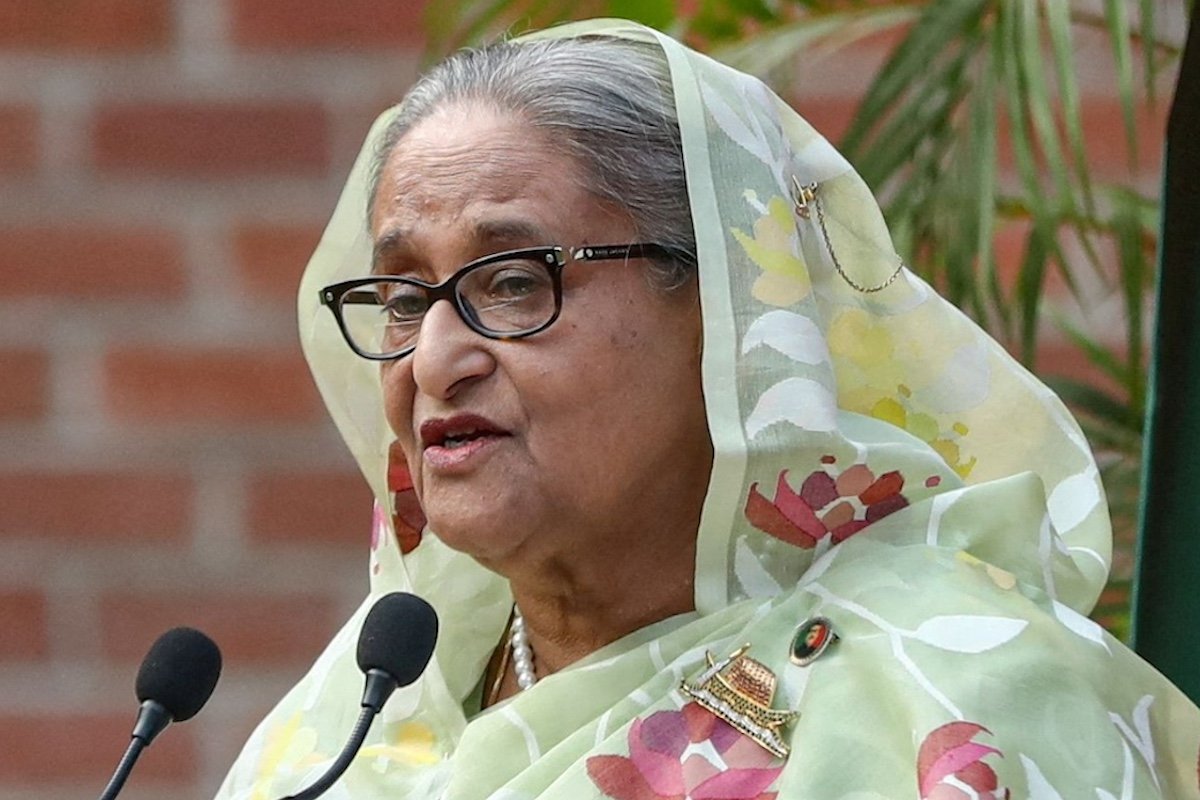
The distinction between returning home and being brought home is more than a matter of wording. For ousted Bangladeshi Prime Minister Sheikh Hasina, it could decide whether she is treated as a convicted fugitive or as an ex-leader who dictated the conditions of her own comeback.
This question should weigh more heavily on Prime Minister Tarique Rahman's government than the latest letter from a British law firm. Hasina, who fled to India in August 2024 after a popular uprising ended her 15-year rule, has reportedly asked for a new Bangladeshi passport and national identity card through London-based Matrix Chambers. The request, sent to the Bangladesh High Commission in New Delhi, has stirred predictable political controversy.
Her supporters see a chance to present her as a victim of political persecution. Her detractors see an attempt to dodge the consequences of a conviction for crimes against humanity. Both reactions risk giving the paperwork more significance than it deserves.
A passport is merely a travel document, not a tool for political rehabilitation. It cannot serve as a bargaining chip over the return of a former head of government convicted of crimes against humanity committed during her final weeks in power. The real question is not whether Hasina wants to come back from India. It is whether Bangladesh will insist that she return through the legal process already available—extradition.
Graver than politics
The government should resist any effort to recast Hasina's case as an ordinary political dispute. The stakes are far higher.
In February 2025, the United Nations Human Rights Office published its investigation into the crackdown on Bangladesh's student-led uprising. The findings were devastating. The report estimated that as many as 1,400 people were killed between July 15 and August 5, 2024—a period of just three weeks. Thousands more were injured. Children accounted for an estimated 12% to 13% of those killed.
Investigators found reasonable grounds to believe that the former government, its security agencies, and violent elements associated with the Awami League had systematically committed serious human rights violations. The report identified evidence of an official policy to suppress protesters through violence, raising concerns about crimes against humanity. It was not a verdict against Hasina, but its findings were independent of Bangladesh's subsequent judicial proceedings.
Hasina and her Awami League have sought to portray the International Crimes Tribunal proceedings as political persecution. Their argument draws on concerns about due process, her trial in absentia, and the death penalty verdict. Those concerns deserve scrutiny, but they do not erase the underlying crimes or the evidence gathered by international investigators.
On November 17, 2025, the tribunal sentenced Hasina to death for crimes against humanity. She has denied wrongdoing and rejected the legitimacy of the proceedings. The Awami League's political narrative asks Bangladeshis to view the conviction primarily through the familiar rivalry between two parties. Yet the killings were not simply another episode in that rivalry. They involved the state's machinery being turned against people demanding political change.
A former prime minister does not acquire immunity from criminal accountability because her prosecution carries political consequences. Nor does a political dimension automatically invalidate a criminal case.
Who dictates the terms?
On November 13, Bangladesh National Party (BNP) Acting Secretary General Ruhul Kabir Rizvi identified the essential difference between voluntary return and extradition. Speaking at a discussion in Dhaka, Rizvi argued that Hasina could not simply return through the ordinary process because she was a convicted person sought under an extradition treaty. He described passports and identity documents as secondary matters. Extradition, he said, was a legal process between two sovereign states.
Her supporters could present a return arranged according to Hasina's preference and timetable as an act of defiance. The former prime minister would appear to have forced the government to accommodate her initiative. That perception would not change her legal status, but politics is not conducted solely through legal documents.
Lord Varys, the fictional master of political intelligence in Game of Thrones, offers a useful observation: “Power resides where men believe it resides.” This insight is especially relevant for Bangladesh, where perceptions of authority have often mattered almost as much as authority itself.
Hasina governed for more than 15 consecutive years through a political system that increasingly concentrated power around her office. Her sudden removal demonstrated how quickly an apparently unassailable government could lose its authority. The BNP government should understand that lesson better than most.
Tarique Rahman came to power through the February 2026 election. His government's legitimacy rests on that electoral mandate and its ability to exercise constitutional authority, not on granting concessions to an ousted predecessor. It should therefore resist any arrangement that allows Hasina to appear to have negotiated her own return. That does not mean humiliating her, denying her lawful protections, or treating an extradition request as a guarantee of India's compliance. It means insisting that the legal process, rather than her wishes, determines what happens next.
For more on the broader regional implications of Hasina's exile, see this analysis of her return pledge.