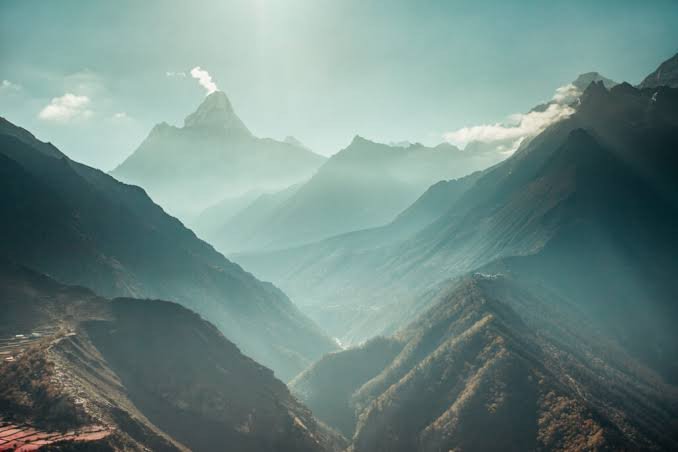
For decades, the 3,500-kilometer Himalayan frontier has served as a volatile geopolitical tripwire, stretching from the high-altitude deserts of Ladakh in the west to the rugged ridges of Arunachal Pradesh in the east. This sprawling Line of Actual Control has locked New Delhi and Beijing into an institutionalized security dilemma, where every military posture is scrutinized with suspicion. Yet nearly half of this central Himalayan arc has remained insulated from such friction—Nepal's 1,400-kilometer northern border with Tibet has functioned as a sanctuary between two nuclear-armed neighbors.
That equilibrium is now fracturing as climate disasters become more frequent. Glacial retreat, thawing permafrost, seismic instability, and extreme rainfall are combining to create cascading cross-border risks, injecting political uncertainty into what was once a buffer zone. These hazards do not stop at customs posts, and neither can the region's response.
The fragility of this sanctuary was tragically exposed in August 2026, when a devastating collapse of ice and rock along the northern flank of Langtang-Lirung peak near the China-Nepal border triggered catastrophic floods. Over 7,000 people were left dead or missing, and damage ran into billions of dollars. In the chaotic hours that followed, geopolitical paranoia overrode humanitarian grief. Regional media buzzed with accusations that Beijing had the telemetry to warn Nepal but failed to issue a timely upstream alert. Diplomatic channels had to step in to clarify that the disaster was a natural, transboundary glacial collapse affecting both sides.
Climate science later delivered a sobering twist: the collapse's trigger point lay entirely on Nepal's side of the border. A month later, Nepalese Prime Minister Balendra Shah stood before the United Nations General Assembly and called for a “Himalayan Climate Resilience Mechanism” to bring Beijing and Delhi into shared environmental stewardship.
A thaw in Sino-Indian relations
Some argue that any such collaboration is infeasible given Sino-Indian tensions. Yet this reading ignores a modest but structurally significant diplomatic thaw. It began on the sidelines of the BRICS summit in Kazan in October 2024, gained momentum through Shanghai Cooperation Organisation dialogues in Tianjin in August 2025, and was reinforced during the Xi-Modi leadership meeting at the BRICS summit in New Delhi in September 2026. While full strategic trust remains distant, these incremental breakthroughs have opened a rare window for limited, functional cooperation.
China and India continue to compete intensely, but both recognize that unmanaged borderland instability carries mounting costs. Climate risk, especially in the Himalayas, offers a rare issue area where functional cooperation can proceed without requiring a grand political settlement. Himalayan safety cannot be viewed through the zero-sum lens that has long shaped South Asian politics.
The region's water system is fundamentally indivisible: headwaters originate in the icy heights of the Tibetan plateau, pass through Nepal's steep river corridors, and flow heavily into India's densely populated agricultural plains. When a glacier fails upstream, Nepal takes the initial physical brunt, but India ultimately suffers downstream from ruined crops, broken supply lines, and shattered infrastructure. China, too, has clear stakes in preserving the resilience of borderland infrastructure and maintaining regional stability.
The August floods also shattered transmission lines and primary customs infrastructure linking Nepal to China, abruptly disrupting supply-chain logistics that have made Nepal a vital transit corridor for clean-tech components. This high-altitude blockade directly choked Nepal's shift toward green mobility, where Chinese imports had achieved a staggering 75% replacement rate of the domestic automotive fleet.
Systematic hydrological data sharing, joint risk assessments, and structured dialogues on mountain hazards are precisely the kinds of narrow, confidence-building measures that can stabilize relations rather than test them. Kathmandu is uniquely positioned to serve as a neutral, constructive site for a sustained trilateral dialogue. Nepal holds both the strongest moral claim and the greatest practical incentive to convene such talks. Sitting at the center of these cascading risks, it has maintained working relations with both of its giant neighbors.
The nation should step up and host a standing platform for technical experts, disaster managers, meteorological agencies, and river basin specialists. An initial agenda focused strictly on glacier monitoring, flood forecasting, emergency communications, and common engineering standards for vulnerable mountain corridors would allow all three countries to build trust incrementally. Such cooperation would not resolve the broader strategic rivalry, but it could prevent climate disasters from becoming flashpoints. As China's demographic pressures reshape its domestic priorities, and as India's economic transformation demands stable water and energy supplies, the Himalayas offer a pragmatic starting point for dialogue.
The window is narrow, but the opportunity is real. If Beijing and Delhi can set aside their zero-sum instincts on this issue, they may find that shared stewardship of the world's highest peaks is not a concession, but a necessity.