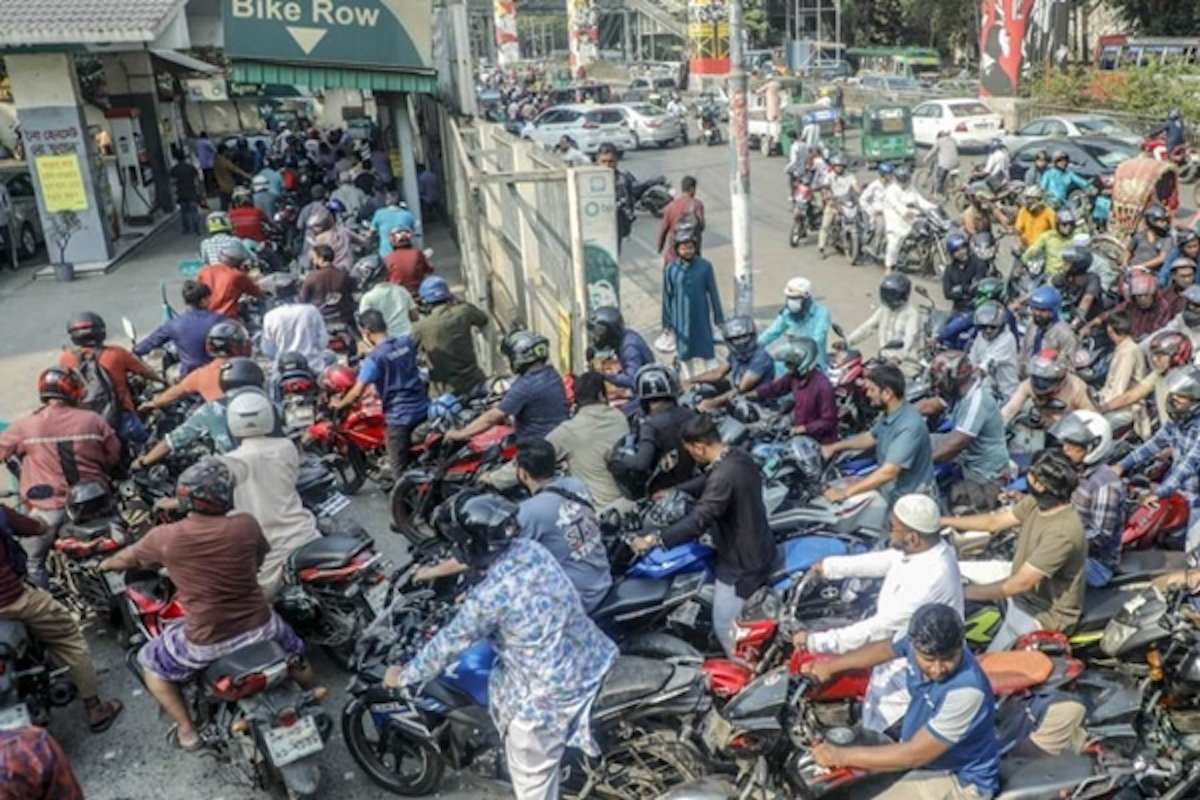
Bangladesh's current fuel crisis, which has seen long queues at pumps across Dhaka and reports of black-market sales, is being blamed by officials on panic buying and syndicates. While these factors play a role, they are secondary to a deeper problem: supply-side mismanagement exacerbated by politically motivated delays in price correction.
The Bangladesh Nationalist Party (BNP) government chose in late March to keep domestic fuel prices unchanged for April, even as global energy costs surged and import conditions worsened due to tensions in the Middle East and disruptions in the Strait of Hormuz. This decision, as reported by Reuters, was political, not technical. The government hoped to avoid public backlash ahead of local elections, but the delay proved costly.
When the government finally reversed course in mid-April, imposing steep increases of 10% to 15% on petrol, diesel, kerosene, and octane, the damage was already done. Supply distortions had set in, hoarding had spread, and public trust in official assurances had collapsed. As Dhaka Tribune reported, queues persisted even after the hike, with one line in Mirpur stretching nearly a kilometer.
Textbook Economics Ignored
Bangladesh imports roughly 95% of its energy needs, according to Reuters. When domestic prices are kept artificially low in a tightening market, consumers and dealers respond predictably: they top up early, hoard stock, and create speculative channels. This is exactly what happened. By the time the government acted, fuel was being sold on the black market at premiums of 15 to 20 takas per liter in northern districts, and octane in Dhaka fetched 250 to 300 takas per liter—more than double the official price.
The government's defenders argue that aggregate stock levels remain adequate, but as economists note, inventory in depots is not the same as deliverable supply at pumps. The system failed to ensure fuel reached stations at predictable intervals and in sufficient quantities. One station owner in Dhaka told local media that daily deliveries were arriving hours late, making queues unavoidable.
This pattern is familiar across Asia. As we've seen in other non-rich Asian states bearing the brunt of the Iran crisis, delayed corrections convert manageable pressures into crises. In Bangladesh's case, the BNP government's attempt to postpone political pain only deepened the economic cost.
The credibility problem is acute. The government first insisted there was no shortage, then abruptly imposed a steep hike. That sequence tells consumers that officials may understate stress and that future reversals are possible. Rational consumers respond by buying more whenever they can, further deepening shortages. This behavioral spiral is now entrenched.
Had the government moved in March with a moderate, rules-based adjustment aligned with its own automatic pricing framework, the outcome would likely have been less severe. Smaller earlier increases could have reduced speculative demand, signaled realism to the market, and protected distribution margins. Instead, the government chose delay, and the result is a crisis of its own making.
This is not just a fuel crisis; it is a crisis of governance. As trade misinvoicing and banking frauds drain billions from Bangladesh's economy, the fuel crunch adds another layer of strain on a country already grappling with foreign exchange pressures. The lesson is clear: in energy policy, as in economics, there is no substitute for timely, credible action.