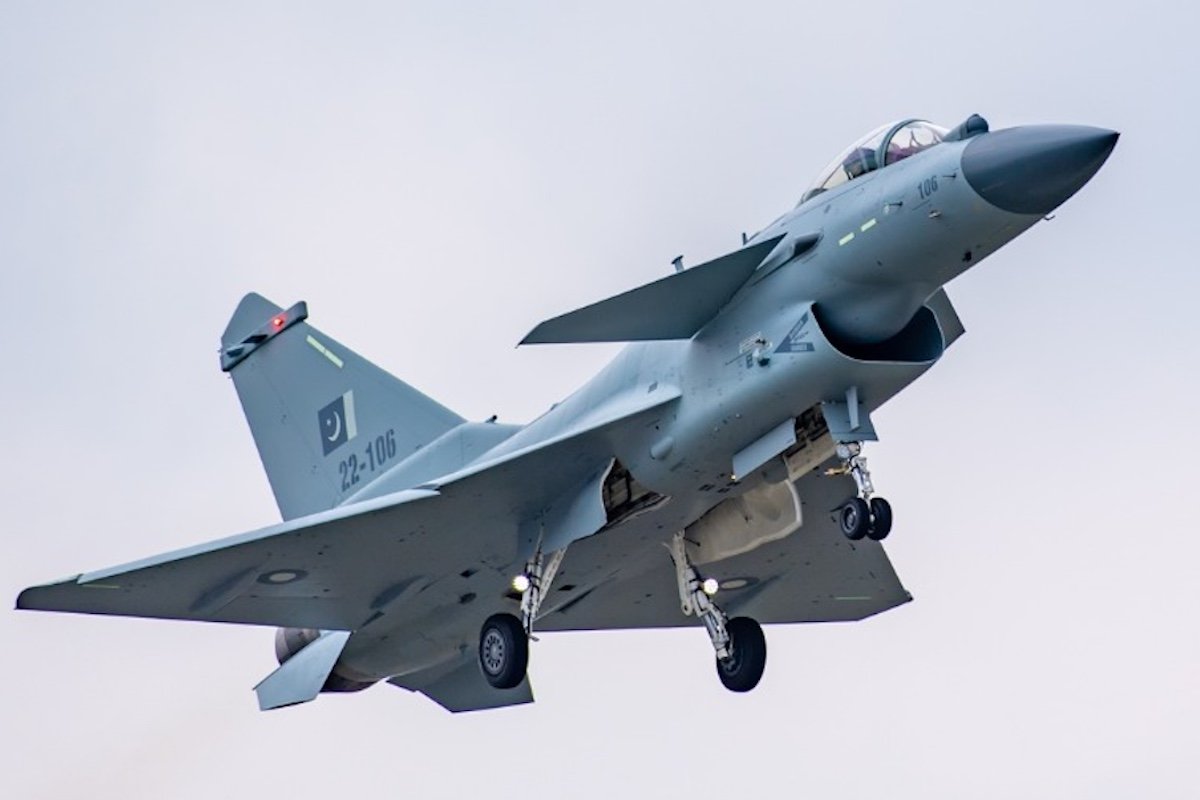
Bangladesh is moving forward with one of its most significant defense acquisitions in years, preparing to purchase Chinese J-10CE fighter jets as part of an air force modernization drive. The deal, reported by multiple outlets this month, would not only enhance Dhaka's airpower but also tie its military capabilities more closely to Chinese weapons, support networks, and supply chains.
A draft proposal has been submitted to Bangladesh's Finance Ministry and Armed Forces Division for final approval. The package also includes attack helicopters, VIP transport helicopters, and unmanned aerial systems. Procurement could begin in the current fiscal year if funds are allocated, or roll into the next budget cycle.
Bangladesh is considering acquiring 20 to 24 aircraft. The base cost per jet is US$62.7 million, but with training, logistics, infrastructure, and related expenses, the total could reach nearly $115 million per aircraft.
Why the J-10CE?
The J-10CE's reported performance in the May 2025 India-Pakistan conflict may have influenced Bangladesh's choice. Pakistan, the only confirmed foreign operator of the export type, claimed the aircraft helped shoot down Indian fighters, including Rafales—claims that remain disputed. However, analysts note that Pakistan's success depended heavily on the broader Chinese-origin combat network, including ground-based air defenses and airborne early warning and control aircraft, rather than the fighter alone.
Bangladesh's prospective acquisition would therefore do more than modernize its fleet. Realizing the aircraft's full potential could pull the country deeper into China's combat ecosystem, narrowing its tactical gap with India while increasing long-term operational dependence on Chinese support.
Previously, Asia Times reported that Bangladesh is also planning to acquire China-Pakistan JF-17 Thunder Block III fighters to replace its aging F-7s and MiG-29s. The J-10 and JF-17 would occupy complementary roles: the heavier J-10 emphasizes air superiority, advanced radar, and greater aerodynamic performance, while the lighter JF-17 offers a cheaper, easier-to-maintain multirole platform. Together, they would give Bangladesh a high-low fighter mix, with J-10s assigned to demanding air-superiority missions and JF-17s handling routine combat air patrol and strike duties.
Chinese fighters are a logical choice given their comparatively low cost, Bangladesh's decades of experience operating Chinese equipment, and established procurement ties with Beijing. Over the past 20 years, China has supplied Bangladesh with ships, fighter aircraft, tanks, and missile systems, accounting for 70% of the country's arms purchases.
Dependence and risks
High-end weapons systems depend on ongoing spare parts, maintenance, software updates, training, and supplier access over many years. These dependencies establish channels of influence for China that extend well beyond the initial transaction, aligning clients' foreign policy, defense, and economic interests more closely with Beijing's own.
There are also operational risks. JF-17 fighters supplied to Myanmar have reportedly suffered structural and technical issues, with airframes vulnerable to damage during high-G maneuvers. Additional alleged defects include maintenance and accuracy problems with the KLJ-7 radar and malfunctions in the weapon mission management computer, hindering beyond-visual-range combat capability. Myanmar's JF-17s also face spare parts shortages because Western sanctions prevent access to the Western avionics and electronics installed in the type.
While these procurements cannot overturn India's regional air superiority—New Delhi fields 29 fighter squadrons—they significantly narrow Bangladesh's tactical capability gap and bolster its airspace patrolling. Crucially, they complicate Indian defense planning near the Siliguri Corridor, a roughly 20-kilometer-wide land bridge linking India's northeastern states to the rest of the country. India may have to devote greater planning attention and additional resources to its eastern approaches, particularly during wider regional contingencies.
India and Bangladesh have no active territorial disputes, but relations have deteriorated since the August 2024 ouster of former Prime Minister Sheikh Hasina, whose close ties with India became a source of resentment among some domestic opponents. India has strengthened its military posture around the Siliguri Corridor amid longstanding concerns about its vulnerability. China's proximity via the Chumbi Valley already makes the corridor a sensitive planning problem, and nearby deployments may be seen in Bangladesh as increasing Indian military pressure along its northern frontier.
China may have found greater room to expand ties after Hasina's ouster as Bangladesh sought more distance from India. For Bangladesh, closer relations with China offer another means of balancing Indian influence. The J-10CE deal, if finalized, would be a clear signal of that shift, with strategic implications for the entire region.