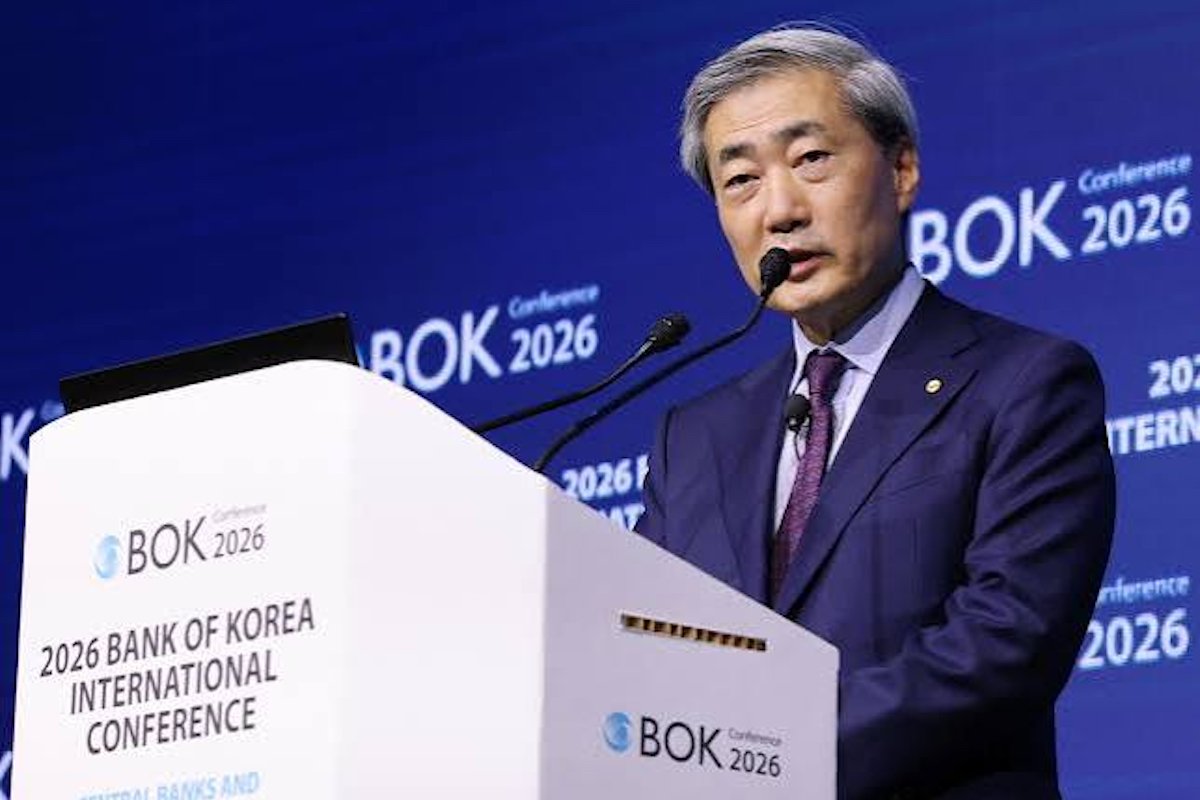
In a move that signals a sharp divergence from US monetary policy, the Bank of Korea (BOK) raised its benchmark interest rate by 25 basis points to 2.75% on Thursday, ending a three-and-a-half-year pause. Governor Shin Hyun-song framed the decision as a necessary response to an economy increasingly driven by artificial intelligence—a factor he sees as fueling both growth and inflation.
The timing is significant. Hours before the BOK's announcement, Federal Reserve Chair Kevin Warsh told US lawmakers that the AI investment boom is unlikely to create persistent price pressures. "This is one of the good family fights," Warsh said, arguing that supply responses would absorb one-time price changes. The BOK sees it differently.
Korea's AI-Driven Export Boom
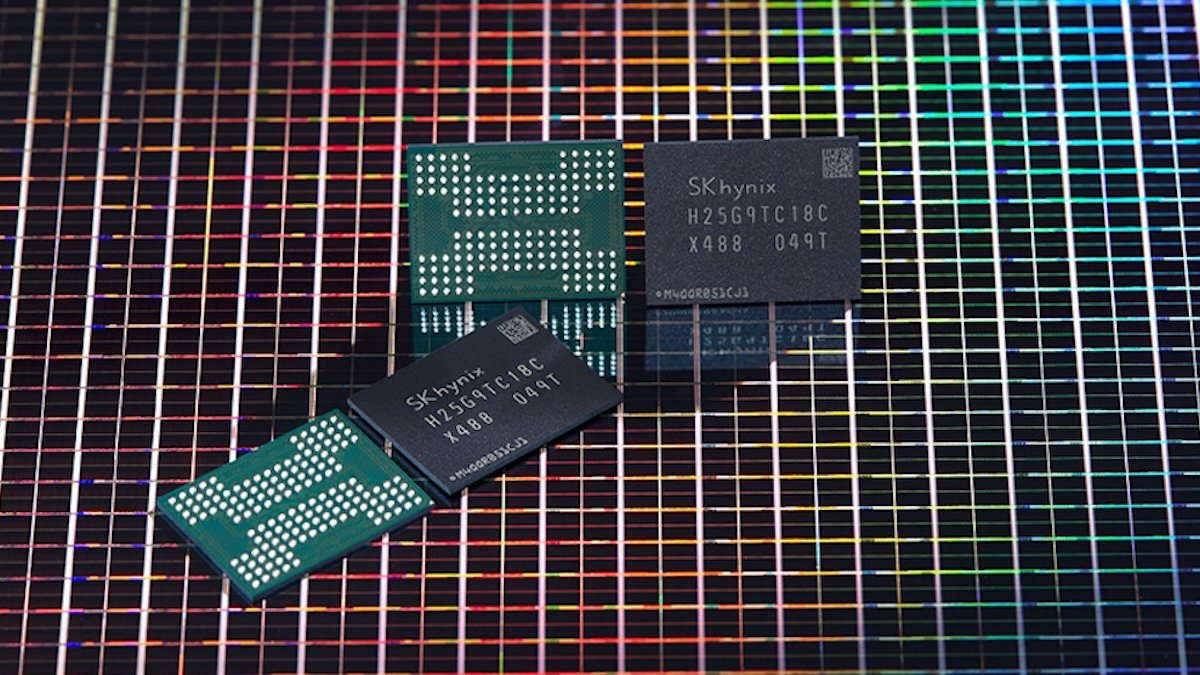
No economy is better positioned to test these competing theories than South Korea. Its open, $1.9 trillion economy has long served as a bellwether for global demand shifts, sitting at the intersection of US, Chinese, and high-tech supply chains. AI is now the dominant force. Exports surged 70.9% year-on-year in June—the largest jump since 1978—driven by chip demand from SK Hynix and Samsung Electronics. That followed a 53.4% rise in May.
Those are growth rates reminiscent of the "Asian tiger" era, not typical for a mature developed economy. President Lee Jae-myung's administration has doubled down on the bet. Late last month, Lee announced plans for Seoul to oversee a massive AI buildout, including at least $880 billion in planned investment from SK Hynix and Samsung to expand chipmaking and AI capacity. "We must secure the core elements of AI faster than any other country," Lee said, calling semiconductors, physical AI, and AI data centers the "triple axis for a great leap forward." He framed the push as a matter of survival, citing rural decline and an aging workforce.
The BOK's statement Thursday said growth is expected to "considerably exceed" its May forecast of 2.6%, while inflation stays elevated for "a considerable time." AI was not named as the driver—but it underpins nearly every line of that forecast.
Market Froth and Regulatory Concerns
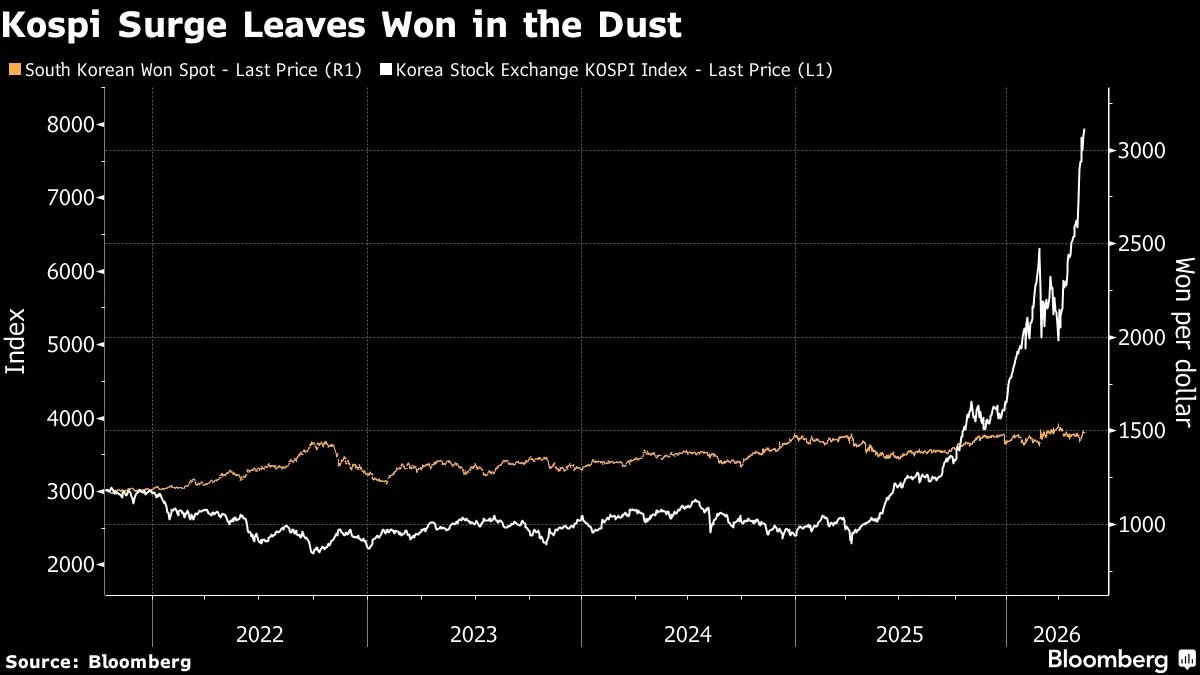
The AI boom is turbocharging South Korea's stock market. The Kospi index has risen 61% this year, hitting record highs. At least six of the index's 12 all-time circuit-breaker halts have occurred in 2025 alone. Finance Minister Koo Yun-cheol is monitoring volatility risks, including in newly launched single-stock leveraged ETFs tied to chipmakers. Lee Chan-jin, governor of the Financial Supervisory Service, admitted that approvals for those products "had been prepared hastily," signaling that bubble fears have reached the regulator's doorstep. South Korea is now halting some of these products.
Shin's rationale for the rate hike leaned on all three legs of the BOK's mandate. "Developments across all three areas—growth, inflation, and financial stability—supporting the need for an interest rate hike, it was judged appropriate to raise rates at this meeting," he said. He added that "unlike major countries with weak economic recoveries, demand-side inflationary pressures are expected to gradually increase as the impact of the semiconductor boom spills over into domestic demand."
That directly counters Warsh's argument. The Fed chair acknowledged supply crunches in energy, labor, chips, and software but said they are unlikely to leave a lasting mark on policy. "I don't view a one-time change in prices as necessarily being inflationary because I think there's a supply response," Warsh said. "In that way, this is different from a foreign conflict and what it might do, which tends to reduce the supply side of the economy."
Korea sees it differently, both economically and philosophically. Thursday's BOK statement flagged "the AI investment outlook" as the key swing factor for growth and inflation six months out.
A History of Resilience
Read one way, the rate hike signals confidence—a central bank comfortable tightening into an AI boom rather than fearing it. Read another way, it reassures global investors that South Korea's financial system can absorb the punch. That history is why markets are inclined to trust it. Korea was the first economy to claw back from the 1997-98 Asian financial crisis. It navigated the Lehman shock a decade later. Bets among hedge funds that Asia's No. 4 economy would become the "next Iceland" never panned out. The 2013 taper tantrum barely dented it. Trump's first-term trade war didn't move it. Covid didn't either—Korea was a model of low infection rates, and by August 2021, the BOK was the first major central bank to tighten policy.
Since taking office in June 2025, Lee's government has tried to prove Korea can do more than play defense—that it can go on offense and raise its competitive standing, if the AI wager pays off. But even as Seoul stocks ride a genuine gold rush, MSCI rejected Korea's bid for "developed market" status last month, declining even to add Seoul to its upgrade watchlist. That verdict undercuts a long-running Lee administration goal of decoupling Korea's market status from China's and India's.
The rejection underscores the gap between Korea's reform promises and the operational realities foreign funds still face—trading, hedging, settlement, and asset transfer remain more cumbersome than index compilers would like. Pledges to smooth those frictions aren't enough anymore; MSCI wants action. The trouble for Lee is that talking down the "Korea discount" is far easier than dismantling it. Thirteen months into his term, his government has passed few reforms to loosen the grip of the chaebols—the family-run conglomerates that concentrate economic power.
For now, the BOK's move positions South Korea as a test case for whether AI-driven growth is inherently inflationary. The answer will have implications far beyond Seoul, affecting how central banks from Tokyo to Frankfurt calibrate policy in an era of rapid technological change. As Shin's rate hike shows, Korea is not waiting for the Fed to decide.