President Donald Trump's military campaign against Iran, widely viewed as an artificial crisis, has eroded trust in Washington among allies. For South Korea, the unilateral redeployment of PAC-3 and THAAD missile defense systems from East Asia to the Middle East underscores the costs of Trump's approach. Yet Seoul has responded with a strategy that turns unpredictability into opportunity.
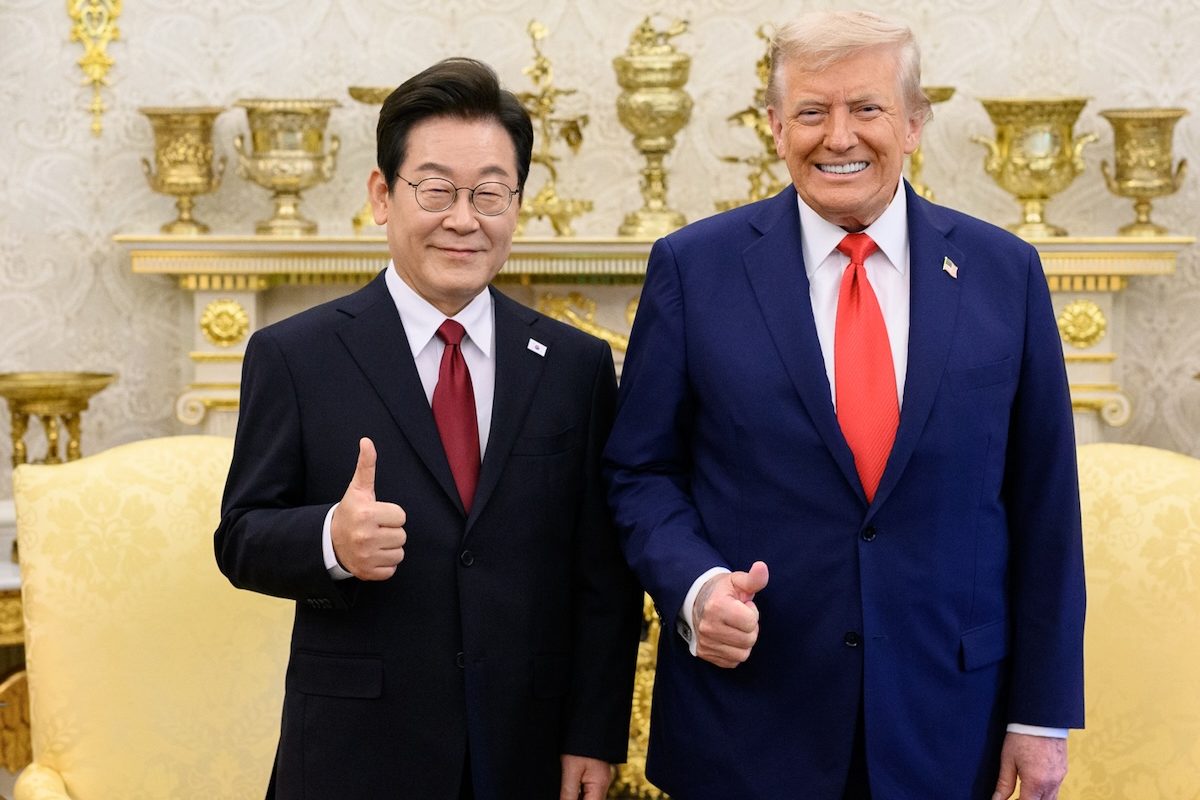
President Lee Jae-myung's "Pragmatic Diplomacy Centered on National Interest" has evolved from a skeptical concept into a substantive shield. Unlike previous administrations that rushed to align their defense blueprints with each new US National Security Strategy, Seoul now prioritizes flexibility. The Trump administration's disregard for international law and its own doctrines makes rigid commitments counterproductive.
Flexibility Over Doctrine
South Korea's approach mirrors a broader shift among US allies. Rather than issuing formal written responses to US strategic documents, nations now monitor where Trump's personal attention moves and adapt accordingly. This situation-to-situation framework explains the lukewarm response to Trump's call for a coalition against Iran's blockade of the Strait of Hormuz—a crisis many allies believe he manufactured.
Trump's subsequent bullying of allies, including South Korea, has backfired. Public opinion of both Trump and the US has turned sharply negative in South Korea during his second term. Yet Lee's administration has secured tangible wins through careful negotiation.
Key Achievements in the Alliance
- ROK-US Summits: Minimized fallout from Trump's tariff wars by leveraging commitments for large-scale South Korean investment in the US and its domestic shipbuilding base.
- Nuclear Technology Support: Alleviated doubts about US extended deterrence by securing support for South Korea's civilian and naval nuclear technology, formalized in a White House Joint Fact Sheet on November 13.
- Indigenous SSN Program: President Lee personally chairs the ROK Navy's nuclear-powered attack submarine program. A US inter-agency delegation visited Seoul on June 12 for kick-off talks, agreeing on expert panels to finalize technical details.
- OPCON Transition Roadmap: A concrete timeline for returning wartime operational control to South Korea by end-2028, aligning with both administrations' terms.
As the alliance enters a transitional phase, the role of United States Forces Korea (USFK) is shifting. Trump has articulated a vision of "decent peace," where the US handles global confrontations with China and Russia while allies boost defense spending for regional threats. South Korea, now the world's fourth-largest defense exporter, is well-positioned to meet this demand.
At the recent G7 meeting, Trump explicitly asked Lee, "Can South Korea urgently build 10 naval warships for the United States?" Lee responded, "In the spirit of our 70-year alliance, and with South Korea's world-class shipbuilding capabilities, we are ready to support." This exchange highlights how Seoul leverages its industrial strengths to manage the alliance on its own terms.
The broader lesson is that pragmatism, not principle, is the currency of the Trump era. South Korea's strategy offers a model for other allies navigating a US administration that routinely ignores its own doctrines. As Iran drags the US into a protracted conflict over the Strait of Hormuz, Seoul's case-by-case approach may prove more durable than any formal alliance framework.