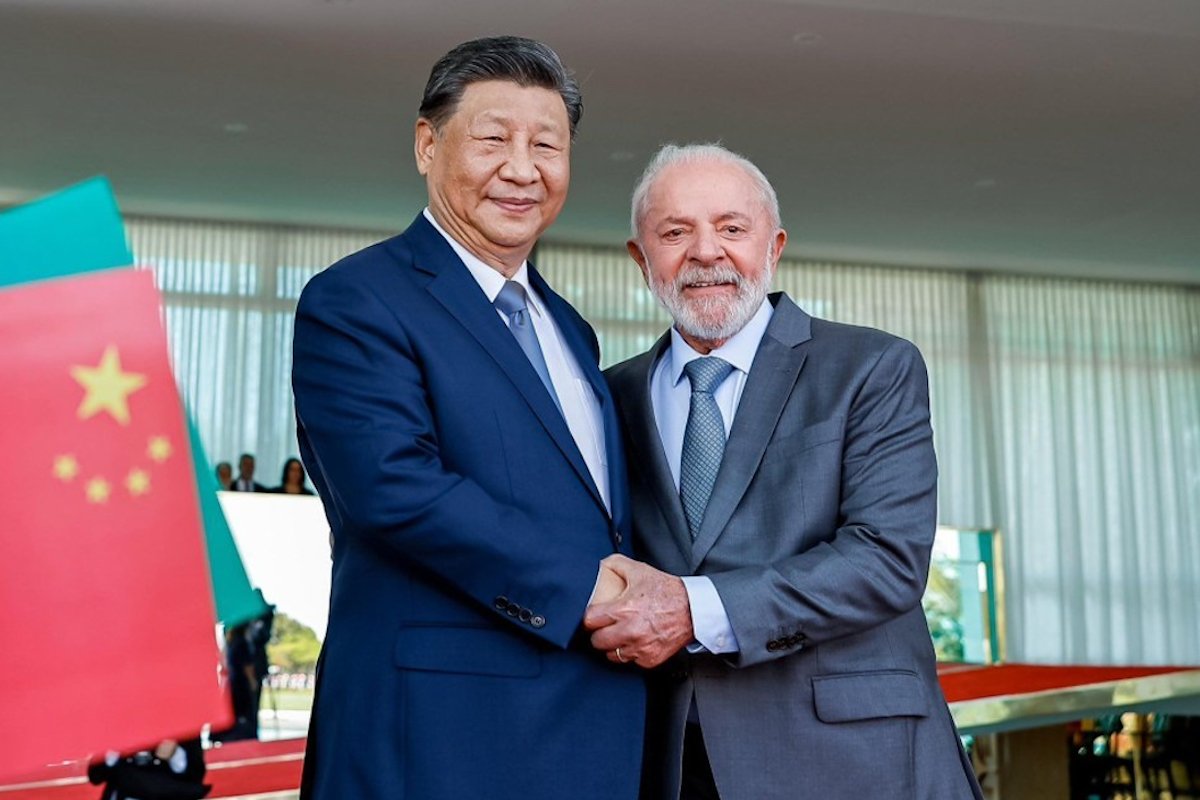
When Luiz Inácio Lula da Silva secured a second term on October 25, the result may have disappointed those in Washington hoping for a more pliant partner in Latin America. But the more consequential story is not about politics—it is about the deep economic entanglement between Brazil and China that no president, however sympathetic to the United States, could easily unravel.
Lula won 51.79% of valid votes against Jair Bolsonaro's 48.21%, according to Brazil's electoral authority. His victory ensures continuity in a foreign policy that has sought to balance relations with both Washington and Beijing. Yet the election also laid bare a structural reality: Brazil's economic ties with China are now sustained by a web of commercial interests that extend far beyond presidential preferences.
Trade numbers tell the story
Between January and September 2026, Brazilian exports to China reached US$84.7 billion, up 12% year-on-year. China absorbed 29.75% of Brazil's exports, while the United States took just 9.65%. Exports to the US actually fell 6.5% over the same period. For Brazilian farmers, miners, and manufacturers, these figures represent customers, revenues, and investments that cannot simply be redirected by diplomatic decree.
China is not merely buying soybeans and iron ore. Chinese companies are increasingly active in Brazil's electricity networks, mining operations, automobile plants, and renewable energy projects. The relationship is evolving from a conventional exchange of raw materials for finished goods into a deeper partnership woven into Brazil's productive infrastructure.
That evolution creates a collision between Washington's strategic preferences and Brazil's commercial realities. American policymakers may view Chinese influence in the Western Hemisphere as a geopolitical vulnerability. But Brazilian exporters and infrastructure operators calculate their interests differently. For them, disengagement would require finding alternative markets, financing, and technology—not just a change in political allegiance.
Domestic constituencies resist decoupling
China's importance to Brazil begins with the sheer scale of its demand. Brazilian soybeans feed Chinese livestock, iron ore feeds its steel mills, and crude oil supplies its refineries. These exchanges have created powerful domestic constituencies whose commercial interests transcend ideological divides.
Agribusiness, historically aligned with conservative politics, benefits enormously from Chinese demand. Mining companies and commodity exporters operate on similarly pragmatic calculations. A government seeking to distance Brazil from Beijing would face resistance not only from China but also from influential domestic players.
Bilateral trade reached approximately $143.3 billion in the first nine months of this year, generating a Brazilian surplus of $26.1 billion—about 42% of Brazil's total merchandise trade surplus. These numbers underscore how central China has become to Brazil's economic health.
Vulnerabilities and opportunities
The relationship is not without risks. Brazil predominantly exports agricultural products, minerals, and energy, while importing manufactured goods and advanced technologies. This pattern generates substantial revenue but does little to strengthen domestic technological capabilities. Commodity dependence can coexist with—and even promote—industrial stagnation.
The emerging lithium trade illustrates the dilemma. From January to September, Brazilian exports of spodumene, a lithium-bearing mineral, surged 339% in value to $172.3 million. China purchased approximately 97% of those exports. Brazil holds the resource, but China dominates the downstream battery-processing and manufacturing ecosystem. The commercial opportunity is considerable, but so is the risk of remaining confined to the least sophisticated stages of production.
Still, Brazil's dependence should not be mistaken for helplessness. Brazil supplies commodities that Chinese industries need, and alternative markets exist for some products. The real question is how quickly exporters could replace Chinese demand, at what price, and with what consequences for employment and investment. Economic vulnerability depends not merely on the size of a relationship but on the cost of replacing it.
Investment as strategic infrastructure
According to the Brazil-China Business Council, Chinese investment in Brazil reached $6.1 billion in 2025, up 45% from the previous year. Brazil attracted 10.9% of Chinese overseas investment tracked by the council, making it the largest destination. Crucially, the money was not concentrated solely in commodity extraction.
Electricity projects received approximately $1.79 billion, mining attracted $1.76 billion, and automotive investment reached about $965 million. Chinese companies are thus participating in sectors that shape Brazil's future industrial capacity, particularly electricity infrastructure, electric vehicles, and strategic minerals.
Yet Chinese investment is not automatically beneficial. Chinese factories may create jobs and introduce technology, but they also make Brazil reliant on imported components, limiting domestic value creation. Mining investment may boost exports without developing Brazilian processing capabilities.
For Washington, the lesson is clear: pressuring Brazil to decouple from China is not just a diplomatic challenge—it is an economic one. As long as Chinese demand and investment remain integral to Brazil's prosperity, any attempt to sever ties will face formidable obstacles. The US model of engagement may be losing its appeal, and Brazil's choices reflect a broader regional trend. Meanwhile, Western allies are already preparing for a post-Trump world, and Brazil's pragmatic approach to China is likely to endure regardless of who sits in the White House.