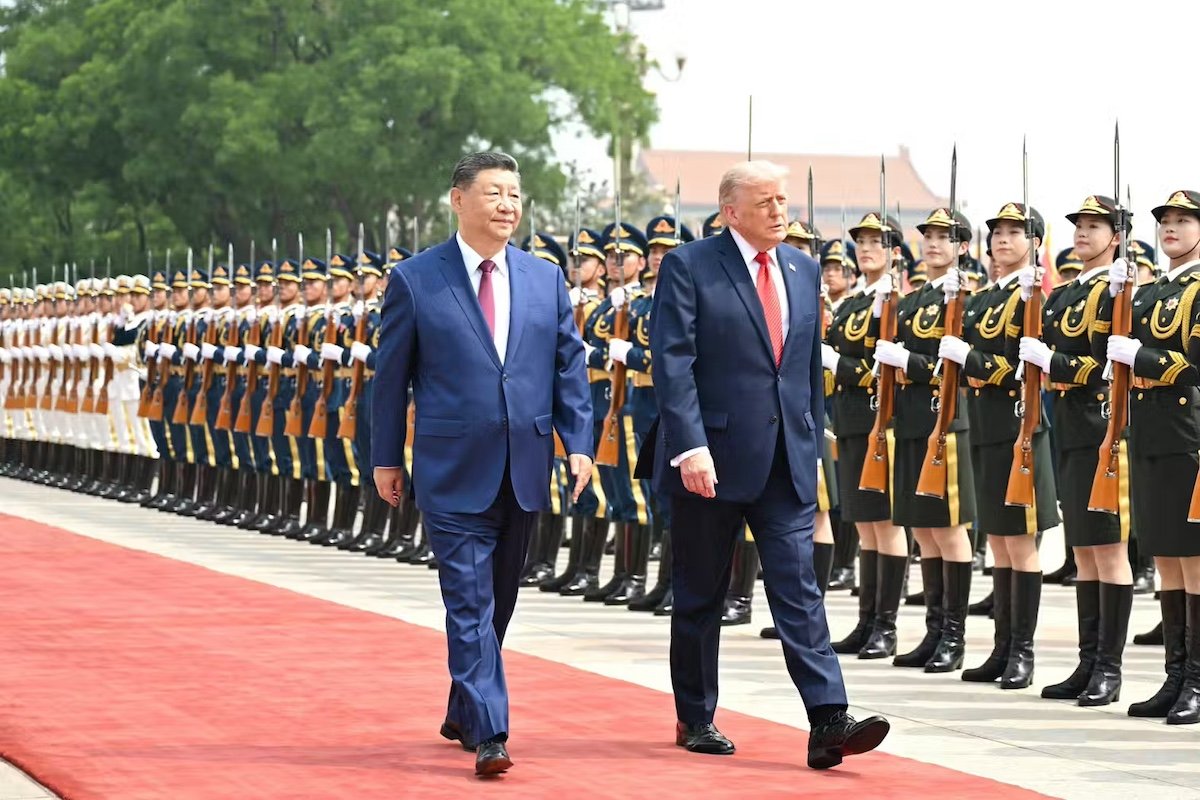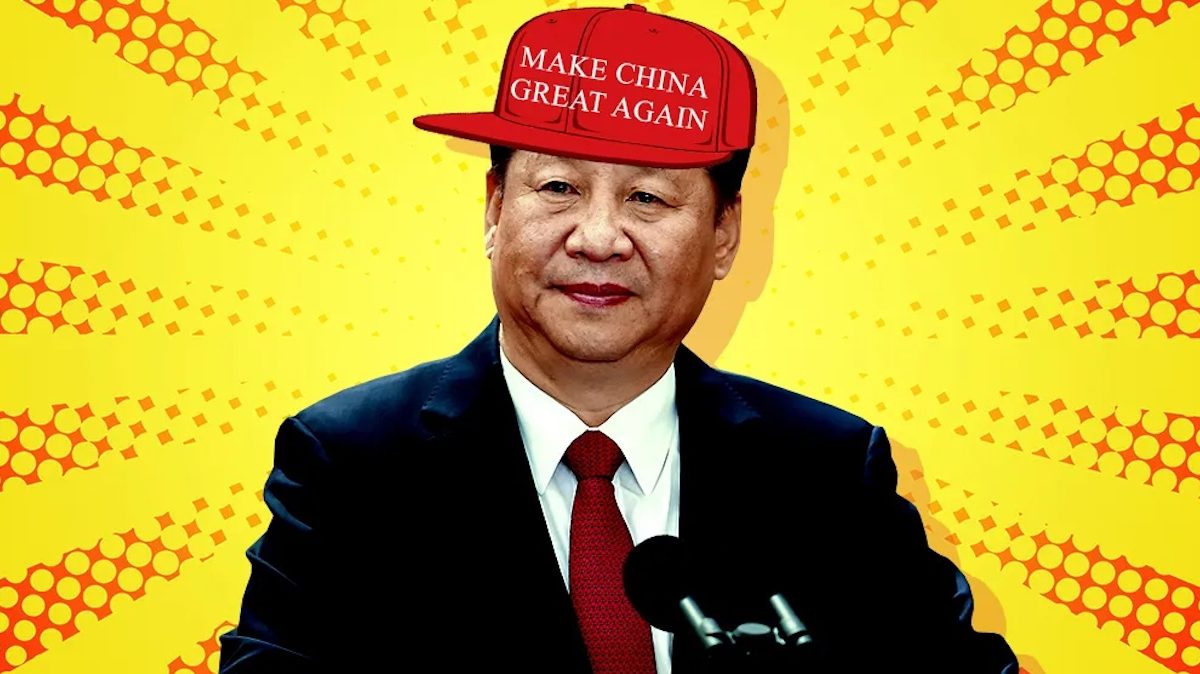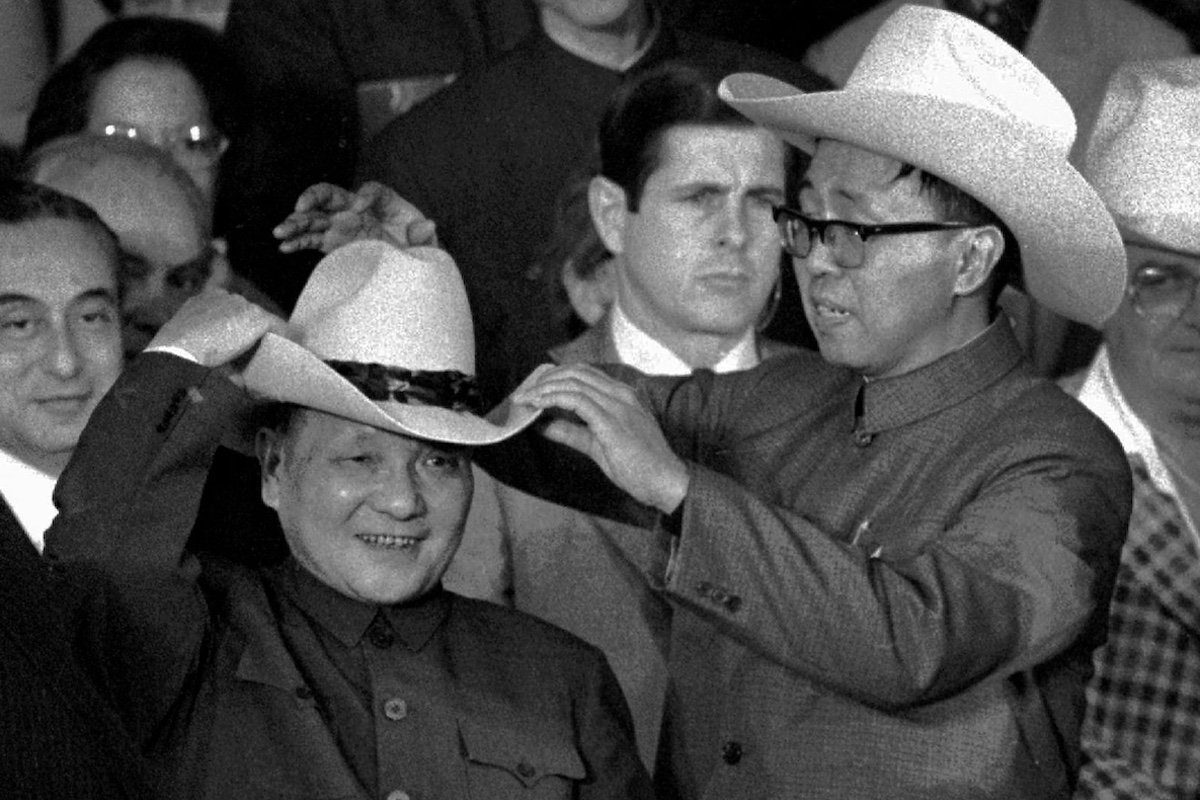
On the eve of a party plenum that has removed 45 of its 376 members, China's leadership faces a fundamental question: is the model it has adopted still suited to its current historical stage? The purge signals internal uncertainty, and foreign examples offer little reassurance. If the United States presented a positive model, Beijing might reconsider, but MAGA-era Washington—reliant on the Pentagon rather than cultural outreach like China's Confucius Institutes—offers no such lesson.
In the early 1980s, after the Wall of Democracy protests in Xidan, and again in the early 1990s, following the Tiananmen demonstrations, China's current leaders began their political careers fearing heping yanbian, or “peaceful evolution.” That phrase described the gradual transformation of a communist state into a capitalist democracy, achieved not by tanks or revolution but by trade, ideas, and contact with the West. For a generation of Chinese officials, it was the great strategic danger—communism could collapse because of it. Yet it was also an unstoppable force; the Chinese state had to embrace reforms, i.e., peaceful evolution, or it wouldn't work.
Today, China is witnessing a peaceful evolution of another kind: the United States is transforming into something else. Is this the end of the US, or a further stage in its development? The lack of clear answers in America and the West contrasts sharply with the certainty of 40 years ago, during the final phases of the Cold War and right after the collapse of the Soviet Empire. The US then held a “cultural hegemony” over China and the world, defending its democracy; now, apparently, it doesn't.
Chinese people are pragmatic and empirical. At the end of the day, they all believe, as Deng Xiaoping once quipped, that no matter whether the cat is black or white, as long as it catches mice. In the 1980s, Deng believed that following the US model was the right cat. China wanted to become like the US and better than the US. For decades, the US was an aspirational model for China. This Chinese aspiration was an important instrument the US used, consciously or unconsciously, in dealing with China. If China no longer wants to become like the US, then the US loses an important pathway for engagement. China will try to face the world following its own model, believing it is on the right path.
A question of models
The question of external models is not new. For over a century, China has measured itself against foreign examples. In the 1920s, between the world wars, China faced a similar dilemma: after the ruinous collapse of the traditional empire, which West should it follow? Was it Communism from Russia, fascism from Italy and Germany, or liberal democracy from Great Britain, France, and the US? Each seemed a plausible future, and each had admirers in China. The three models competed worldwide. Then China felt culturally, politically, and militarily in tatters, and it ended up following the Soviets. Half a century later, post-Maoist China concluded the Soviet model hadn't worked.
The country wasn't much better off than decades earlier, so it was willing to adapt the American model in some ways. It was because America was “the best model,” having won the Cold War and guaranteeing development and wealth to its people. Now China feels more successful than the US. For the first time in two centuries, its leaders talk on equal terms with the Western superpower. Donald Trump started his presidency two years ago promising to put down China's surplus and relaunch America's economy. Some 24 months later, the US is bogged down again in a Middle Eastern war, this time with Iran, causing the biggest oil crisis in half a century and driving markets mad. Not much to look up to in Beijing.
It's not only about US foreign misfortunes. The American “cat” no longer seems to be working for America; therefore, it won't work for China either. Beijing won't try to adapt the US model to its reality; quite the contrary. This shift changes the roots of the dynamics of bilateral ties after half a century, and it happens because of what Beijing sees happening in America.
Fog without a compass
Everyone sees the other through the lens of their own experience. What China sees across the Pacific is a society struggling in a thick fog that ominously resembles China's own 19th-century toils. Then, the abuse of opium and the spread of fanatical pseudo-Christian faith, the Taiping, wrought havoc on the empire, pushing it into a self-destructive civil war. Today in the US, fentanyl addiction and the abuse of prescription opioids have devastated communities. TikTok and dozens of other social media platforms are not a fanatic religion, but they blur the line between truth and falsehood into an uncontrollable, almost incomprehensible ball of confusion.
In Beijing, the US's present plight may look gloomily similar to the Chinese predicament two centuries ago. Fentanyl now in the US is like opium two centuries ago in China, and the nonsense peddled on social media now in America is like the Taiping fanaticism 200 years ago in China. TikTok and many social media platforms have two sides: they gather information about individuals (thus improving levers of central control), and they spread superficiality. Conversely, sophisticated societies need people with depth and sophisticated education to navigate today's society. The US has only a few educational platforms, and it has little quality control to protect children or citizens. American society inspects food and medicine, but not social media content.
This perception gap has profound implications. As Beijing watches Washington's struggles—from opioid crises to political polarization—it sees a model that has lost its luster. The result is a China that is more confident in its own path, less willing to emulate the US, and more determined to chart its own course. This is not just a matter of ideology; it is a pragmatic assessment of what works. For the US, the loss of its aspirational appeal in China removes a key lever in the relationship. As Washington's China policy still avoids hard truths, the gap between the two powers' worldviews widens. The question now is whether China has the right cat. Many domestic troubles suggest it doesn't, but the comparison with the external model, the US, may say otherwise.