America's mid-term congressional elections on November 3rd will mark the beginning of the final two years of the Trump administration, and thus the nearing of a potentially historic moment of reckoning for the country's estranged allies. The reckoning may seem distant, but in the blink of an eye, those members of the former West will face an awkward choice: will they greet whoever is elected as his successor in November 2028 as a friend, as if nothing had changed in the previous four years? Or must the bitter, painful experience of Trump's hostility mean that they must hold their former friend at arm's length, believing that something has changed permanently in their relationship with the United States?
Much could happen during those two years to affect this calculation, whether in America, the world, or in the internal politics of each ally, be it Japan, the United Kingdom, Canada, France, or any of the others. But now is nonetheless the time to start planning for that moment. Whether a government feels optimistic or pessimistic about its future relationship with the United States, it must work to get itself into the strongest possible position for dealing with that new president and his or her administration. In fact, many are doing so already.
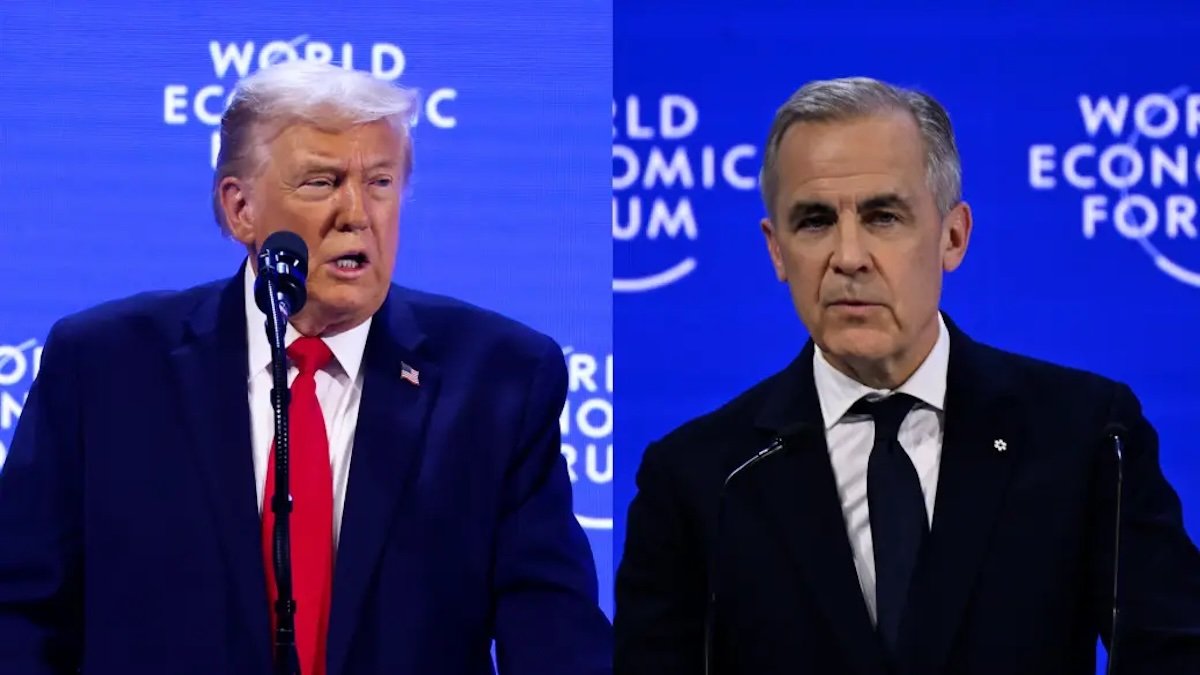
Canada's Prime Minister Mark Carney has spoken eloquently of the need to accept that there has been a “rupture” in the international order and has outlined ambitious plans to diversify his country's trading, technological, and defense relationships away from the United States and towards closer collaboration with what he called Canada's fellow “middle powers.” European leaders, led by France's outgoing president, Emmanuel Macron, speak of the need to develop “strategic autonomy.” Yet, admirable and bold though such ambitions undoubtedly are, they should be taken seriously but not literally, to borrow a phrase that has often been used about Trump himself.
Short-term maneuvers, long-term goals
Carney knows that two years is too short a time for him to have any chance of fulfilling his declared ambitions for Canada. His long-term strategy is in truth a short-term maneuver designed to make such a plan possible but, he hopes, not actually necessary. His first objective is to ensure he will still be Canada's prime minister in two years' time, for by talking proudly and patriotically about Canada's sovereignty he hopes to maintain his popularity and keep his job. His second objective, however, will be more important: to provide himself and Canada with as much leverage as he can for the moment when he takes his first call from, or holds his first summit with, the new American president in 2029.
It is the same for European leaders. They have known since Vladimir Putin attempted his full-scale invasion of Ukraine nearly five years ago that they needed to take more responsibility for the defense and security of their own continent, which is why the European members of NATO have increased their annual defense spending by more than 90% in the ensuing period, according to the International Institute for Strategic Studies. They have also taken over the full financial and military burden of supporting Ukraine, given that Trump brought such American support to an end in early 2025. They know that, to borrow a term from the financial markets, the transatlantic relationship has been “repriced.” But they still want that relationship to continue and to be restored to something close and co-operative rather than the insulting, bullying relationship under Trump.
To paraphrase a traditional saying from the European monarchies: the West is dead; long live the West. European and North American allies are, in effect, converging on Japan's approach. Japan knows that it has no “plan B” that can substitute for its security alliance with America, in the face of pressure from China, Russia, and North Korea, so it must work to make sure that “plan A” can work as well as possible with hopefully less gangster-like US presidents than Trump and to Japan's benefit, not its detriment.
Europe and Canada are not quite in the same position, as they do have alternatives. But they also know that those alternatives would be much worse than working alongside the world's biggest economy and most powerful military force. They want to recreate the collaborative traditions of the West, but on new terms. One important element of those new terms will be a more equitable sharing of the burdens of collective activities, most notably defense. Japan, Canada, and the Europeans are already making big strides toward that goal. In fact, with America's own public debt burden likely to put constraints on its own ability to spend more on defense, constraints its allies have already been feeling for years, the Western partners' situations are converging.
What Canada and the Europeans also want, however, is to ensure that America cannot just take them for granted and push them around. One interesting idea for how the European Union could do this was published recently by two scholars at the Institute for European Policymaking at Bocconi University in Italy, Daniel Gros and Nathalie Tocci. They propose that the EU should invite other likeminded countries, which would generally be democracies with open economies such as Japan, Canada, and Australia but could include others, to come together to sign what they call CORE – the “Compact for Open and Resilient Economies.” Under this compact, members would pledge to consult each other before taking major economic or security decisions, creating a web of mutual commitments that would make it harder for any single power, including the US, to dominate.
Such initiatives reflect a broader recognition that the post-war transatlantic order is undergoing a fundamental shift. The challenge for allies is not to abandon the relationship but to rebalance it, ensuring that cooperation is based on mutual respect and shared interests rather than unilateral dictates. As the 2029 transition approaches, the window for preparation is narrowing. Allies that act now will be better positioned to shape the terms of the new relationship, whether with a Democratic or Republican president. The stakes are high, not just for the West but for the entire Indo-Pacific, where the US alliance system remains a cornerstone of regional stability. For Japan, South Korea, and others, the outcome of this recalibration will have direct consequences for their security and prosperity.
In the meantime, allies should watch closely how Trump's final two years unfold, including his record spending in the midterms and his policies driving inflation. These developments will shape the political landscape that the next president inherits. By planning now, Western allies can ensure that when the moment of reckoning arrives, they are not caught off guard but are ready to engage with a new American administration from a position of strength and clarity.