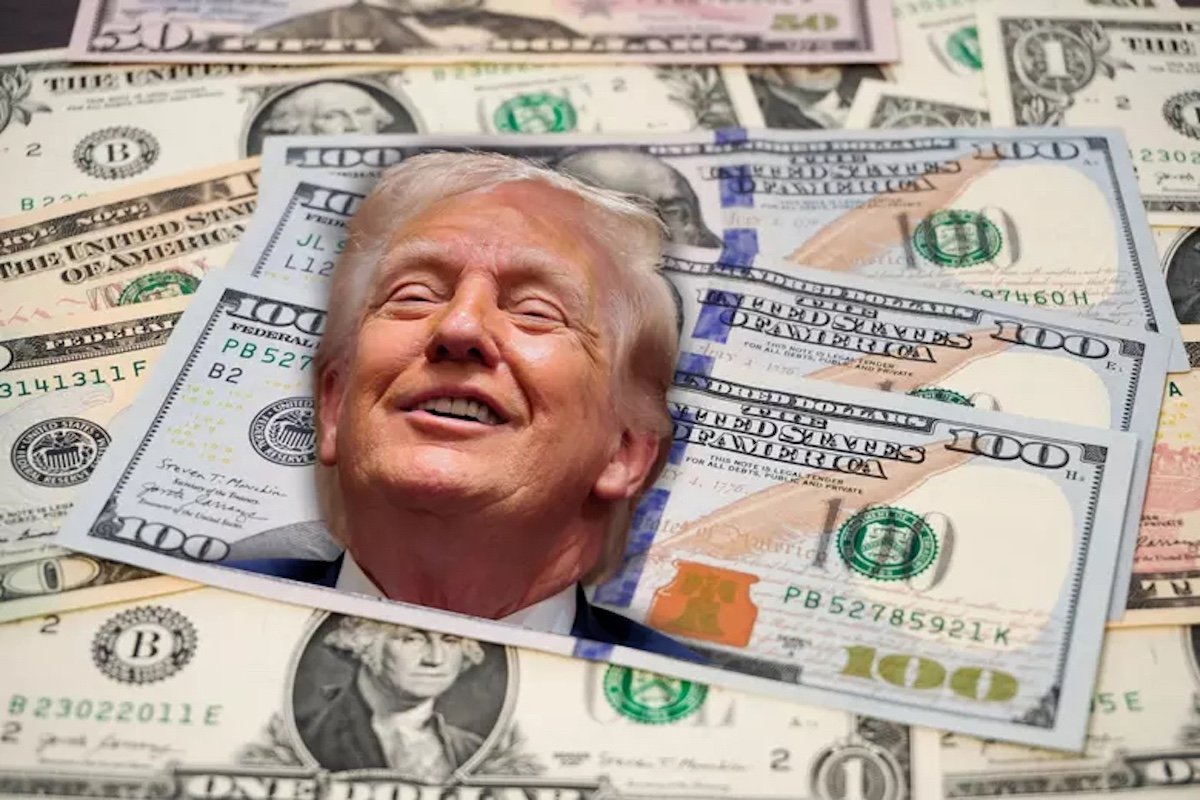
Donald Trump has always been eager to attach his name to achievements, and the current surge in inflation is no exception—though not in the way he would like. The recent price pressures are almost entirely of his own making, a result of policy choices that have rippled through the US economy and beyond.
To set the record straight: the earlier inflation spike under President Joe Biden was a global phenomenon, a consequence of the pandemic that struck during Trump’s first term. When Biden took office in January 2021, the US was still down over 10 million jobs from pre-pandemic levels. His recovery package accelerated hiring, bringing unemployment down to 4% by year’s end—far faster than expected. The reopening of the economy, much like in Germany, France, and elsewhere, triggered a temporary burst of inflation. It peaked at 9% in June 2022, then fell to 3.1% a year later, and stood at 2.6% by the November 2024 election. Forecasts pointed to a continued decline toward the Federal Reserve’s 2% target by the end of 2025.
Then Trump reversed course. Even before his inauguration, households and businesses began stockpiling imported goods in anticipation of his tariffs. Durable goods prices, which had been declining since early 2023, started rising again. The Consumer Price Index followed suit, hitting 3% in September 2025 before easing to 2.7% by year’s end. Many economists expected this to be a one-time adjustment, with inflation settling back down if no new tariffs were imposed.
But that theory was never tested. In late February, Trump launched a war against Iran, ostensibly to prevent it from developing nuclear weapons—a claim widely dismissed as pretext, especially since Trump himself had boasted of destroying Iran’s nuclear program in a prior strike. The real motivations, shared with Israeli Prime Minister Benjamin Netanyahu, were likely more about regime change than nonproliferation. The attack, however, backfired: Iran survived and retaliated by blocking oil shipments through the Strait of Hormuz, sending global oil prices soaring.
Oil and fertilizer: the ripple effects
Oil is not just fuel for cars; it is also diesel, essential for transporting goods across the US. Higher diesel costs are now feeding into nearly every product. Additionally, much of the world’s fertilizer is produced in Gulf countries, and fertilizer prices have skyrocketed, threatening crop yields this year and next.
The broad impact is visible in the Producer Price Index, which rose 6.3% year-over-year in September. While consumer inflation won’t reach that level, the direction is clear: prices will keep climbing in the coming months, far from the Fed’s 2% target.
This inflation is different from the 1970s in one crucial way: wages are not keeping up. Annual wage growth has slowed from 4% in 2023-2024 to 3% now, meaning workers are falling further behind as prices accelerate. The extra revenue is flowing to corporate profits, not labor costs—good news for Trump’s billionaire donors, but bad for the average American.
The consequences extend beyond US borders. Asian economies, heavily reliant on energy imports and exports, are feeling the strain. Trump’s Iran policies have disrupted global supply chains, and his trade wars with China and others are reshaping regional trade patterns. Export prospects for tech firms are now tied to the whims of Washington. Meanwhile, Trump’s embrace of Putin has further destabilized European energy markets, indirectly affecting Asian buyers.
In short, Trump’s policies have reignited inflation, and the pain is being felt not just in the US but across the Indo-Pacific. The question is how long it will take for voters and markets to hold him accountable.