Beijing appears ready to let its technology giants purchase more high-end Nvidia chips, a move that would give the US chip designer a fresh foothold in China and keep Chinese AI developers tied to its software after months of stalled trade.
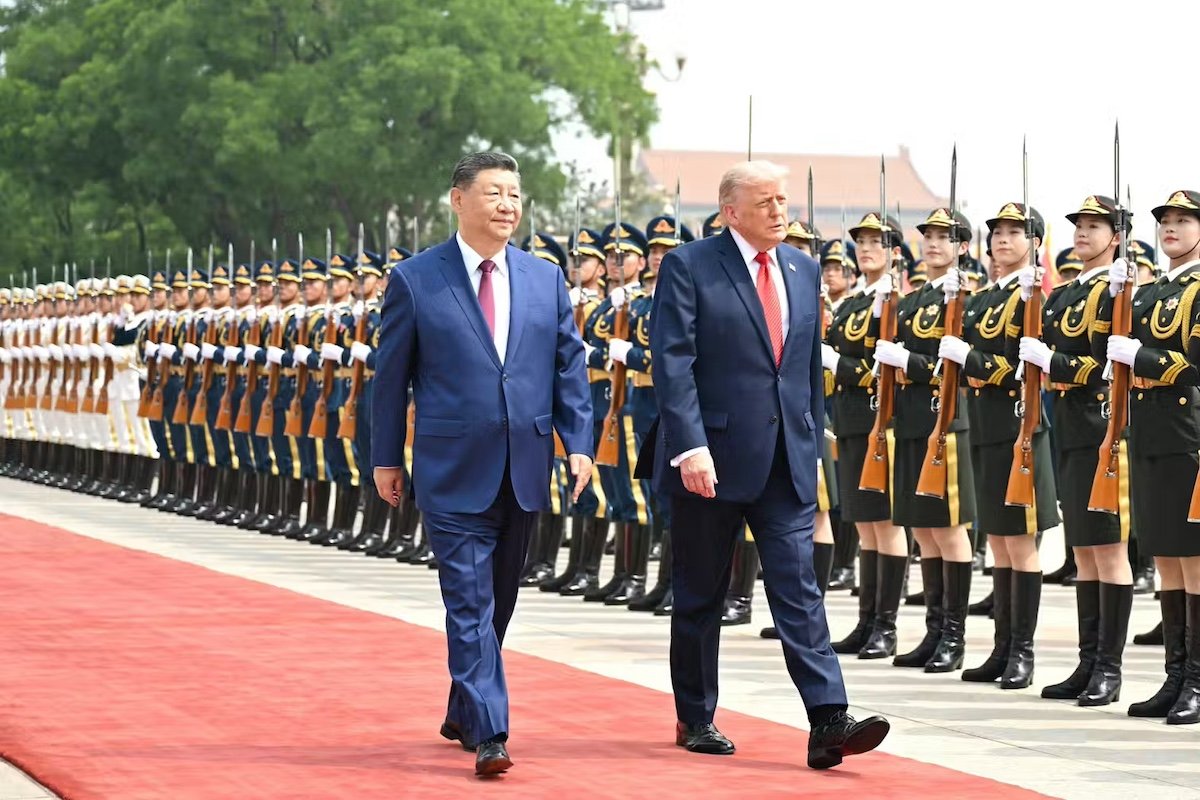
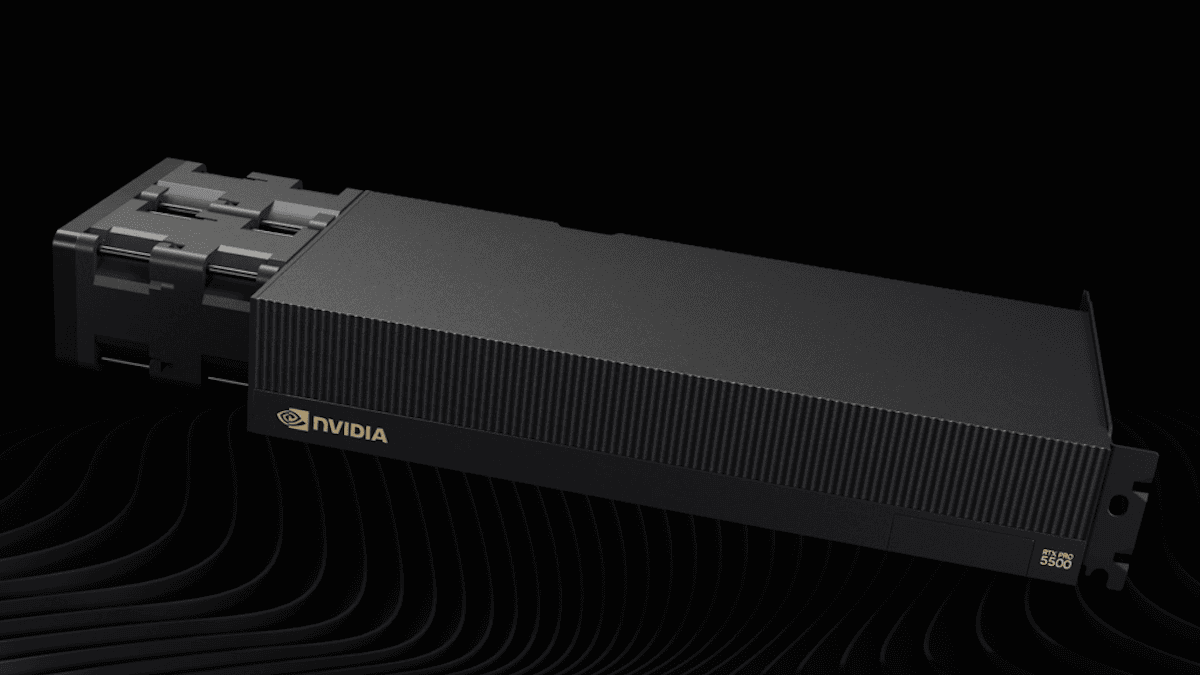
China's Ministry of Industry and Information Technology (MIIT) has asked major domestic companies, including ByteDance, Alibaba, and Tencent, to disclose their plans to buy Nvidia's RTX PRO 5500 processors, according to a report by The Information on Sunday, citing people familiar with the matter. The request follows the summit between Chinese President Xi Jinping and US President Donald Trump in Washington on September 23-25, where Nvidia chief executive Jensen Huang was among the guests at a White House state dinner.
According to the report, ByteDance alone is considering purchasing about one million RTX PRO 5500 chips. Nvidia plans to start shipping the chips to China in late December at roughly 500,000 units per quarter.
A strategic product for the Chinese market
The RTX PRO line has been part of Nvidia's China strategy for over a year. In July 2025, after meeting Trump in Washington and officials in Beijing, Huang announced a new, fully compliant RTX PRO GPU for China, which Nvidia said was ideal for digital twin AI in smart factories and logistics.
“General-purpose, open-source research and foundation models are the backbone of AI innovation. We believe that every civil model should run best on the US technology stack, encouraging nations worldwide to choose America,” Huang told reporters in Washington at the time.
Nvidia officially launched the RTX PRO 5500 on September 14 this year. The workstation card is powered by a GB202 graphics processor with 21,760 cores, matching the consumer GeForce RTX 5090, and carries 84 gigabytes of memory. It is essentially a top-tier gaming card with memory pushed to the extreme, allowing a company to run open-source AI models on its own servers for inference, but not for training new models.
An Nvidia spokesperson told Reuters on Sunday that US firms remain restricted by a combination of outdated US export controls, which cover gaming products released nearly half a decade ago, and China's own limits on US imports.
CUDA ecosystem at stake
If the purchases go ahead, Nvidia would have the opportunity to maintain its Compute Unified Device Architecture (CUDA) software ecosystem in China, where local chipmakers have been trying to lure AI developers onto their own platforms, some Chinese commentators said.
“The RTX PRO 5500 retains the full CUDA software stack. For Chinese developers, this means existing training frameworks, inference engines and toolchains can be moved across almost seamlessly without adapting the underlying software,” says a columnist with Communications World Web (CWW.net.cn), a telecommunications media platform managed by the MIIT.
“For Nvidia, every chip that enters the Chinese market helps extend the life of the CUDA ecosystem. The RTX PRO 5500 falls just below the export control red line while remaining powerful enough for real applications,” he says. “Whether it is approved offers a perfect case study of how the chip rivalry between China and the US is layered.”
He adds that if ByteDance's order of about one million chips arrived in bulk, it would quickly fill China's computing power gap but could also delay some companies' plans to switch to domestic chips. Regulators must strike a balance so that foreign computing power serves as a transitional supplement rather than creating path dependence.
Insufficient local supply
The H200, an older-generation Nvidia AI chip, has been at the center of a year-long tug-of-war since 2025. Washington barred its export to China until last December, when Trump allowed sales to approved Chinese customers in return for a 25% cut of the proceeds. Beijing blocked the chip at customs in January and later allowed only limited imports. By August, ByteDance and Tencent had each received about 10,000 units, far short of the 75,000 each was licensed to buy.
Beijing has instead steered firms toward Huawei Technologies' Ascend chips, made by Semiconductor Manufacturing International Corp (SMIC) and run on its Compute Architecture for Neural Networks (CANN) platform. Huawei's rotating chairman Eric Xu told the media during the Huawei Connect 2026 conference in Shanghai on September 17-19 that the company's production of AI computing equipment could not yet meet domestic demand. He said Huawei would not expand into overseas markets on a large scale in the short term.
Some observers said the RTX PRO 5500 shows where Washington now draws its line: Chinese firms can buy chips powerful enough to run large AI models, but Nvidia's most advanced Blackwell data center processors, used to train cutting-edge models, remain off-limits. The RTX PRO 5500's 84 GB of GDDR7 graphics memory with error-correcting code (ECC) makes it particularly attractive for inference workloads.
The potential approval of the RTX PRO 5500 underscores the layered nature of the US-China chip rivalry, where each product release and regulatory decision shapes the technological landscape. As the Trump-Xi summit signals a quiet end of the 'China plus one' era, the chip trade remains a critical test of bilateral relations. Meanwhile, Taiwan's silicon shield faces a race against time in the AI era, and Washington has surrendered rare earth dominance to Beijing, adding further complexity to the global tech supply chain.