On November 16, in Manila, Chinese and ASEAN leaders confirmed that the upgraded China-ASEAN Free Trade Area (CAFTA 3.0) protocol will take effect at the start of next month. The pact goes well beyond tariff cuts, institutionalizing cross-border alignment in digital trade, e-payments, smart customs single windows, supply-chain connectivity, and artificial intelligence standards.
That same day in Washington, the US Commerce Department's Bureau of Industry and Security (BIS) issued its interim final rule, "Addressing Remote Access to Advanced Semiconductors." Effective upon Federal Register publication on November 19, the rule imposes strict new licensing requirements on Singapore, Malaysia, Thailand, and Indonesia—alongside Brazil—for advanced AI chips. It triggers a 90-day compliance countdown for regional data centers that provide remote compute access to Chinese-headquartered firms.
For two years, global tech-policy debates have run on parallel tracks. Washington export-control analysts focus on closing chip diversion loopholes, while emerging-market researchers debate whether building national AI systems on Chinese open-weight foundations locks the Global South into Beijing's governance orbit. Few have modeled what happens when these forces intersect on the ground in Southeast Asia this winter. As CAFTA 3.0's institutional integration collides with Washington's extraterritorial cloud policing, ASEAN enterprises face a structural split-stack trap that exposes costly blind spots across the region.
Washington's blind spot
In Washington, analysts at the Center for Strategic and International Studies and the Center for a New American Security view the BIS rule as an overdue patch to the rescinded Biden-era AI diffusion framework. By replacing tiered global quotas with targeted destination controls and a 12-million aggregate processing cap across digitally linked data centers serving clients in Macau or Country Group D:5 destinations (including China and Hong Kong), BIS aims to stop developers from renting frontier Nvidia clusters in Johor or Singapore to bypass chip bans.
Crucially, the rule exempts US-headquartered end users, privileging American hyperscalers in Southeast Asia while subjecting local operators to strict licensing and customer-screening hurdles. Meanwhile, Washington's compliance-centric model has a glaring geoeconomic blind spot: it treats Southeast Asian data centers as isolated server farms rather than nodes embedded in a US$1 trillion regional trade bloc.
Legally, Washington's export-control perimeter is narrower than broad trade decoupling. "The rule doesn't say you can't serve the US and China overall; it's what you can do with the high-end US chips," said Steven Okun, chief executive of Singapore-based consultancy APAC Advisors. He noted that BIS licensing targets frontier AI models rather than routine warehousing or general logistics.
However, viewing the collision merely as a matter of checking two separate compliance boxes can mask a deeper institutional divide. Washington and Beijing simply do not govern technology the same way. The US regulatory model relies on legalistic perimeter policing: discrete rules, end-user checklists, and auditable walls around specific hardware. On the other hand, China's governance model under CAFTA 3.0 operates through embedded infrastructural integration: shared technical standards, interoperable payment and customs plumbing, and continuous cross-border data corridors.
When a Southeast Asian bank, logistics platform, or enterprise plugs into CAFTA 3.0's digital ecosystem while trying to run generative AI workloads on BIS-restricted compute, two incompatible governance philosophies collide within the same corporate architecture. More importantly, Washington's narrow exception for commercial recommender systems leaves general-purpose generative AI squarely inside the licensing net. By shifting legal liability onto overseas operators to verify end-user workloads within 90 days or face export blacklisting, BIS has turned US cloud infrastructure in ASEAN into a compliance hazard, accelerating commercial defection toward self-hosted Chinese open-weight models such as Alibaba's Qwen, DeepSeek, and Moonshot's Kimi K3.
Singapore-Malaysia squeeze
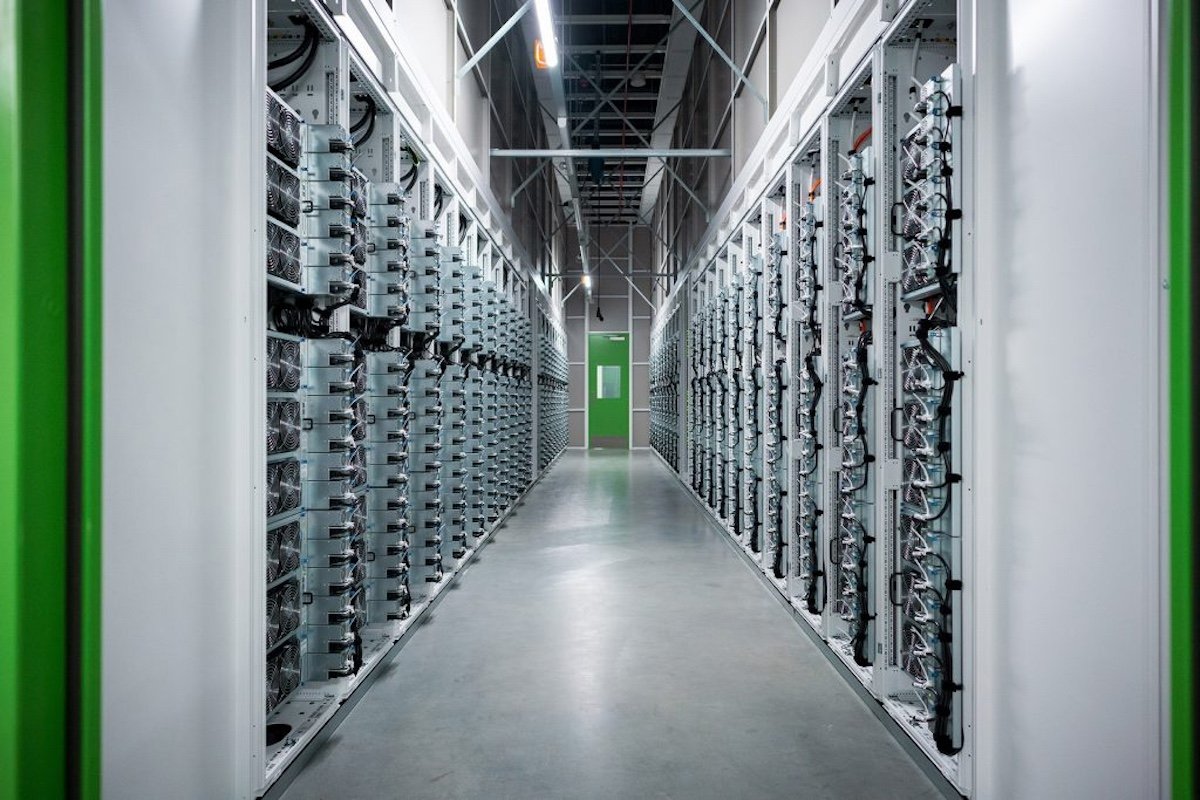
These regulatory headwinds are hitting just as Southeast Asia's physical data-center buildout runs into acute resource and political limits. In Malaysia's Johor state, where operational data center load surged to roughly a quarter of the state's electricity, authorities halted approvals for water-intensive Tier 1 and Tier 2 designs amid drought pressures and grid strain.
Across the Causeway, an asymmetric value-chain hierarchy has taken shape: regional corporate headquarters and legal orchestration cluster in Singapore, while Johor absorbs the water- and power-intensive physical buildout. Overlaying that infrastructure split is a sharp regulatory and investment bind. "There is a mismatch: on one hand they want investments into Johor, especially AI data centers, and on the other hand they obviously do not want to create issues with Washington," said James Chin, professor of Asian studies at the University of Tasmania.
He noted that while Prime Minister Anwar Ibrahim's government seeks to keep both Beijing and Washington onside to protect foreign investment, Putrajaya has already launched probes after receiving a US list of firms suspected of gray-market chip transfers. A Wall Street Journal investigation published on November 21 highlighted that enforcement challenge, detailing how networks linked to Singapore-based intermediaries have been moving advanced chips to Chinese clients.
The timing could hardly be worse for ASEAN's digital ambitions. As the bloc pushes forward with its Manila agenda and seeks to maintain its neutrality amid great-power competition, the new US rules threaten to undermine the very infrastructure investments that regional governments have courted. For enterprises, the choice is stark: comply with US export controls and risk losing access to Chinese markets, or embrace Chinese AI ecosystems and face potential blacklisting from US technology. The split-stack trap is not just a technical challenge—it is a strategic dilemma that will shape Southeast Asia's digital future for years to come.