Last week in Shenzhen, Indonesian President Prabowo Subianto oversaw the signing of a US$1.8 billion agreement with Chinese partners to convert Indonesian coal into ethanol, a fuel additive that can be blended with petrol. The deal, involving state energy firm Pertamina, Indonesia's Ministry of Higher Education, Science and Technology, and Beijing Petrochemical Engineering, is touted as a way to cut Indonesia's reliance on imported petrol.
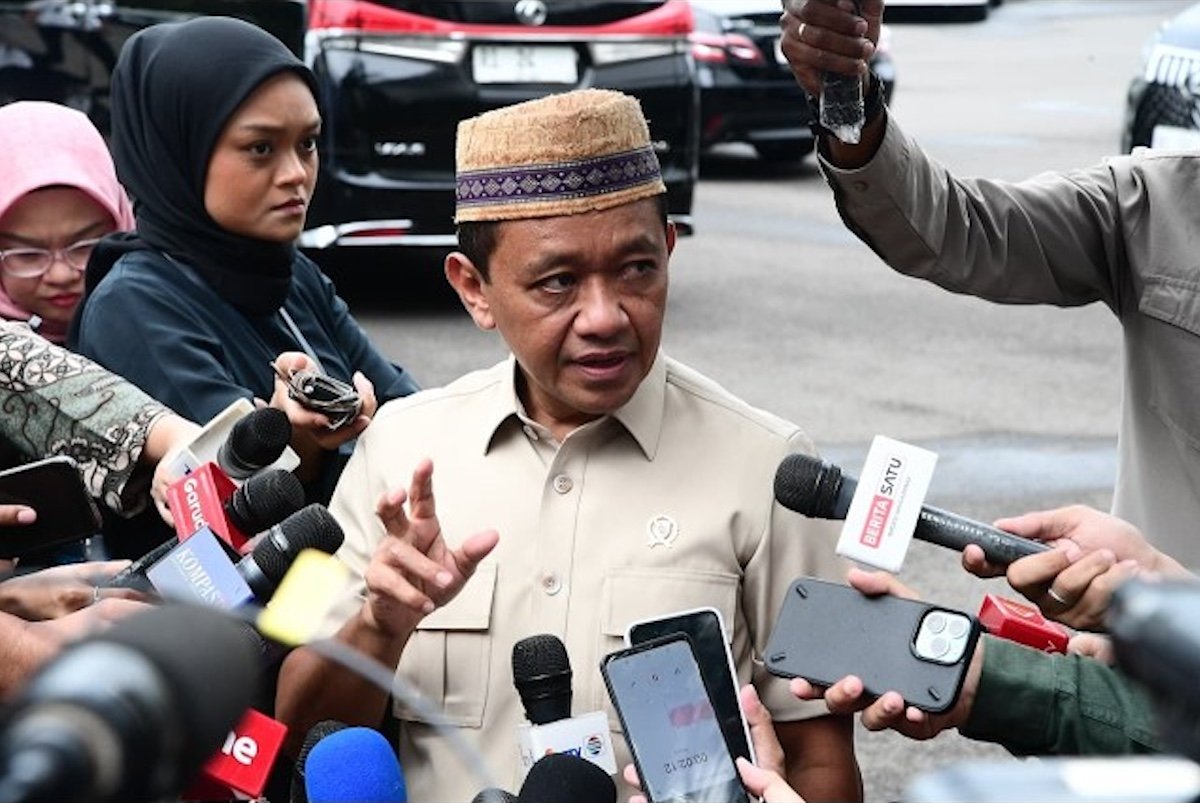
Days later, Energy Minister Bahlil Lahadalia announced in Jakarta that the Bakrie Group, one of Indonesia's most prominent business families, would join the project, and that construction had already begun. Yet Pertamina has clarified that the agreement is only a memorandum of understanding, not a binding contract. No comprehensive feasibility study has been completed, and key details—such as the plant's location, production capacity, and coal supply source—remain undetermined.
Who benefits from the deal?
The haste raises serious questions about governance. Bahlil is not only the energy minister; since August 2024 he has also led Golkar, one of Indonesia's largest political parties. Aburizal Bakrie, the patriarch of the Bakrie family and a former Golkar chairman, sits on the party's honorary council. When a minister who also heads a party hands a role in a state-backed project to a group linked to his party's elder, without any prior study, the public has every right to ask why.
The licensing arrangement adds another layer of concern. Bahlil said the Bakrie Group's old coal contract has been converted into a new special mining license. In Indonesia, large coal miners seeking extended contracts are required to promise domestic coal processing facilities. In 2023, the then-energy minister confirmed that such coal processing projects would proceed as part of that arrangement. In effect, a coal company can secure decades of mining rights by pledging to build a factory—whether that factory ever turns a profit is someone else's problem.
This kind of industrial policy rewards political closeness and protects entrenched coal interests. It does not foster a genuinely new industry. The precedent is not encouraging. In 2022, then-President Joko Widodo broke ground on a US$2.1 billion plant in South Sumatra to convert coal into dimethyl ether (DME), a gas meant to replace imported cooking fuel. A year later, the main investor, US firm Air Products, walked away, with a senior energy ministry official admitting the project made no economic sense. Air Products also abandoned a coal-to-methanol plan in East Kalimantan that involved Bakrie companies.
The Institute for Energy Economics and Financial Analysis calculated that producing DME would cost nearly twice as much as importing cooking gas, and that the plant would require a state subsidy of at least US$354 per tonne to break even. By 2025, state miner Bukit Asam said potential new partners were willing to invest far less than Air Products had planned. Coal-to-ethanol faces the same fundamental problem: converting solid coal into liquid fuel requires massive machinery, enormous energy, and vast amounts of water, making the end product expensive.
When oil prices fall, such plants lose money, and governments are pressed to cover the gap through subsidies, tax breaks, or cheap loans from state banks. Ultimately, taxpayers foot the bill.
China's green headfake
In 2021, President Xi Jinping promised the United Nations that China would help developing countries build green energy and would stop constructing new coal power plants abroad. A coal-to-fuel plant is not a power plant, so it slips through a loophole in that pledge. But its environmental impact is equally damaging.
Inside China, the coal-to-chemicals sector is already a concern. The Center for Research on Energy and Clean Air found that it was the only major sector where emissions were still rising, and that planned growth could add 2% to China's total emissions by 2029. Some analysts warn that China risks repeating past mistakes and being left with plants nobody needs. Exporting the same technology to Indonesia merely transfers that risk.
A plant like this operates for 25 to 30 years. Once built, it gives Indonesia a reason to keep digging coal long after other countries have moved on. If climate regulations tighten or cleaner fuels become cheaper, the plant could lose its value well before its time. The financial burden would fall on Pertamina, state banks, and ultimately the public.
Indonesia should still cooperate with China on energy. China produces most of the world's solar panels, wind turbines, and batteries, and does so at low cost. Indonesia has abundant sunshine and a rapidly growing demand for power. If the genuine goal is to reduce petrol imports, a better path would be to electrify motorbikes and buses and charge them with solar and wind energy.
Jakarta should pause this project until an independent study of its costs and risks is made public. And if Beijing wants to be seen as a green partner, it should invest where its promises are. The region is watching closely, as other high-profile summits in Shenzhen have shown that symbolism often outpaces substance.