The unanimous board vote on Monday that restored Jensen Huang as Nvidia's chief executive, with public backing from US President Donald Trump, sent a wave of relief through global AI stocks—Nvidia shares jumped more than 31% in New York. But for Southeast Asia, home to roughly half of Asia-Pacific's under-construction data center pipeline, Huang's return does little to ease the physical, financial, and regulatory bottlenecks that are closing in on the region's server-farm boom.
Wall Street and London analysts have long priced in uninterrupted expansion. Gartner projects worldwide AI spending will reach US$4.05 trillion by 2027, with 59%—or $2.4 trillion—going into infrastructure. Yet Apollo warns the industry will need $1.5 trillion to $2 trillion in annualized revenue by 2028 to justify that spending. Goldman Sachs flags mounting debt-funded capital expenditure, projecting nearly $1 trillion in new AI debt in 2027 as hyperscalers turn free-cash-flow negative.
Those capital assumptions are now colliding with a twin squeeze from Washington and host capitals. Rather than easing export friction, Huang's White House-brokered reinstatement leaves Nvidia operating under heightened political and compliance scrutiny, just as the US Commerce Department's November 19 remote-access rule takes effect and Trump threatens punitive taxes on US firms building data centers overseas.
“Export control stands to be a significantly greater constraint following the Jensen saga, even with his reinstatement. Politics [is] now more fundamentally involved,” said Ian Bremmer, president and founder of political risk consultancy Eurasia Group.
Global lenders are reassessing the fallout. Major banks, including JPMorgan Chase and Citigroup, have begun reviewing their financing exposure to Southeast Asian data-center projects caught between US chip restrictions and cross-border cloud uncertainty. This compounds pressure on debt-leveraged operators that analysts already warn will face severe consolidation by 2030.
Thailand hits the brakes
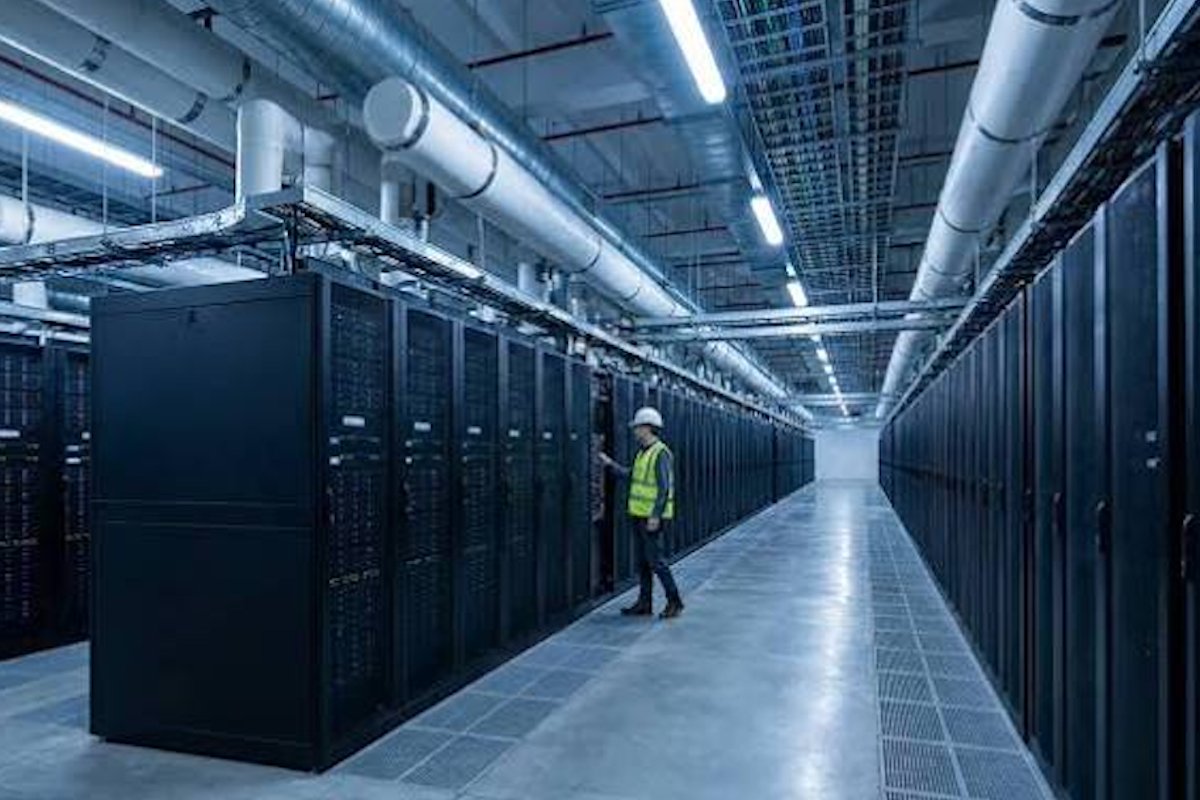
Nowhere is domestic regulatory pushback sharper than in Thailand. After positioning itself as a fast-track alternative for hyperscale investment in the Eastern Economic Corridor, Bangkok paused construction on 49 data centers in September and froze 117 pending approvals while drafting national standards on power, water, and local economic value. Earlier this month, Thai authorities backed a seven-tier regulatory framework linking new project approvals directly to energy efficiency, water conservation, and measurable domestic economic spillovers.
The policy shift reflects growing concern among Thai economists that resource-heavy server farms strain national utilities while generating minimal long-term employment. Research by the Thailand Development Research Institute (TDRI) estimates that a 100-megawatt data center consumes electricity equivalent to roughly 1.3 million residents while creating only around 50 permanent jobs. Securing reliable power and genuine technology transfer has become a strategic imperative for Bangkok, not merely an industrial policy tweak.
Speaking at a webinar on Indo-Pacific Security, Kitti Prasirtsuk, Professor of International Relations at Thammasat University, noted that ASEAN states are “sandwiched by China on one hand and by the United States on the other,” driving regional governments to seek “subtle” and “issue-based” partnerships that protect critical infrastructure, from undersea cables to power grids, without forcing binary alignment. For Thailand, Prasirtsuk added, defense and industrial cooperation increasingly hinges on “co-production and technology transfer” alongside Japanese clean-energy financing to sustain long-term resilience.
Johor's squeeze and Malaysia's dilemma
A similar reckoning is unfolding across the border in Malaysia's Johor state. Driven by spillover demand from land- and energy-constrained Singapore, operational data-center load in Johor surged to roughly a quarter of the state's electricity, prompting authorities to halt approvals for water-intensive Tier 1 and Tier 2 designs amid drought pressures and grid strain. While the Johor-Singapore Special Economic Zone (JS-SEZ) was designed to pair Singapore's capital and corporate headquarters with Johor's land and utilities, tightening local resource rules and US remote-compute restrictions are exposing the limits of a pure infrastructure-hosting model.
Even as Malaysian Prime Minister Anwar Ibrahim told the South China Morning Post on Tuesday that China is “easier to deal with” than the United States amid escalating tech tensions, Putrajaya's traditional hedging faces hard commercial and regulatory limits. Malaysia accounts for roughly 14.4% of US integrated-circuit imports in 2026, leaving its semiconductor and cloud ecosystem deeply exposed to Washington's compliance perimeter.
That exposure carries outsized strategic weight because Malaysia is the only ASEAN state physically straddling both sides of the South China Sea, placing Putrajaya at the geopolitical epicenter of US-China rivalry in Southeast Asia. Both Washington, which anchors high-tech semiconductor manufacturing and maritime intelligence sharing, and Beijing, which backs major rail, port, and Johor data-center buildouts, treat Malaysia as a decisive regional pivot. As Trump's Nvidia intervention leaves Southeast Asia to police chip smuggling, the region's governments are left to navigate a tightening web of export controls and local resource limits.
For now, Huang's comeback may have revived investor sentiment in AI stocks, but it does nothing to address the power shortages, water stress, and regulatory pushback that are reshaping Southeast Asia's data center landscape. As Huang's return ties Nvidia tighter to US statecraft, the region's leaders are increasingly focused on securing resilient infrastructure and genuine technology transfer—not just hosting servers for foreign hyperscalers.