Wall Street may have cheered Jensen Huang's return to Nvidia as a sign of corporate resilience, but the celebration masks a deepening crisis in Southeast Asia's artificial intelligence infrastructure. The physical and financial machinery behind the region's AI ambitions has ground to a halt.
According to the Financial Times, Nvidia has instructed major partners like Dell and Supermicro to stop shipping servers to buyers in Malaysia, Singapore, Thailand, and Indonesia. This follows a Bloomberg report that global banks have frozen billions in data-center loans tied to Chinese tech giants ByteDance, Alibaba, and Tencent.
The two developments form a coordinated squeeze: lenders have cut off project capital, and hardware suppliers have pulled the emergency brake on equipment. For months, analysts have warned that Southeast Asia's data-center expansion was on a collision course with US export controls, and that collision has now arrived.
Neutrality shattered
Southeast Asian capitals from Kuala Lumpur to Jakarta had built their AI strategies on the assumption that they could serve as neutral hubs for global compute, welcoming both American hyperscalers and Chinese tech firms. Billions were poured into land, water, and power-grid upgrades to attract investment.
On November 19, the US Commerce Department's Bureau of Industry and Security (BIS) upended that assumption. New interim rules closed a loophole that allowed remote cloud access to advanced chips and imposed a 90-day compliance deadline before enforcement begins on December 1.
The immediate impact on ASEAN operators is not just geopolitical—it is structural. Under the new rules, regional cloud providers must obtain federal licenses proving their end-users are not on restricted lists. Facilities serving clients in mainland China or Macau face a 12-month aggregate processing cap across digitally linked sites.
Yet the rules come with little guidance. Industry executives say BIS has not clarified how to secure approvals, audit multi-layered cloud tenants, or what technical telemetry satisfies export enforcers. Rather than risk extraterritorial penalties, server makers have chosen a blanket freeze.
“They are forced to when the Justice Department is involved,” said James Chin, a professor of Asian studies at the University of Tasmania, noting the parallel criminal crackdowns on chip smuggling in Singapore and Malaysia.
Financial fallout
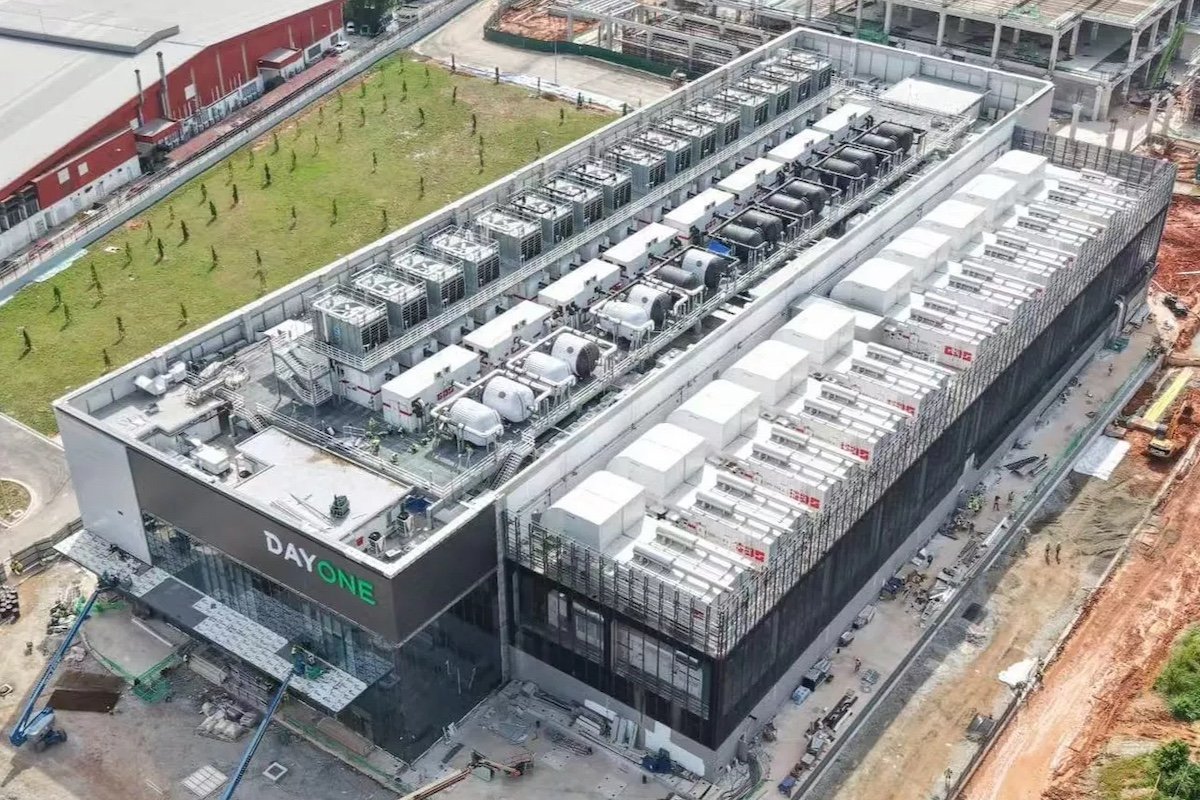
The compliance vacuum is already hitting capital markets. Lenders have stalled a $6.6 billion debt package for Bain Capital's Bridge Data Centres in Malaysia, and private credit funds have retreated from a $300 million facility for GMI Cloud in Thailand. ByteDance-backed DayOne Data Centers has shelved its US listing plans, and a BlackRock consortium is weighing a lower bid for regional assets.
Without licensing clarity, secondary debt buyers are unwilling to touch facilities reliant on Chinese anchor tenants. The freeze also lands as ASEAN prepares for deeper digital integration with Beijing under the upgraded China-ASEAN Free Trade Area (CAFTA 3.0), trapping regional governments between Washington's hardware vetoes and Beijing's demand for non-discriminatory digital commerce.
Physical infrastructure cannot simply wait out a three-month regulatory limbo. Utility regulators in Johor and Thailand were already scrutinizing data-center applications over power and water strain. Half-built server farms that have locked up grid allocations and water quotas now face steep carrying costs, contractual penalties, and domestic regulatory resets that could trigger forced consolidation.
The rules exempt US-headquartered end-users, effectively insulating American hyperscalers in Singapore and Johor while burdening local operators with onerous know-your-customer and licensing requirements. Rather than leveling the playing field, the 90-day procedure cannibalizes local cloud champions in favor of American tech giants.
For Southeast Asian policymakers, the crisis is a stark reminder that their AI ambitions rest on external decisions. As CAFTA 3.0 and US chip rules collide, the region's leaders have little leverage to alter BIS timelines. The window for action is closing, and the cost of inaction is mounting.