Vietnam's relationship with the United States is entering a delicate phase. While the two countries have deepened cooperation on semiconductors, critical minerals, and Indo-Pacific security, Hanoi's record trade surplus with Washington is testing the economic foundations of the partnership.
The question is no longer whether Vietnam benefits from closer ties with the United States, but whether it can address growing American concerns over market access, regulatory compliance, and supply-chain transparency before trade tensions begin to overshadow strategic cooperation.
The numbers are stark. Vietnam's trade surplus with the United States reached approximately US$123.5 billion in 2025, making it one of America's largest bilateral trade deficits, after those with China, the European Union, and Mexico. As the Trump administration intensifies scrutiny of trading partners and revives its focus on reciprocity and domestic manufacturing, Hanoi faces growing pressure to demonstrate that it is not merely benefiting from shifting global supply chains but also addressing longstanding structural concerns raised by Washington.
Pragmatic Engagement Over Confrontation
Vietnam's response has been notable for both its speed and pragmatism. Rather than publicly challenging US concerns, Hanoi has adopted a strategy of engagement, regulatory reform, and targeted concessions designed to preserve one of its most important economic relationships. Vietnamese officials recognize that access to the US market remains indispensable to sustaining the export-driven growth model that has transformed the country into one of Asia's fastest-growing economies.
Recent bilateral consultations between Vietnamese and US trade officials have focused on several recurring areas of concern: intellectual property protection, customs enforcement, forced labor compliance, digital trade regulations, and the prevention of illegal transshipment. The transshipment issue remains particularly sensitive as multinational firms continue relocating production from China to Vietnam amid geopolitical tensions and supply chain diversification efforts. For Washington, the concern is not simply where products are assembled, but whether sufficient value is being added within Vietnam to justify preferential treatment and avoid accusations that Chinese goods are merely being relabeled before entering the US market.
Vietnamese authorities have responded by tightening rules of origin requirements, increasing customs inspections, and strengthening oversight of export certification procedures. These measures aim to protect Vietnam's standing as a trusted manufacturing hub, especially as US officials have increasingly questioned whether some Chinese-made products—particularly solar panels, steel, and wood products—are being routed through Vietnam to sidestep tariffs.
Investment Climate Reforms
Equally important are Hanoi's efforts to improve its broader investment environment. Over the past two years, Vietnam has accelerated administrative reforms intended to streamline business licensing, simplify customs procedures, and enhance transparency for foreign investors. These reforms are not solely aimed at satisfying US demands. They reflect a growing recognition among Vietnamese policymakers that sustaining high levels of foreign direct investment will require a more predictable regulatory environment and stronger institutional capacity.
Prime Minister Pham Minh Chinh has repeatedly emphasized the importance of creating what officials describe as a “transparent, favorable, and internationally integrated” business climate. The government's ambitions extend beyond maintaining Vietnam's status as a low-cost manufacturing hub. Increasingly, Hanoi seeks to attract higher-value investments in advanced manufacturing, semiconductors, artificial intelligence, renewable energy, and digital technologies.
The semiconductor sector provides a useful example. Supported by the US-Vietnam Comprehensive Strategic Partnership, Vietnam has launched workforce development initiatives to train tens of thousands of engineers and technicians by 2030. American technology firms have expanded their investments, while Vietnamese authorities have introduced incentives to support the development of a more sophisticated technology ecosystem.
At the same time, Hanoi has moved to address concerns raised by international businesses regarding legal predictability and regulatory consistency. Investors have long complained about overlapping regulations, inconsistent enforcement, and bureaucratic delays that increase operational costs. Recent efforts to simplify administrative procedures and improve digital governance are intended to reduce these frictions.
Yet challenges remain. Vietnam's state-managed economic system often struggles to reconcile ambitious reform objectives with entrenched bureaucratic interests. While regulatory improvements have been announced, implementation can vary significantly across ministries and provincial governments. Foreign investors frequently note that policy interpretation remains uneven, creating uncertainty for businesses seeking long-term commitments.
Another area attracting attention is intellectual property protection. The United States Trade Representative's recent designation of Vietnam as a Priority Foreign Country in its Special 301 Report highlights continuing concerns regarding intellectual property rights enforcement. Vietnamese officials have pledged to strengthen protections, but progress will require sustained political will and institutional capacity building. As some analysts argue, this designation may misread the pace of reform rather than its direction.
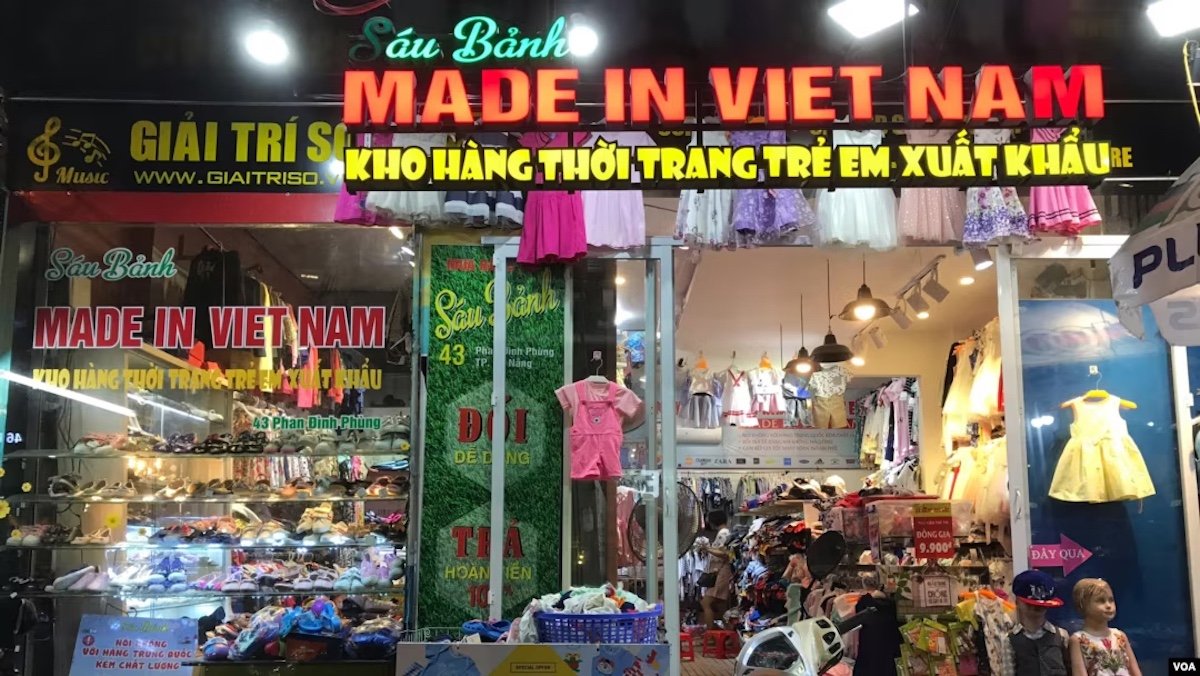
Vietnam's manufacturing rise has been powered by global giants such as Apple suppliers, Samsung Electronics, Intel, and Foxconn, all of which have expanded production as companies hedge against geopolitical risks and overreliance on China. But that success has come with growing scrutiny. To protect its standing, Hanoi has responded with tougher customs enforcement, stricter origin-certification rules, and closer cooperation with Washington on supply-chain transparency.
The broader context is one of intensifying US trade pressure across the region. As India has learned, Washington's demands for reciprocity can be coercive. Vietnam's ability to satisfy those demands without sacrificing its own development priorities will determine whether the US-Vietnam partnership remains a model of strategic convergence or becomes another flashpoint in global trade tensions.