China's accelerating missile buildup is fundamentally altering the military calculus in any potential conflict over Taiwan, shifting the focus from sheer numbers to industrial capacity, stockpile depth, and sustained precision-strike capability. A Bloomberg analysis of corporate filings from 2025 shows that 81 listed Chinese firms disclosed supplying key components to the country's missile industry—more than double the number recorded when President Xi Jinping took office in 2013. Nearly 40% of those companies posted record revenues last year, with combined sales rising 20% to 189 billion yuan (US$28 billion), even as revenues among China's 300 largest listed firms declined overall.
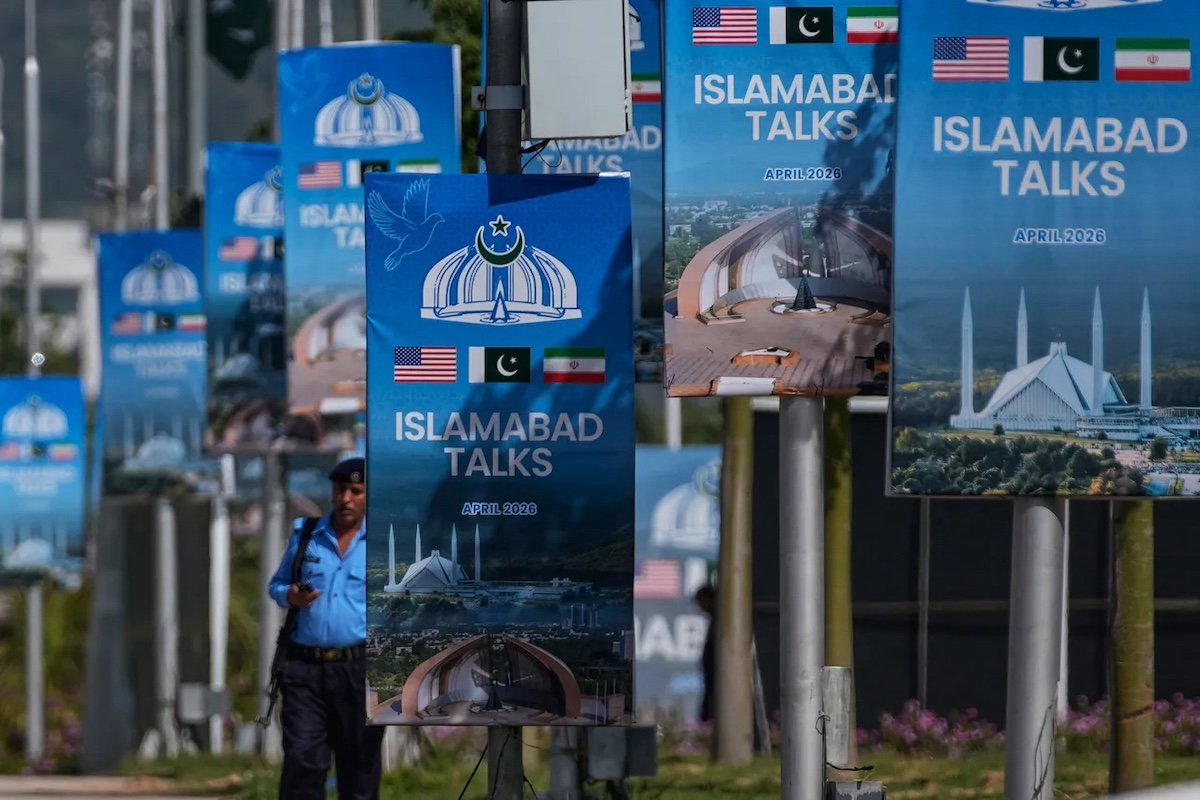
The surge reflects a wave of new military orders tied to rising tensions with the United States, the ongoing war in Iran, and deepening concerns over Taiwan. The report identified firms linked to China's two main state-owned missile makers, CASIC and CASC, producing components ranging from infrared sensors and stealth coatings to fiber-optic guidance systems for cruise and ballistic missiles.
Expanding Arsenal and Infrastructure
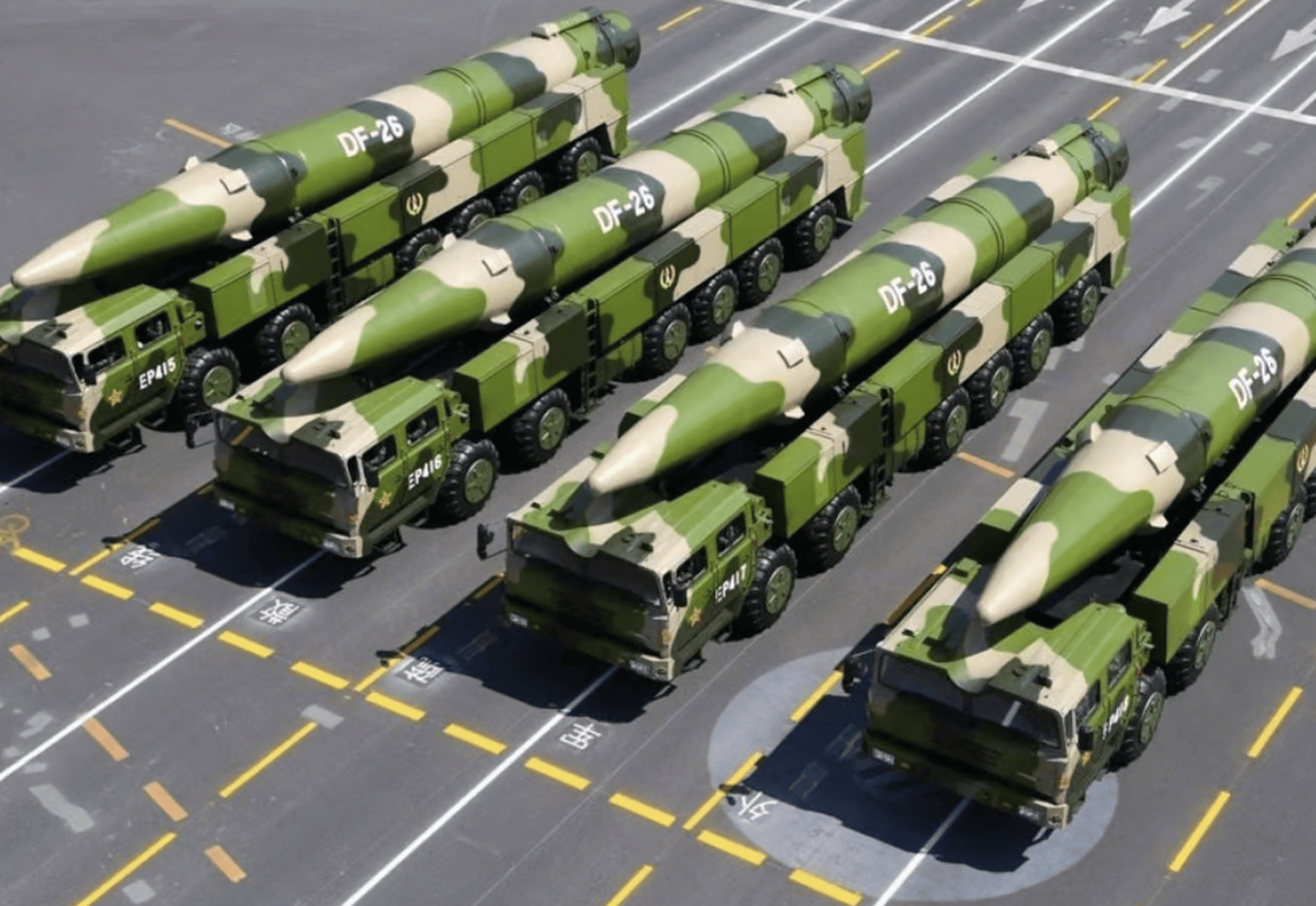
The 2024 US Department of Defense China Military Power Report estimates that the People's Liberation Army Rocket Force's arsenal grew by nearly 50% over four years, to about 3,500 missiles. This growth is backed by a substantial increase in production and storage facilities. CNN reported in November 2025 that China expanded 60% of 136 missile-related facilities between 2020 and 2025, adding over 21 million square feet of floor space. Analysts identified 99 missile manufacturing sites, of which 65 have expanded.
On deployment, The New York Times reported in September 2025 that China is expanding and dispersing missile deployments along its eastern coast facing Taiwan. Missile brigades have built larger new bases and added launch pads and facilities for mobile launchers. Chinese forces practice launching missiles from farm fields, valleys, expressways, and coastal outcrops near Taiwan. During wartime, commanders would deploy mobile missile units to caves and protected sites, then move them after firing to avoid detection.
Strike Scenarios and Industrial Capacity
In the event of a Chinese invasion of Taiwan, Lyle Goldstein, in an October 2025 Defense Priorities report, says China would use ballistic missiles, cruise missiles, rocket artillery, drones, and airpower to suppress Taiwan's air defenses and strike radars, command-and-control nodes, airbases, naval facilities, and logistics infrastructure. Chinese strike missions could number in the thousands per day initially, while China's industrial capacity would allow it to replenish missile stocks during a prolonged conflict and sustain repeated strikes on Taiwanese airfields.
Kelly Grieco and Hunter Slingbaum argue in a March 2026 Stimson report that Chinese missile and artillery strikes could crater Taiwan's runways and taxiways, grounding Taiwanese fighters for days or weeks, and potentially for months if China employed more advanced missile systems or aerial bombardment. Using modeling based on DF-11 and DF-15 missile attacks, they say China could keep Taiwan's fighter bases closed for over two weeks, and nearly a month if long-range artillery were added. Five successful strikes could disable all operational surfaces at Ching Chuan Kang Air Base, leaving surviving aircraft unable to take off or land, while repeated Chinese follow-up strikes could keep airfields unusable during the conflict's opening phase.
Comparative Production Advantages
Comparing China's missile production capacity to that of the US, a January 2026 Heritage Foundation report states that Chinese state-owned defense enterprises are reportedly producing munitions, high-end weapons systems, and other equipment at rates approximately five to six times faster than their US counterparts. The report further assesses that the People's Liberation Army could plausibly surge output of selected munition types by roughly 150–250% within six to eight months of national mobilization. This potential is attributed to military-civil fusion policies, automated “smart factory” production lines, the rapid conversion of dual-use civilian industry, and China's access to critical inputs such as rare-earth elements and energetic materials.
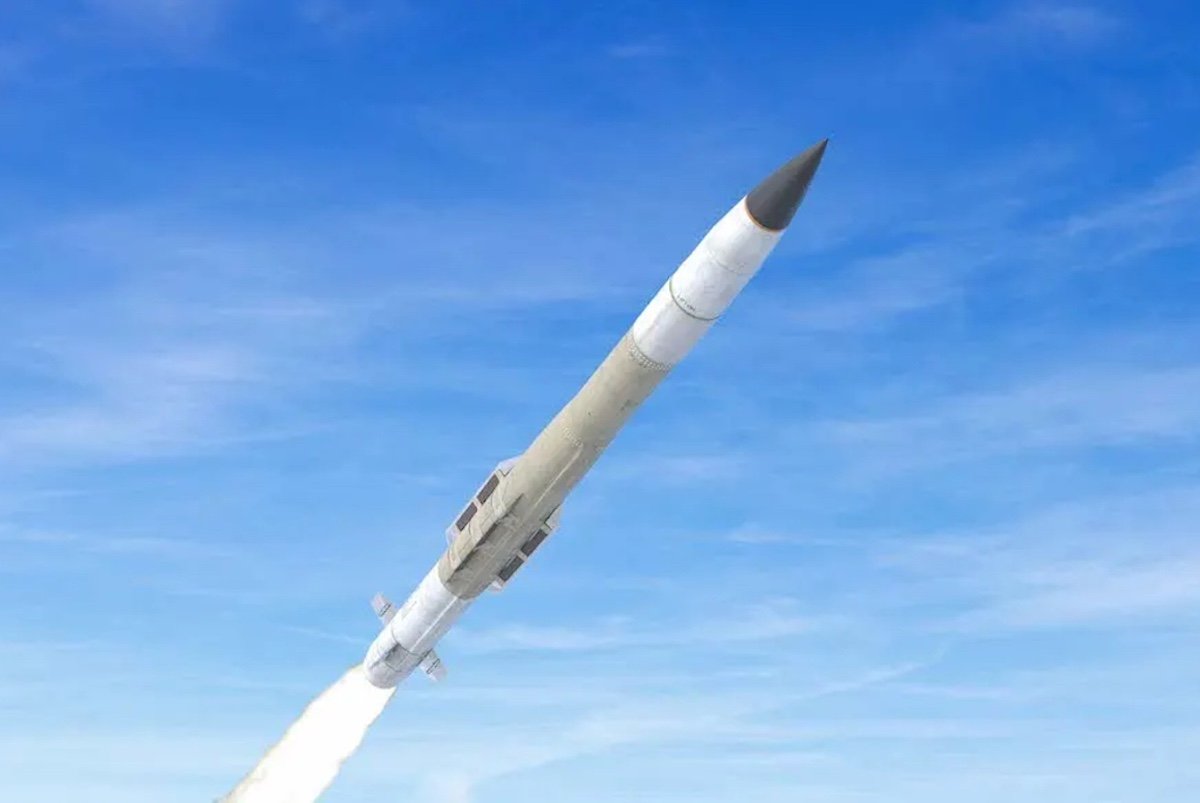
In contrast, Seth Jones argues in a May 2026 Center for Strategic and International Studies report that the US military lacks sufficient munitions and industrial readiness for a prolonged war with China, particularly in long-range strike and air defense systems. US stockpiles of long-range offensive missiles and air defense interceptors were already low before the Iran War and were further depleted during the conflict. Replenishment timelines are lengthy, taking over four years for some SM-3 IIA interceptors and roughly three years for systems such as THAAD interceptors, SM-6, SM-3 IB, Precision Strike Missiles, Tomahawk cruise missiles, and JASSMs.
This industrial asymmetry is reshaping the strategic landscape across the Indo-Pacific. As China extends its strike reach to include Guam, the implications for regional stability are profound. For further context on how these dynamics play out in Southeast Asia, see Indonesia's Strategic Drift: Caught Between US and China in the Indo-Pacific. Meanwhile, the broader US-China rivalry continues to evolve, as explored in Trump and Xi: Managing US-China Rivalry Without War.