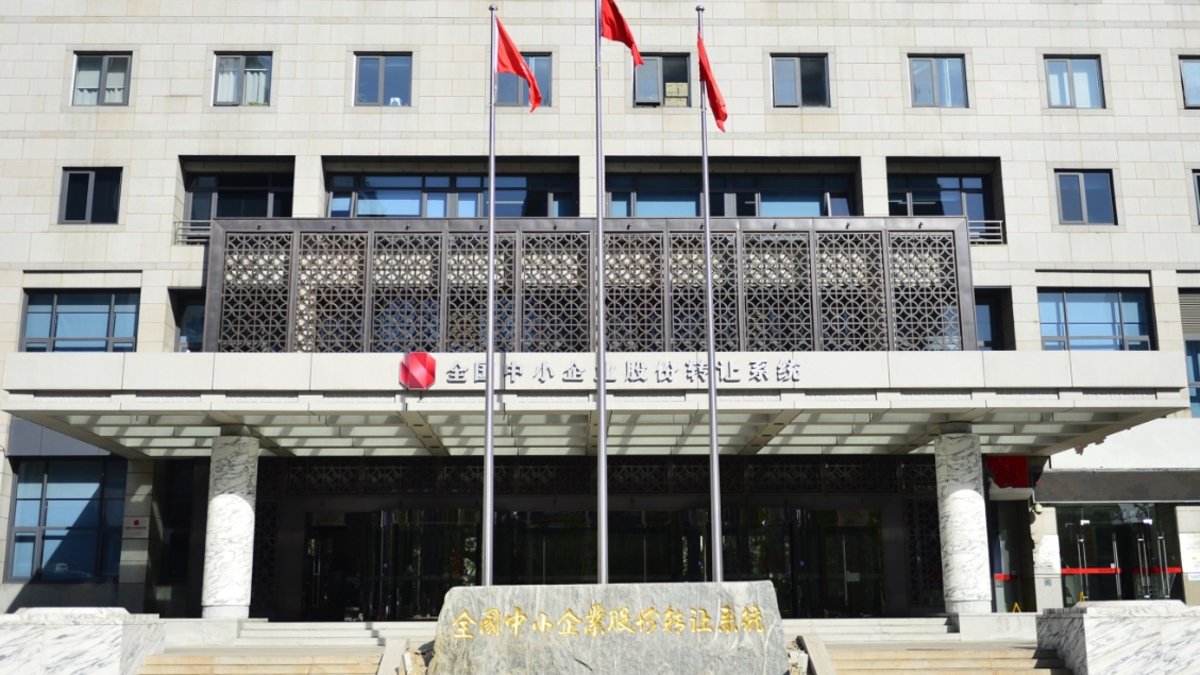
China's National Equities Exchange and Quotations (NEEQ), often termed the "New Third Board," has reported a total turnover exceeding 70 billion yuan for the first seven months of the year. The exchange, which serves as a financing platform for small and medium-sized enterprises (SMEs), saw transactions reach approximately 72.93 billion yuan (about US$10.46 billion) from January through July.
Activity notably accelerated in the final week of July, with turnover from July 27 to 31 alone hitting 11.83 billion yuan. As of the end of last week, the board listed 8,509 companies. Launched in 2013, the NEEQ was designed to provide SMEs with a more accessible capital market, featuring lower costs and streamlined listing procedures compared to the main Shanghai and Shenzhen exchanges.
Broad Fiscal Support Amid Pandemic Pressures
In parallel efforts to stabilize the economy, Chinese authorities granted export tax rebates and exemptions worth 812.8 billion yuan during the first half of 2020. This substantial fiscal measure was aimed at alleviating financial strain on exporters grappling with the global disruptions caused by the Covid-19 pandemic.
The State Taxation Administration detailed that, starting March 20, the government raised export tax rebate rates for 1,464 product categories. By the end of June, these policies had benefited nearly 25,000 export firms. The support appears to have had some effect, with China's foreign trade in June rising 5.1% year-on-year. Exports increased by 4.3% and imports by 6.2%, according to official data.
This state-led intervention to cushion exporters comes as global economic institutions reassess state-led growth models amid China's growing influence on international trade and industrial policy.
Diverging Fortunes in Key Manufacturing Sectors
Recent industrial data reveals a patchy recovery across different sectors. The bicycle industry, for instance, experienced a significant boom. Major bicycle manufacturers—defined as firms with annual main-business revenue over 20 million yuan—saw their total profits surge 24.8% year-on-year to 2.87 billion yuan in the first half. Their combined revenue reached 69.28 billion yuan, a 4.1% increase.
The electric bicycle segment performed even more strongly, with revenue jumping 13.4% to 37.74 billion yuan and profits soaring 31.6% to 1.67 billion yuan. The surge is widely attributed to increased demand for personal transportation and outdoor activities during the pandemic.
In contrast, China's major battery manufacturers faced a downturn. Profits for these firms fell 9% year-on-year to 12.48 billion yuan in H1, while business revenues declined 10% to 316.9 billion yuan. Output figures were mixed: production of lithium-ion batteries rose 1.3% to 7.15 billion units, but output of primary batteries and battery packs dipped 0.7% to 17.82 billion units.
This industrial overcapacity in some sectors, juxtaposed with strength in others, is a dynamic that continues to reshape global trade and pressure other Asian economies competing in similar markets.
Cultural Industry and Corporate Highlights
China's cultural industry showed signs of gradual recovery as pandemic controls took effect. According to the National Bureau of Statistics (NBS), the sector's total revenue for the first six months was 4.02 trillion yuan, a 6.2% year-on-year decline. However, this represented a significant improvement from the 13.9% contraction recorded in the first quarter.
Growth was led by sectors embracing new business models, particularly "Internet Plus" cultural services, where revenue climbed 18.2% to 1.29 trillion yuan. The NBS survey covers approximately 59,000 cultural enterprises with annual revenue exceeding 20 million yuan.
At the corporate level, automaker Anhui Jianghuai Automobile (JAC Motors) reported a net loss of 146 million yuan for H1, a reversal from a 125 million yuan profit a year earlier. The company attributed the loss to pandemic-related sales declines, with vehicle and chassis sales dropping 10.97% to 209,400 units.
Conversely, First Automotive Works Group (FAW) reported a striking 108% year-on-year increase in sales of its premium Hongqi brand cars for the January-July period, selling over 87,500 units. The company credited an expansion of online and offline sales channels for the growth, with July sales alone nearly doubling to over 17,500 sedans.
The data collectively sketch a picture of an economy in selective recovery, where state support, shifting consumer behavior, and digital adaptation are creating clear winners and losers. The performance of the NEEQ offers one window into the financial health of China's vast SME sector, which remains a critical component of national employment and innovation, even as larger industrial and policy trends play out across the region.