Beijing has floated sweeping export controls on next-generation solar cell technology, a move that could complicate Elon Musk's ambitions to power satellites and AI computing from space. The proposal, unveiled by China's Ministry of Commerce and Ministry of Science and Technology, targets 40 technologies across artificial intelligence, biomedicine, and solar manufacturing. Fourteen would face outright export bans, while 26 would require licenses. Products made with the controlled technologies could still be shipped abroad, but the underlying know-how and key equipment would be restricted.
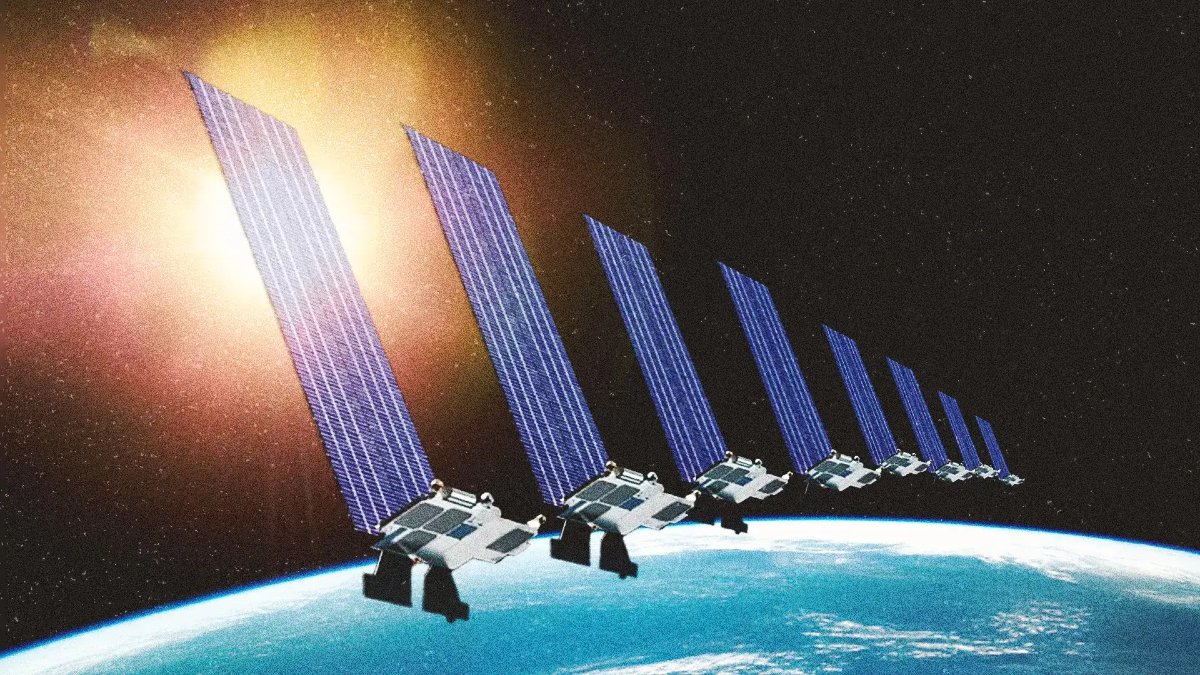
The list includes production technology for perovskite and tandem solar cell modules—materials that are efficient, lightweight, and flexible, making them ideal for space applications. On Earth, perovskite cells degrade quickly when exposed to moisture and oxygen, but in the vacuum of space they can last longer and even self-heal from radiation damage. That makes them a leading candidate for powering satellites and future orbital data centers.
Musk, who runs both Tesla and SpaceX, said on a Tesla earnings call in late January that the company would aim to produce 100 gigawatts of solar cells annually in the United States. Media reports suggest part of that capacity would support SpaceX's satellite fleet. Days later, a Tesla team visited Chinese solar firms involved in equipment, silicon wafers, and perovskite technology. GCL Group confirmed the visit, while JinkoSolar said it had signed no agreements.
The proposed controls come as Musk integrates his AI venture, xAI, into SpaceX. In early February, he said space would become the cheapest place to generate AI computing within two to three years, using satellites with near-constant solar power. He has also prioritized building a Moon city within a decade. In March, Reuters reported that Tesla was in talks to buy about US$2.9 billion of Chinese solar manufacturing equipment, some of which would need Chinese export approval under the new rules.
What the export controls cover
The 40 technologies span three fields. In AI, 23 technologies related to large models, AI agents, computing clusters, and information processing would be covered, though technologies already in the public domain via open-source releases or academic papers would be exempt. In biomedicine, five technologies related to cell and gene therapy, small nucleic acid drugs, and pathogenic microorganisms would be covered, with automatic licenses for outbound licensing deals that don't transfer ownership. In solar, 12 technologies related to polysilicon, wafer, and cell manufacturing would be covered, including key and core equipment.
The 14 outright bans include AI-driven malicious code generation and mutation, and proprietary cell and gene therapy process platforms. License requirements would apply to AI-assisted vulnerability discovery and engineering technology for polysilicon lines with an annual capacity of 30,000 tons or more.
A Ministry of Commerce spokesperson said the revision is a routine update to China's catalog of technologies prohibited or restricted from export, which the two ministries have adjusted periodically since 2001. He insisted it does not target any specific country, region, or entity. “In recent years, AI, biomedical and solar technologies have been increasingly applied in sensitive fields, and all major economies have imposed export controls to varying degrees. China has drawn on common international practice and imposed necessary controls in accordance with the law,” he said.
The spokesperson added that most AI and biotech activity would not be affected. Offering AI models to overseas users through APIs, apps, websites, or software-as-a-service would not count as an export. Downloading an open-source Chinese model to run on computers outside China would be fine, but a Chinese firm would need a license to install a controlled model on an overseas client's servers.
The proposal follows a September 21 agreement in New York between US Treasury Secretary Scott Bessent and Chinese Vice Premier He Lifeng to notify each other of AI incidents that could threaten national security. Bessent cited non-state actors in cyberattacks and bioweapons as examples.
Industry experts note that China's move is partly about protecting its lead in solar technology, which is critical for its own space ambitions. “Space photovoltaics is the core energy source for strategic industries such as commercial spaceflight, space stations, space computing and deep-space exploration. It serves both civilian and defense needs and bears on the security of China's space energy strategy,” said Zhao Lei, a researcher at the Chinese Academy of Sciences' Institute of Electrical Engineering and director of its solar cell laboratory.
The public can comment on the proposal until November 15. If enacted, the controls could force Musk and other foreign firms to seek alternative suppliers or develop their own perovskite technology, potentially delaying their space power plans. The move also underscores the growing intersection of trade policy, technology competition, and space security in the Indo-Pacific. For more on how Washington's approach to Beijing is evolving, see why Washington's China policy still avoids hard truths. And for a look at how other nations are navigating China's tech leverage, consider what Australia can learn from Southeast Asia's China strategy.