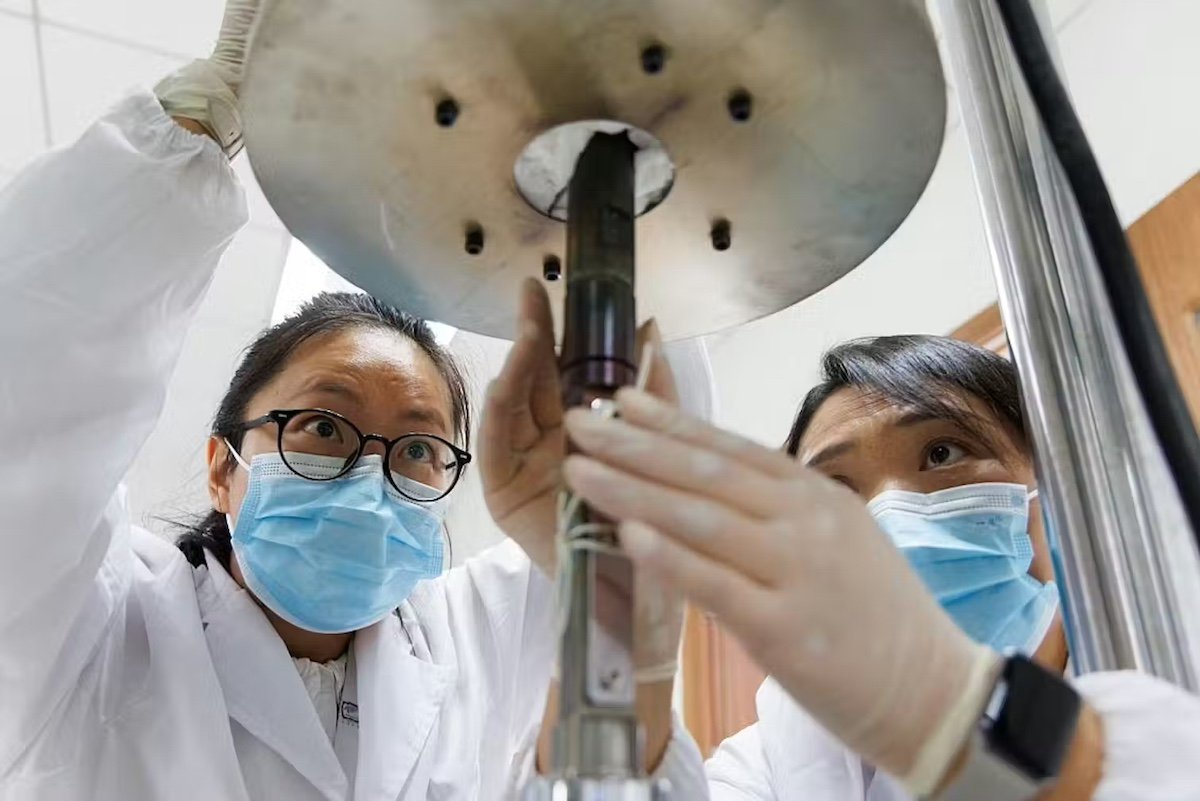
China's investment in research and development has reached parity with—and by purchasing power measures surpassed—that of the United States, according to a March 2026 OECD report. Both nations now spend over US$1 trillion annually on R&D. For eight decades, the US operated the most productive scientific enterprise in history, yielding breakthroughs like the internet, the mRNA vaccine, semiconductors, and GPS. That dominance was built on sustained public investment in universities and federal labs, and a culture of open inquiry that turned discovery into economic growth—accounting for more than 20% of US productivity since World War II.
China, by contrast, spent almost nothing on research in 1980. Its systematic rise has been relentless: in 2019, it surpassed the US in the share of the top 1% most-cited papers; by 2022, it led globally in total highly cited papers; in 2024, it overtook the US in total scientific publications—the first time any nation has done so since the US itself surpassed the United Kingdom in 1948. That same year, China pulled ahead in the Nature Index, which tracks publications in the world's most selective journals, posting a 17% advantage over the US. Chinese entities also filed roughly 1.8 million patent applications in 2024, compared to America's 603,191.
These are not isolated data points. They mark a structural shift in where the world's scientific frontier is being built. But as a policy analyst tracking international science collaboration for over a decade, I argue that China's ascent is, in one sense, good news. More knowledge generated by more researchers expands the global pool of discovery from which everyone can draw. The world benefits when science thrives.
The Real Problem: US Disinvestment
The problem is not that China is investing, but that the US is not. Federal R&D spending in the US peaked in 2010 at roughly $160 billion and fell by more than 15% over the following five years. As a share of GDP, it dropped from 1.86% in 1964 to about 0.66% in 2021. The federal government is no longer the largest R&D spender: it funded about 40% of basic research in 2022, while the business sector performed roughly 78% of US R&D. Industry has simultaneously withdrawn from open scientific publication over the past four decades, shifting from research toward development. The result is a shrinking pool of openly shared knowledge precisely as public investment contracts.
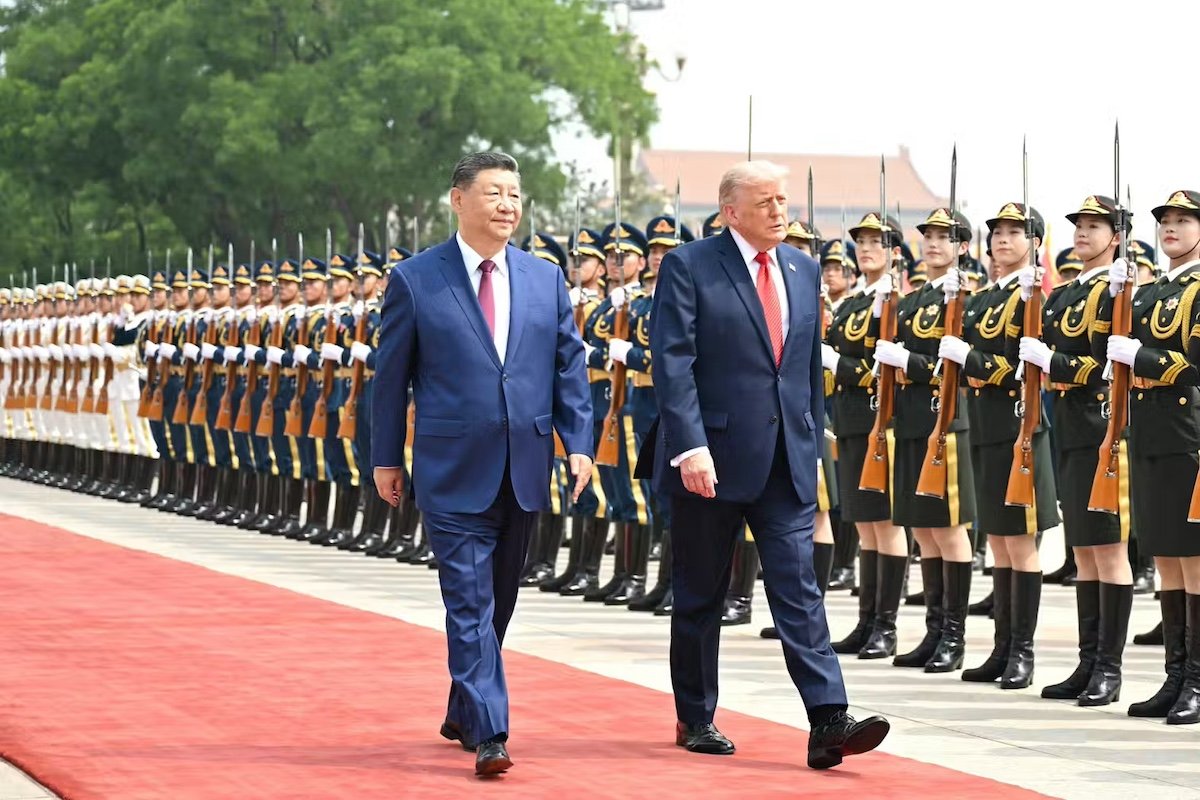
Under the second Trump administration, US science agencies have been slow-walking new research proposals, and current budget cuts threaten to deepen reductions further. At the same time, Washington has actively restricted scientific exchange—tightening access to US institutions, scrutinizing international collaborations, and raising barriers for foreign-born researchers. These policies, intended as security measures, work against the openness that made American science productive and attractive to global talent. I describe this as the stockyard paradox: securing research assets may weaken the very system these measures aim to protect.
The deeper danger for the US economy is that disinvestment and selective engagement erode the capacity to use cutting-edge science regardless of where it is produced. Absorbing and applying knowledge developed in Boston or Beijing requires maintaining research institutions, trained workforces, and active participation in global networks. You cannot free-ride on Chinese science if you have dismantled the institutional and human capital needed to evaluate, translate, and apply it. A nation that hollows out its research base not only falls behind but progressively loses its ability to benefit from science, including in technologies it already accesses.
Talent compounds the problem. The US built its dominance partly by being the destination of choice for the world's most ambitious researchers. It leads in Nobel Prizes, but 40% of those in chemistry, medicine, and physics were awarded to foreign-born scientists. Restrictive policies risk driving that talent elsewhere—to China, Europe, or other Asian hubs. Meanwhile, China's rise is reshaping regional dynamics: its sovereign bonds in Indonesia deepen financial ties, and its practical AI infrastructure contrasts with America's pursuit of AGI mirages. As the US retreats from open science, the Indo-Pacific's research landscape is being redrawn.
The lesson is clear: China's surge is not a threat to global science—it is an opportunity. The real threat is America's retreat from the principles that made it a scientific leader. Without renewed investment and openness, the US risks not just losing its edge, but its ability to benefit from the discoveries of others.