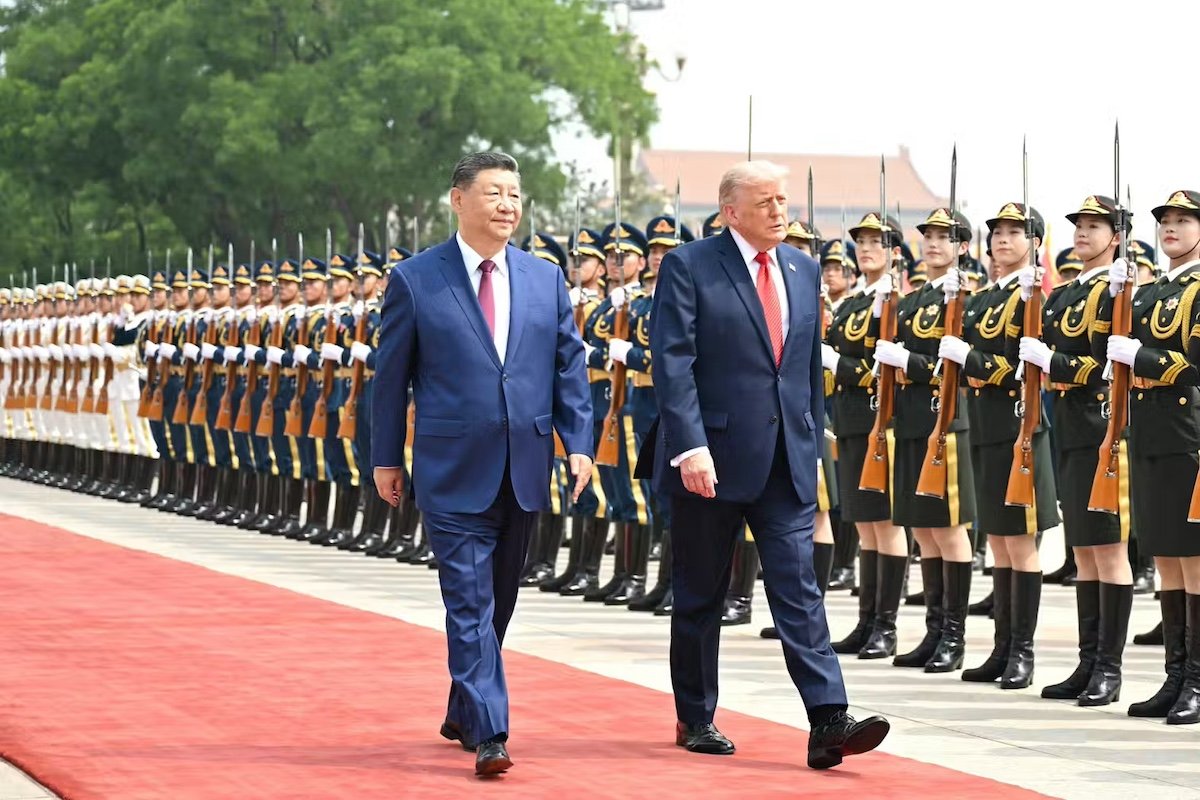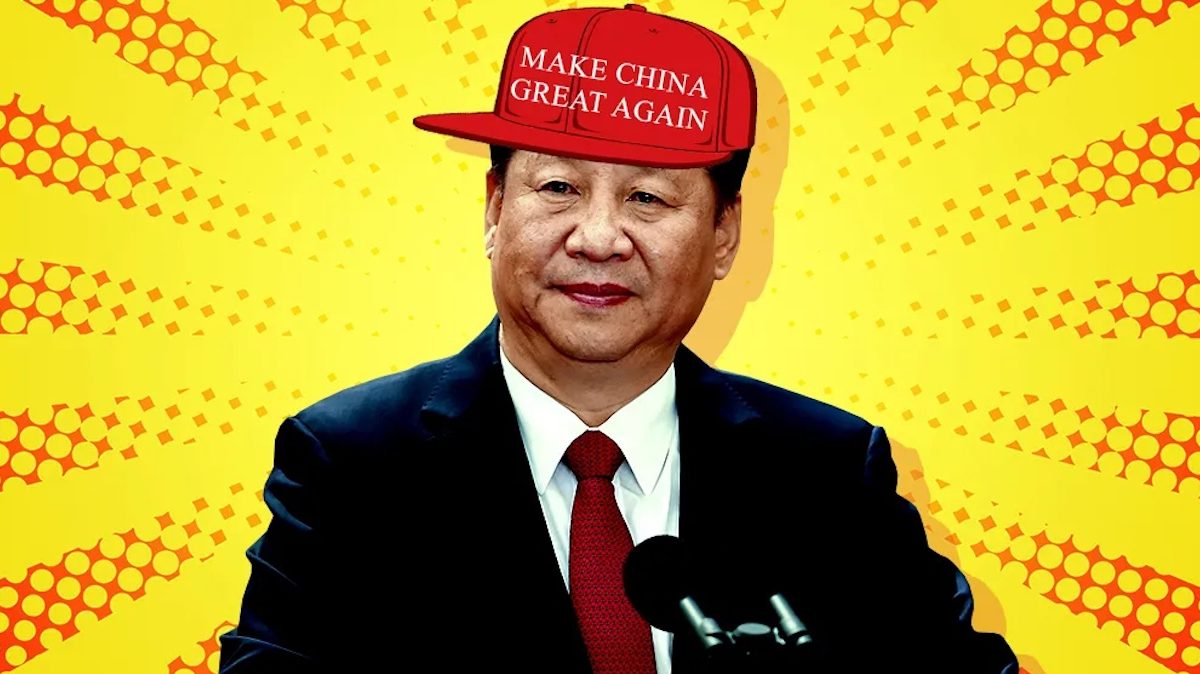
For Beijing, Donald Trump's 2016 election and his return to the White House in 2024 are not random events but evidence of a deeper shift in American politics. The United States that has emerged since 2016, in this view, is one that no longer wants to carry the burdens of global leadership. After a century of engagement—from the First World War through the Cold War—Washington now appears to be turning inward, resentful of the costs of its own creation.
Trump's rise gave voice to an America that feels cheated by the world, a nation that believes its generosity has been exploited. This sentiment has translated into an assault on the very institutions the US built: the United Nations, the World Trade Organization, and the alliances that underpinned the post-1945 order. For China, these institutions never fully reflected its interests or values. If Washington is now dismantling them, why should Beijing rush to defend them?
China does not see itself as a ready-made successor to the American order, as the Soviet Union once aspired to be. Instead, Beijing's approach is more defensive: protect itself from the chaos of a collapsing system, avoid being dragged into external conflicts, and quietly exploit any openings that emerge. The medium-term goal is to survive the destruction of the American-made world and emerge stronger.
Iran as a test case
The turmoil in Iran fits neatly into this framework. If the Strait of Hormuz becomes destabilized by American intervention, Beijing may ask: why should we help Washington fix a problem it created? What would the US offer in return? Could China help shape a different global order, beginning with a reordering of the Strait? For Chinese strategists, the current situation evokes the Warring States period of the fourth century BC, when the Zhou dynasty's authority collapsed and each state had to fend for itself. The prime minister of Wei, Hui Shi, argued that a new order had to be established—one in which each state recognized itself as fully sovereign, without deferring to a central authority. Today, China sees the American centrality as effectively gone.
This perspective was articulated in 2004 by four Chinese strategists—Wang Jian, Wang Xiangsui, Qiao Liang, and Li Xiaoning—in their book The New Warring States Period. They predicted a future of increasing state-to-state friction and decades of confusion as the US order unraveled. The book drew lessons from the faltering US intervention in Iraq, and Wang Jian, once praised as the best economist of his generation, pointed to America's unmanageable debt and the hijacking of political and economic agendas by private companies as long-term weaknesses. The 2008 financial crisis, which punished few and changed little, seemed to confirm their analysis.
Are the Chinese right? Even many of America's own allies now suspect they may be. But what is to be done? China is inclined to close in on itself and wait for others to make the first move. Changing that attitude would require a different international framework—a different message from Washington, its allies, and the states around China. Iran could be a place to begin experimenting with a new order, but only through proactive effort. Yet none of the players on the ground has easy, concrete proposals.
Iran's black hole
Iran is a country of nearly 100 million people, strategically positioned between the Caspian Sea and the Persian Gulf, Central Asia and the Mediterranean. Today, it appears politically fragmented. The old Supreme Leader, Ali Khamenei, is gone, and it is unclear whether his son and heir, Mojtaba Khamenei, is active or to what extent. The Revolutionary Guards appear to have the final say, but they have not rebuilt political unity even within the country. They seemingly trust no one.
Kamran Bokhari, a regional analyst, argues that Iran's regime has survived not because it has prevailed militarily but because US domestic political constraints have limited Washington's willingness to pursue the conflict to its logical conclusion. Survival, however, has come at enormous cost. The regime now confronts deepening political, economic, and security challenges that will constrain its ability to recover and shape its strategic environment for years to come.
It is unclear what China could do, even if it wanted to. Yet thinking through ways to talk with China about Iran may not be a waste of time. They may be small threads thrown into a chaotic situation. Yesterday's American order might not be reversed. A new order will have to be established. The question is how quickly that will happen and how peacefully, rather than through war. Iran could be a path to find some peaceful solutions.
Is the US losing?
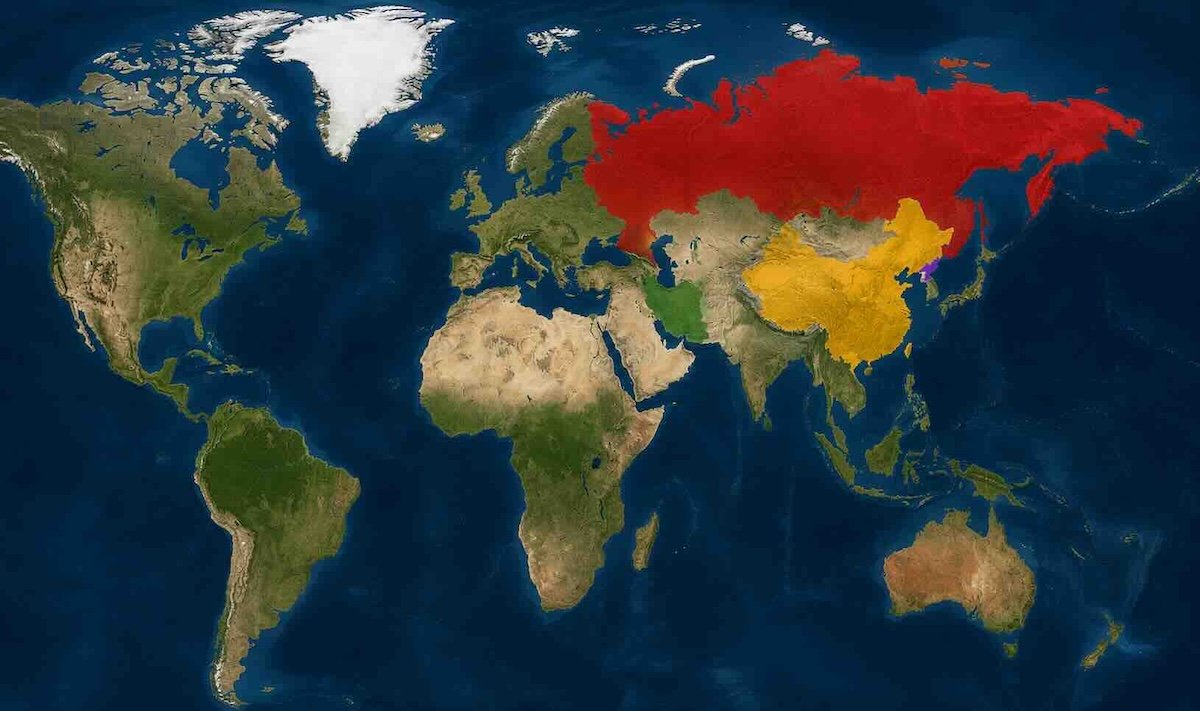
There is, however, one more point. Despite MAGA's isolationist rhetoric, US influence has grown in Venezuela and Syria. Is there a risk that, out of excessive caution and a determination to defend at all costs its political-energy axis with Iran and Russia, Beijing may inadvertently help expand America's disruptive role in the world and shoot itself in the foot? That may be the real crux of the matter. Is China's analysis right or wrong? Perhaps American power is not disintegrating but reorganizing—and, if so, China's wait-and-see strategy could backfire.
For now, Beijing seems content to watch from the sidelines, as Trump threatens to annex the Strait of Hormuz, and to calculate its next move in a world where the old rules no longer apply. The coming years will test whether China's patience is a strength or a vulnerability.