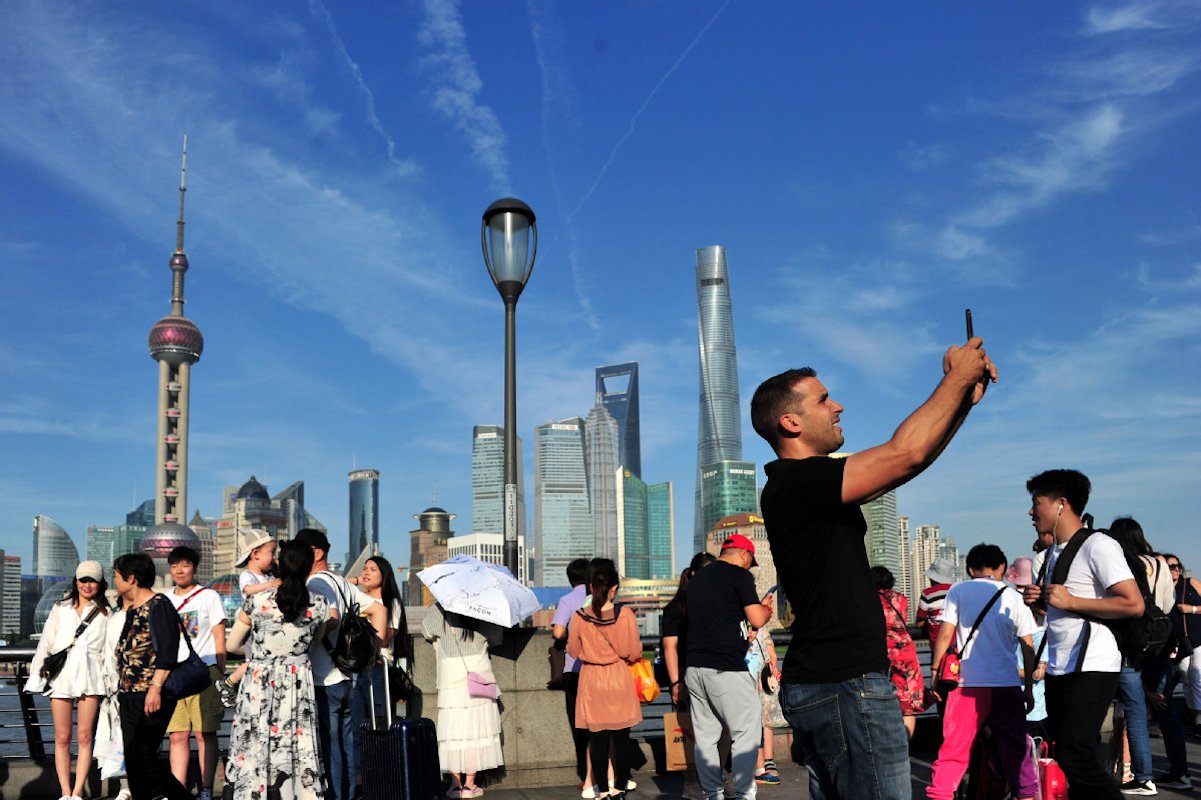
On August 20, China's National Immigration Administration added Kyrgyzstan and Vietnam to its 240-hour visa-free transit policy, bringing the total eligible nationalities to 57. A separate 30-day visa-free scheme for Hainan now covers 61 countries. The announcements may have drawn modest wire coverage, but they underscore a quiet transformation in Chinese tourism policy that many Western travelers have yet to fully grasp.
Record arrivals, visa-free majority
In the first half of 2026, China recorded 22.91 million entries by foreign nationals, a 20.4% increase year-on-year. More striking is the composition: 17.8 million of those arrivals—77.7%—entered visa-free, up 30.6% from the previous year. The top ten source markets—South Korea, Russia, Malaysia, Vietnam, Thailand, Singapore, the United States, Japan, Mongolia, and Australia—accounted for 62% of arrivals, a genuinely global spread that challenges the notion that only regional neighbors are coming.
This is not a one-off stimulus. The policy sequence has been deliberate. Unilateral visa waivers began in December 2023 with France, Germany, Italy, the Netherlands, Spain, and Malaysia, then expanded repeatedly through 2024 and 2025. In February 2026, the United Kingdom and Canada were added, taking the unilateral list to 50 countries through the end of the year.
On top of that sits the 240-hour transit corridor: citizens of 57 countries holding an ordinary passport and a confirmed onward ticket can enter through any of 65 ports—including Beijing, Shanghai, and Guangzhou—and stay up to ten days without a visa, transiting to a third country or region. Tourism, business, and family visits are permitted; work, study, and journalism still require proper visas.
On the ground: easier than the headlines suggest
What the official announcements don't convey is what the experience is actually like on the ground, which is where the gap between policy and perception lives. First, the transit rule is more usable than most travelers assume. Ten days is enough for a serious first trip: Beijing and Xi'an, or Shanghai and Chengdu, or a high-speed rail loop through the Yangtze Delta. The catch is that you must exit to a third country or region—you can't fly home directly under the transit waiver—and your time is regionally constrained, so itinerary planning matters more than it used to. This is the single most misunderstood detail in online forums, and it's exactly the kind of nuance that turns a “visa-free” headline into a frustrated traveler at the border.
Second, the infrastructure that used to intimidate visitors has caught up. China's high-speed rail network now exceeds 40,000 kilometers—the world's largest—with 350 km/h service linking the major tourist corridors. Booking tickets with a foreign passport is straightforward through official channels, and English support has improved markedly. The cashless payment wall, long the biggest practical barrier, has largely crumbled: Alipay and WeChat Pay now accept international Visa and Mastercard, and both have built-in translation. Didi works with foreign numbers. eSIM tourist packages from Chinese carriers mean a visitor can be online within minutes of landing, without hunting for a physical SIM.
Third—and this is the part I can speak to from six years of living in Xi'an—the on-the-ground reality still lags the policy on the information side. Most English-language advice about visiting China was written between 2019 and 2023, when the experience was genuinely difficult. It told travelers to expect payment chaos, booking friction, and app walls. Much of that advice is now outdated, sometimes dangerously so: travelers following old guides miss that the 240-hour rule exists, or don't know their passport qualifies, or still believe foreign cards don't work in Alipay.
A structural shift for the travel industry
The asymmetry matters for the travel industry, not just for individual tourists. China is one of the few major destinations currently in an aggressive, policy-driven opening phase. Airlines, hotel groups, tour operators, and insurance providers that update their China guidance are positioned to capture demand that is demonstrably surging; those relying on pre-2024 assumptions are leaving money on the table. The August 20 expansion—two countries at a time, every few months, like clockwork—suggests this trajectory will continue through at least 2027.
None of this is to sugarcoat the experience. Connectivity for Western services still requires a VPN. Some smaller merchants remain cash-and-QR only. Weather, crowds, and language barriers haven't changed. But the core proposition has: for a growing share of the world's passport holders, China is now easier to enter, cheaper to get around, and more navigable than at any point in the past two decades.
The visa-free boom isn't a policy footnote. It's a structural shift in how—and how many—foreigners experience China. The travelers who read the new rules, plan around the transit corridor, and arrive with updated expectations are getting a version of China that the old guidebooks never described. The rest of the world is still catching up.
For more on China's evolving global engagement, see our analysis of China's pharma strategy shift and the fragile stability in India-China ties.