Britain's Tobacco and Vapes Bill, passed by Parliament in April and awaiting Royal Assent, would permanently bar the sale of tobacco to anyone born on or after January 1, 2009. The measure aims to create a "smoke-free generation" by raising the legal age of sale year by year, while tightening controls on retailing, vaping, advertising, packaging, and public use. It does not force current smokers to quit; instead, it changes the market's default settings so tobacco gradually stops recruiting new customers.
This design matters for China, where the tobacco debate often collapses into a false choice between preserving the status quo or imposing an unrealistic ban. Britain's experiment suggests a third possibility: not immediate abolition, but long-term market denormalization. The British approach is phased, youth-centered, and paired with complementary measures such as retailer licensing, age restrictions, and enforcement powers.
China's Tobacco Challenge Is Larger and More Complex
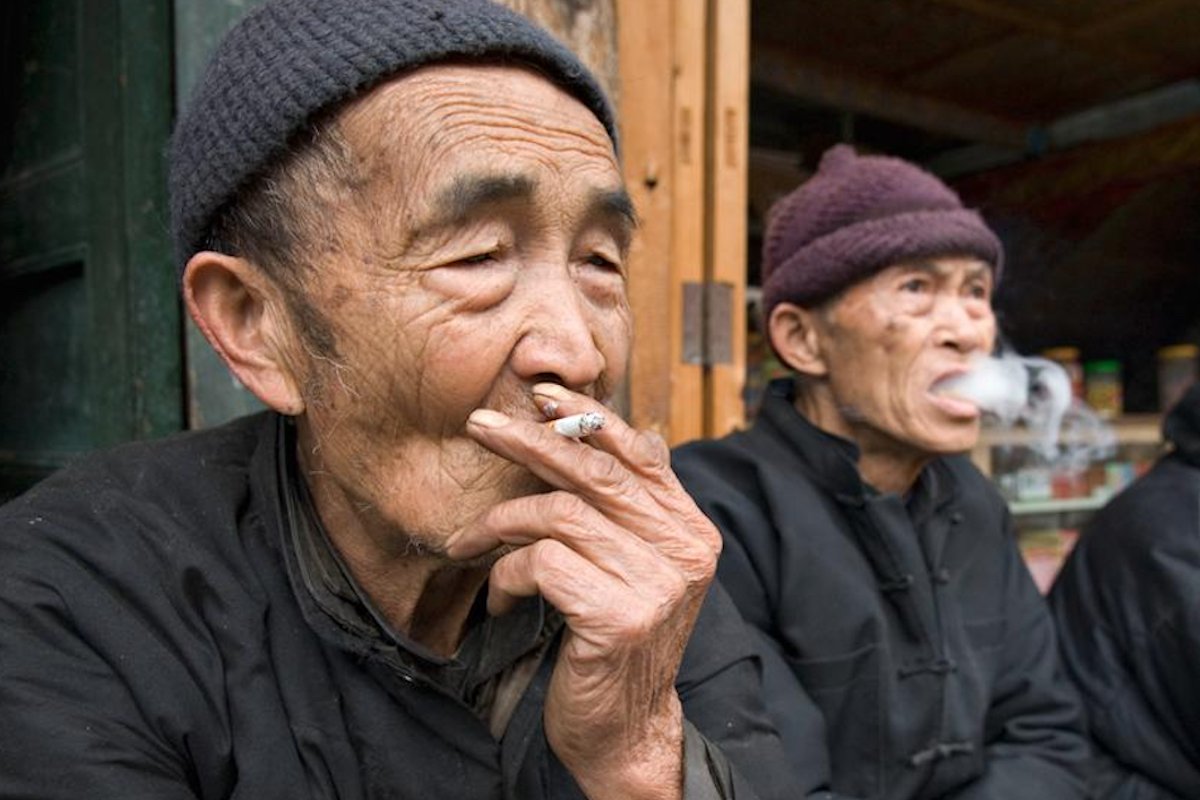
China remains the world's largest producer and consumer of tobacco, with more than 300 million smokers. A 2024 China CDC study found that current smoking prevalence among adults aged 15 and older was 23.2%, with higher rates in rural than urban areas. Beijing's Healthy China 2030 plan aims to reduce adult smoking prevalence to 20% by 2030, a goal that will be difficult to reach without stronger measures.
Yet China should resist copying Britain's law wholesale. Britain regulates a private-market habit in a mature tobacco-control environment. China manages a public-health burden intertwined with a state tobacco monopoly, local fiscal interests, male social norms, gift culture, retail habits, and uneven enforcement capacity. As noted in China's regulatory approach to foreign acquisitions, Beijing often prefers phased experimentation over sudden leaps.
The strategic question for China is not "Should Beijing copy London?" but rather "Which parts of the British approach can help reduce youth initiation, support adult cessation, and manage transition costs in a credible order?"
Building the Runway Before the Ban
A generational tobacco restriction in China would only be credible if the runway were built first. That means stronger national retailer licensing, reliable age-verification systems, better product tracing, visible enforcement against illicit sales, broader smoke-free public spaces, higher effective prices, and a serious expansion of cessation services. A ban without this platform risks becoming performative; a platform without a long-term endgame risks becoming incremental forever.
China could begin with disciplined experimentation in selected cities, special zones, or provinces with stronger public health infrastructure. These pilots could test whether retailer licensing, digital age verification, school-based prevention, smoke-free enforcement, and cessation support can work together before any national decision is made. This fits China's governance style better than a sudden national leap and would allow policymakers to measure real outcomes: fewer young initiates, lower secondhand smoke exposure, more quit attempts, and reduced local medical costs.
The harder question is political economy. China's tobacco system is not merely a public-health challenge; it is also a revenue system and an industrial structure. Any serious reform must answer what happens to local governments, tobacco-growing regions, retailers, and workers if cigarette sales gradually decline. This is where China may need a health-transition strategy, not just a health campaign. One approach would be transparent accounting of how much tobacco revenue is collected, where it goes, and how much smoking-related disease costs the health system, households, and employers. Over time, a portion of tobacco revenue could be placed into a dedicated transition fund to support cessation services, local public-health enforcement, farmer adjustment, worker retraining, and fiscal cushioning for tobacco-dependent areas.
The point is not to punish local governments for relying on tobacco revenue, but to make declining cigarette sales financially manageable rather than administratively threatening. Public health reform becomes more governable when the losers from transition are acknowledged rather than ignored. Britain's gamble is that a society can end smoking by denying the habit to a new generation. China's challenge is broader: it must decide whether tobacco control can coexist with the state's fiscal and industrial interests. Borrowing Britain's logic—not its law—offers a path forward.