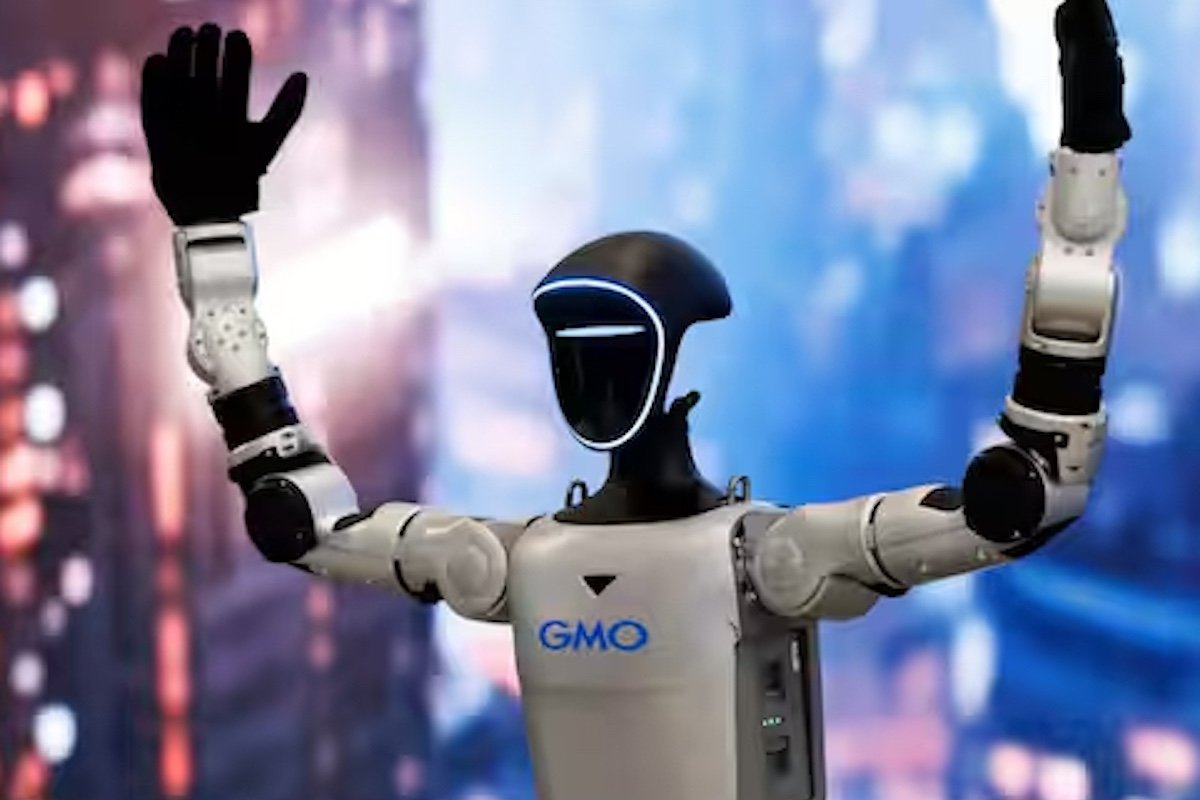
At Tokyo's Haneda Airport, a Chinese humanoid robot is being tested for ground-handling tasks, but the real innovation may be in the business model behind it. JAL Ground Service, a subsidiary of Japan Airlines, is running a trial that began in May and is scheduled through 2028, evaluating which jobs are suitable for the machine and what safety conditions it must meet. The robot, supplied by Chinese firm Unitree Robotics, is being integrated by GMO AI & Robotics, a Japanese company that adjusts the machine's movements for the crowded environment where people, vehicles, and equipment share limited space.
Ground handling is a revealing test for humanoids. Baggage and cargo are moved around aircraft in spaces built for human reach and movement, not fixed automation. A humanoid can use that environment without expensive alterations, but it must learn a series of tightly controlled tasks without creating new risks. The machines arrive able to walk, carry, and balance, but their airport jobs still have to be written into software.
Local integration as a business model
In June, GMO became Unitree's authorized distributor in Japan, covering implementation support, software development, secure communications, maintenance, and operations, as well as sales. GMO also rents humanoids for proof-of-concept trials, allowing customers to test one without buying it and giving the company experience across different sites. This approach draws on the wider GMO Internet Group's communications, cloud, security, and financial services, which become relevant when a robot must connect to a customer's network, be monitored over time, and be offered through rental or leasing rather than outright sale.
Unitree can ship the same platform to several Asian markets, but it cannot practically reproduce every customer's workflow from Hangzhou or maintain every site. Firms like GMO are placing themselves in that gap. A fault that is routine for Unitree's engineers may be unfamiliar to the technician standing beside the machine in Tokyo. JAL will still need to know who restores service and explains what happened. When the workflow changes, the motion program may have to change with it; a second site brings another round of integration.
The three-year Haneda trial can absorb extra supervision and repeated adjustment. Paid daily operations cannot. Baggage does not wait while a movement is rebuilt or a problem is referred across time zones. This is where the business model shifts from hardware sales to service agreements.
Lessons from the US and the road ahead
GXO, a US logistics company, made a similar transition after testing Agility Robotics' Digit in a warehouse in late 2023. It signed a multi-year Robots-as-a-Service agreement the following year. Digit was connected with autonomous mobile robots and conveyors, taking totes from one system and placing them onto another. By November 2025, Agility said the robots had moved more than 100,000 totes at the facility. Agility supplies Digit, its fleet-management platform, and much of the deployment expertise, covering facility mapping, workflow definition, fleet operations, and troubleshooting. At Haneda, comparable functions are divided among Unitree, GMO, and JAL rather than held by one supplier.
At GXO, commercial use meant a narrow task repeated thousands of times inside an existing workflow, managed through a service agreement rather than a one-off equipment sale. That difference changes where revenue may sit. A reseller earns a margin when a robot changes hands. GMO is positioning itself to earn from rentals, software, maintenance, and operations after installation.
The business depends on solving enough ordinary problems locally that every fault does not become a call to engineers in China. Technical control may not follow customer responsibility so neatly. If Unitree retains tight control over software tools and updates, GMO could be answerable to JAL without being able to resolve a serious fault on its own. A response-time promise is only as good as the access behind it.
Lower-priced hardware does not settle the economics either. Extensive customization can erase the initial saving, while a local service agreement may still leave the customer dependent on the manufacturer's headquarters. A Japanese partner shortens the distance to the customer; it does not make an unreliable machine reliable. The practical test is whether GMO's technicians receive the training, spare parts, and software access to handle routine failures without waiting for Unitree. JAL will also need a clear escalation path: what can be fixed in Japan, when engineers in China become involved, and who remains responsible while they do.
The second contract will be more revealing than the Haneda demonstration. If GMO can take what it learns there to another airport without rebuilding the project from scratch, it will have created more than a distribution business. Haneda may then show something larger than whether a humanoid can move baggage. The machines are Chinese. The business that makes them useful may be built in Japan.
This model echoes broader trends in Asian tech, where state-led tech ascent in China is reshaping business practices across the region. Meanwhile, the US has threatened sanctions on Chinese AI firms over model distillation, highlighting the geopolitical stakes in robotics and AI. The Haneda trial may offer a template for how Chinese hardware can be integrated into demanding markets through local service partnerships.