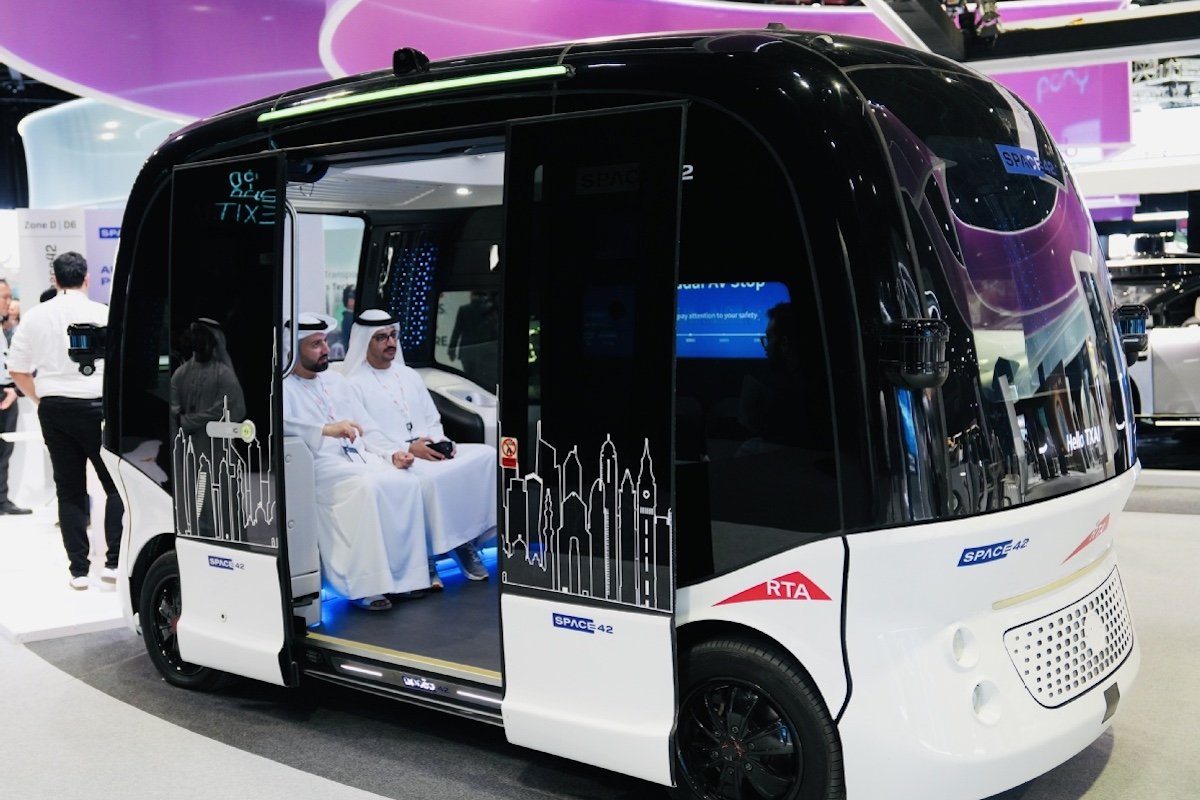
In a concentrated push into the Middle East, Chinese technology companies are establishing the Gulf as a critical proving ground for advanced services struggling to turn a profit at home. The first week of April saw two major launches in Dubai: Baidu's Apollo Go autonomous ride-hailing service opened for bookings on its own app on April 1, followed just two days earlier by the debut of a fully driverless robotaxi service from WeRide, accessible via the Uber app.
These consecutive launches make Dubai the first city outside China where multiple Chinese autonomous driving companies are operating commercial, fully driverless taxi services simultaneously. Baidu's deployment uses its in-house sixth-generation RT6 vehicle, while the WeRide-Uber collaboration employs Robotaxi GXRs built on Geely's Farizon platform, powered by WeRide's Level 4 autonomous software.
Profitability Abroad, Losses at Home
The financial contrast between domestic and Gulf operations is stark. WeRide, founded in Guangzhou in 2017, now operates over 200 robotaxis in the Middle East and achieved operational profitability in the region in 2025, a milestone it has yet to reach in China. Similarly, Baidu's Apollo Go, which runs the largest robotaxi fleet in China, only recently reached unit economics break-even in its flagship city of Wuhan.
This expansion is driven by a brutal domestic environment. China's electric vehicle price war, which began in late 2022, shows no sign of abating, with over 130 brands competing for share and almost none earning a positive return. The pressure extends through supply chains, illustrated by BYD demanding a 10% price cut from its suppliers in 2025. A similar dynamic grips the food delivery sector, where Meituan faces intense competition from JD.com and Douyin, driving down commission rates industry-wide.
Meituan's response has been the rapid overseas deployment of its international brand, Keeta. Launched in Saudi Arabia in September 2024, Keeta became the kingdom's third-largest food delivery platform within four months. By December 2024, its drone delivery unit, Keeta Drone, had secured the UAE's first commercial beyond-visual-line-of-sight drone delivery license from Dubai's Civil Aviation Authority.
The Gulf's Structural Appeal
The Gulf Cooperation Council states offer what China's saturated market cannot: regulatory openness, government partners eager to co-invest in smart-city infrastructure, and a first-mover advantage in markets where Western competitors are largely absent. Dubai's Roads and Transport Authority aims for 25% of journeys to be autonomous by 2030, a goal aligned with Saudi Arabia's broader Vision 2030 modernization agenda.
These policies provide Chinese firms with a government-backed runway far more accessible than in Europe or the United States. With no Western autonomous driving company currently operating commercially in the Gulf, Chinese providers have positioned themselves as the default choice for autonomous mobility. This strategic positioning is part of a broader pattern of China's growing economic clout in the Middle East, even as complex security dynamics persist.
The results are evident in trade figures. China's automotive market share in Arab Gulf countries surged from 2% in 2019 to approximately 15% in 2025. Of the 8.32 million vehicles Chinese automakers shipped overseas in 2025, about 1.39 million—roughly one-sixth—were destined for Gulf states.
Exporting a Competitive Model
The conventional narrative of China's economic slowdown focuses on domestic overcapacity and weak demand. The Gulf expansion reveals another dimension: the same hyper-competition destroying profitability at home is producing companies that are technologically advanced, operationally efficient, and willing to enter new markets at unsustainably low price points to capture share.
Keeta's market entry strategy mirrored the tactics of China's EV sector: aggressive vouchers and waived delivery fees to drive down prices and capture market share through low or negative margins. While this approach no longer delivers a decisive edge in China, it remains potent in new overseas markets. WeRide and Keeta share a trajectory of achieving operational success abroad while their domestic businesses continue to burn cash.
This export of both products and operational models represents a significant, often overlooked, facet of China's economic story. Falling domestic growth rates coexist with a generation of companies hardened by years of brutal competition, now leveraging that experience globally. The Gulf's role in this shift is pivotal, absorbing industrial overcapacity while allowing Chinese firms to build global brand equity. This regional economic deepening occurs alongside other strategic shifts, such as the global transition from fossil fuels, where China is positioning itself as a key anchor for new energy security frameworks.
The Gulf foray demonstrates that for Chinese tech firms, international expansion is no longer a luxury but a necessity born of domestic market saturation. Their success in the Middle East suggests that the operational intensity forged in China's competitive crucible may become a defining feature of their global playbook, with implications for technology adoption and market structures far beyond Asia.