China has committed an estimated $145 billion in investments and construction contracts across the Middle East, with Iranian crude oil constituting 13–14% of its total imports. Despite this enormous economic footprint, Beijing maintains no permanent military force in the region beyond its sole overseas base in Djibouti, creating a fundamental vulnerability in its foreign policy strategy.
The Security Gap in an Economic Strategy
China's regional approach is built on two pillars: deep economic integration and proactive diplomacy. In 2024 alone, Arab and Gulf states received approximately $39 billion in Chinese investment. Projects like the $10 billion China–Oman Industrial Park at Duqm and refinery upgrades in Iran embed local economies within Beijing's trade networks. Diplomatically, China has positioned itself as a mediator, notably facilitating the 2023 détente between Iran and Saudi Arabia.
This strategy has expanded influence without direct confrontation but omits a critical component: security. That role has long been filled by the United States, through bases across the region and the US Navy's Fifth Fleet, which until recently secured key maritime trade routes like the Persian Gulf. While serving American interests, this system also protects the energy flows and shipping lanes China increasingly depends on, tethering Beijing to a security environment it does not command.
A Crisis Exposes Dependence
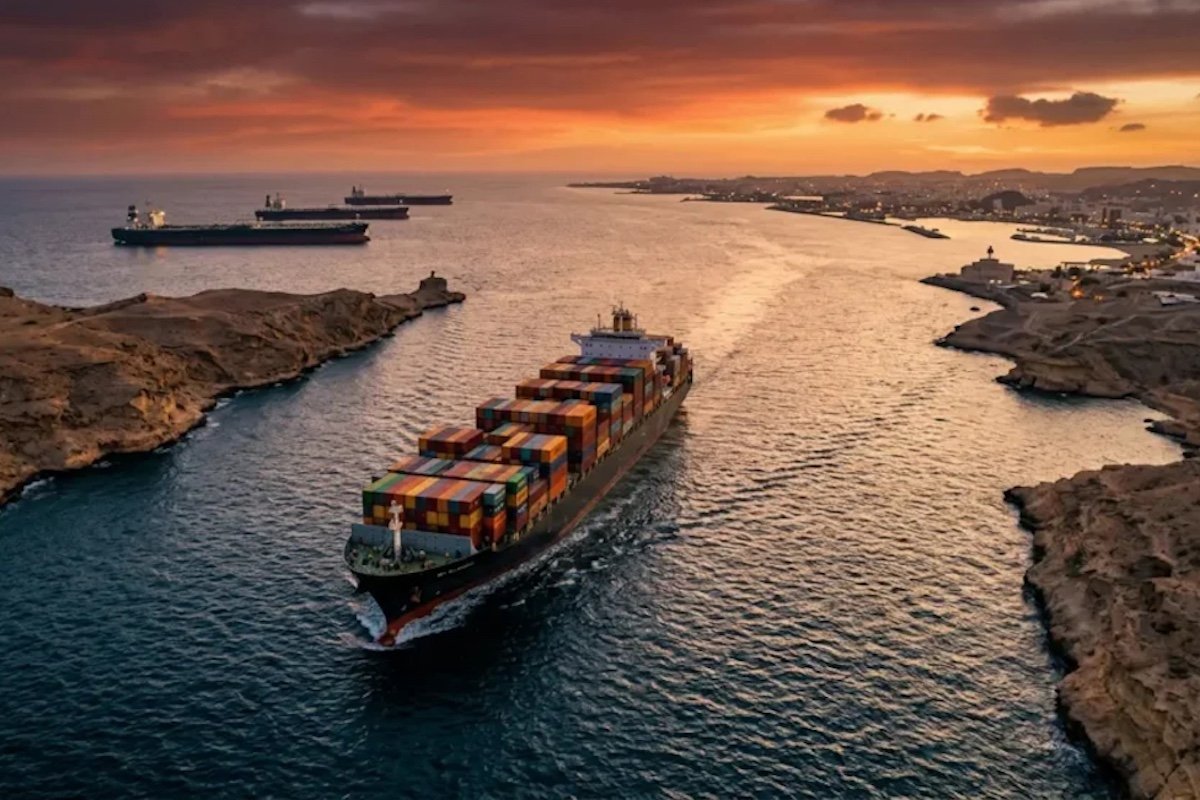
The recent Iran crisis laid this structural exposure bare. Following US and Israeli airstrikes, Iran effectively shut down the Strait of Hormuz—a chokepoint for 20% of the world's oil and gas—reducing traffic by over 90%. While Tehran granted conditional passage to vessels from favored nations like China, Russia, and India, the disruption was severe. Some European and Asian refiners faced prices nearing $150 per barrel, with the International Energy Agency head calling the blockade more consequential than the oil shocks of 1973, 1979, and 2022 combined.
China's access hinged entirely on Iranian goodwill and its diplomatic standing in Tehran—a fragile arrangement underscoring how its security capacity lags far behind its economic exposure. The disruption also exacerbated strains on regional economies tied to Chinese trade.
The strategic divergence with the US is widening. Washington, less dependent on Gulf crude due to domestic production and North American imports, prioritizes keeping energy flowing. China, as the world's largest crude importer, has a broader vulnerability encompassing infrastructure, supply chains, and investments, making it more sensitive to any regional instability.
Doctrinal and Political Constraints
Beijing's dilemma is sharpened by its own governing principles. A 2019 defense white paper outlines an "independent foreign policy of peace," reflecting deep resistance to formal military alliances. President Xi Jinping consistently emphasizes strategic autonomy, and China's Global Security Initiative criticizes alliance structures as a "Cold War mentality."
These are not just doctrinal constraints but reputational ones. Beijing has built its international identity on peaceful development and non-interference. A more assertive military role in the Middle East would undermine that positioning and complicate relations with host states sensitive to foreign basing, a reality reflected in China's cautious, limited overseas basing record.
This significantly narrows Beijing's ability to translate economic weight into security influence. As China's overseas footprint grows and American commitments become less predictable, the costs of this mismatch will likely intensify. Long-term energy security shifts may eventually alter the calculus, but for now, the pressure is mounting.
Navigating an Unsustainable Position
Beijing is not signaling a major strategic shift, but escalating risks may force adjustment. Future responses will likely be limited to two avenues: modest maritime expansion by the People's Liberation Army Navy (PLAN) or greater reliance on host-state security agreements. The former faces political hurdles in a region wary of foreign military presence; the latter offers uncertain guarantees.
The core challenge remains. China is deeply embedded in a security system it neither controls nor can reliably depend on, a paradox at the heart of its global rise. While China's diplomatic role remains key to regional deals, its ability to unilaterally protect its vast Middle Eastern interests is severely limited. For now, Beijing's billions in the Gulf remain under the watch—and ultimate protection—of American gunboats.