Geopolitical upheaval in the Middle East is catalyzing a profound and accelerated shift in the global energy landscape. The conflict, involving the US, Israel, and Iran, has exposed the fragility of oil-dependent supply chains, particularly with the strategic Strait of Hormuz under threat. This crisis is compelling petroleum-importing nations worldwide to urgently reduce oil from their energy portfolios, regardless of near-term diplomatic resolutions. The damage to market confidence appears permanent.
China's Manufacturing Prowess Meets a Geopolitical Imperative
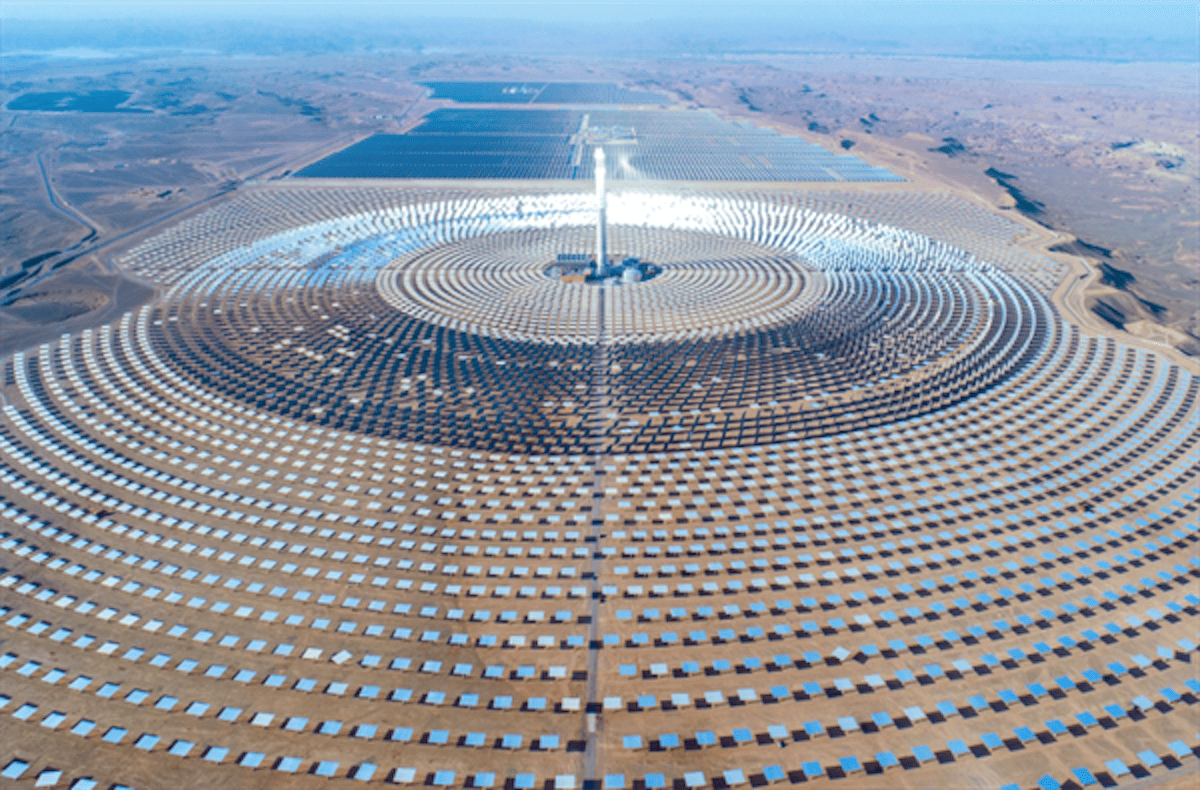
This urgency dovetails precisely with China's established industrial dominance in the technologies required for a post-oil economy. As the world's leading producer of electric vehicles, batteries, solar panels, wind turbines, and nuclear reactors, China is poised to replace traditional oil-exporting nations as the most critical supplier of global energy security. The narrative that the world cannot absorb more Chinese exports has been upended by a stark new reality: nations now need what China manufactures most.
Trade data underscores this structural shift. Despite targeted tariffs, China's 2025 trade surplus grew significantly, powered not by the US market but by soaring exports to the Global South. Shipments to ASEAN and Africa surged by 13% and 26%, respectively. Early 2026 figures show this trend accelerating, with exports to the EU, ASEAN, and Africa skyrocketing. The demand for Chinese-made energy transition technology is becoming a primary driver of global trade flows.
The End of Oil's Transportation Monopoly
For decades, energy models were bifurcated: transportation ran on oil, while electricity generation used a diverse mix of sources. China's technological and manufacturing advances have decisively broken oil's century-long monopoly on transport. The pain points that once hindered electric vehicle adoption—high cost, limited range, and long charging times—have been systematically eliminated.
Battery prices have plummeted by 90% over 15 years. Chinese automakers like BYD now offer models with 1,000-kilometer ranges and ultra-fast charging, while NIO's expansive battery-swap network provides an alternative. Concurrently, solar panel costs have fallen 85%, driven by Chinese innovation in photovoltaic efficiency and automated, scaled production. This has enabled China to peak its CO2 emissions years ahead of schedule.
The economic equation is now overwhelming. With oil prices volatile and threatening to double, electric vehicles—which are three to four times more energy-efficient than internal combustion engines—offer dramatically lower operating costs. China's manufacturing scale has also cut EV purchase prices to roughly half that of equivalent gasoline cars in Western markets. As a result, EVs now constitute over half of all new car sales in China, with production increasing approximately fiftyfold in the past decade.
Global Repercussions and Strategic Realignments
The implications extend far beyond consumer automotive markets. Approximately 45% of global oil is refined into gasoline for passenger vehicles, with another 30% used for diesel trucking. Every one of these barrels is now under direct assault from electrification. China is aggressively pushing this transition into commercial trucking as well, for both short and long-haul routes.
This shift is forcing a fundamental reassessment of security and economic postures worldwide. Indo-Pacific nations are reassessing their energy and security strategies in light of the Middle East conflict, with many likely to fast-track investments in nuclear and renewable power to reduce strategic vulnerability. Furthermore, the competition to build the foundational technologies of the future is intensifying, as seen in the parallel US-China race to develop fusion energy supply chains.
The transition also promises to correct a long-standing economic anomaly known as the Lucas Paradox, where capital flowed from poorer to richer nations. As China solidifies its position as the world's preeminent manufacturing economy—its output now larger than that of the US, EU, India, Japan, UK, and Russia combined—it is becoming a central source of capital and technology for the Global South's development, reshaping classical economic patterns.
The age of oil's strategic dominance is concluding not with a gradual decline, but with a geopolitical rupture. In its place, a new architecture of energy security is emerging, one built on electrification and technological supply chains. China, through its decade-long investment and scaling of clean energy technologies, is positioned at the very center of this new order, fundamentally altering its role in the global economy and the strategic calculations of nations across Asia and the world.